
Termite Monitoring Stations, Trelona Compatible
3.6Editor score
Six monitoring stations included
No termiticide inside
Compatible with listed attractants
Moisture-resistant outdoor design
Termite traps guide comparing monitoring stations, bait components, replacement parts, and tools for detection, inspection, and termite control at home outside
Termite traps and monitoring stations help homeowners detect subterranean termite activity, protect vulnerable wood structures, and follow up on bait treatments. A useful product must fit the site, resist outdoor conditions, allow regular inspection, and complement a broader pest-management plan rather than replace professional advice.
The products in this guide were compared by examining their stated purpose, installation method, monitoring features, bait compatibility, replacement components, durability, and customer rating. The list covers complete monitoring stations, wood inserts, protective caps, station-opening tools, and related products that are sometimes considered alongside termite traps.
Each review explains what the product is designed to do, where it fits into termite monitoring, and which buyers may find it useful. Ratings reflect the supplied customer feedback, while practical limitations and compatibility requirements deserve attention because prices, availability, and station designs can change over time.
3.6Editor score

4.5Editor score

5.0Editor score
This side-by-side comparison shows whether each listing is a complete monitoring station, a replacement component, an inspection accessory, or a related wood-protection product. Buyers should first identify the station system already in use and then confirm fit, placement, and treatment requirements.



The Spectracide Terminate Termite Detection & Killing Replacement Stakes combine two functions in a ground-mounted system: a pop-up indicator reveals termite activity, while the stakes are designed to kill foraging termites. With a 4.5 customer rating, this is the most complete termite-focused option in the guide and earns the Editor's Choice distinction.
We may earn a commission when you buy through this link, at no additional cost to you.
The package includes five replacement stakes with locator shields. These are intended to replace stakes already in use with the Spectracide Terminate detection and killing stake system, rather than serve as a complete first-time installation. Installation is straightforward: place the stakes in the ground two to three feet away from the home and no more than 10 feet apart.
The principal advantage is the combination of an observable indicator and a termite-killing stake. The pop-up design removes the need to open a station merely to check whether termites have been active, while the locator shields help identify monitored positions around the structure. The main limitation is its narrow purpose as a replacement pack, which makes system compatibility essential.
This is the strongest choice for homeowners who already use the compatible Spectracide Terminate system and need to refresh worn or missing stakes. It is also a practical option for pest professionals replacing selected monitoring points. Confirm the existing system and its installation pattern before purchasing, and treat visible activity as a reason to investigate the surrounding structure rather than as a substitute for a complete inspection.
The pop-up indicator is the feature that most improves routine monitoring. Because activity becomes visually apparent, homeowners can check the installed stakes without repeatedly disturbing the surrounding soil or removing monitoring components.
These are replacement stakes for a compatible kit rather than a broad-spectrum standalone collection. Buyers should verify the product name, installation spacing, and locator-shield design before assuming the units will integrate with another brand.
We may earn a commission when you buy through this link, at no additional cost to you.
This six-pack of termite monitoring stations is designed for outdoor placement around wooden structures and landscape perimeters. Its 3.6 rating places it behind the stronger-rated systems, but the included six stations, wood blocks, flags, and broad intended applications make it a sensible budget-oriented monitoring option.
We may earn a commission when you buy through this link, at no additional cost to you.
The stations are compatible with Trelona attractant or Advance attractant, according to the supplied description. The product deliberately contains no termiticide, which means it functions as a monitoring station rather than a prepackaged treatment. Buyers using this product should understand that adding attractant is a separate step and that the station itself does not eliminate termites.
A key-free, simplified structure is intended to reduce disruption when checking the station. This matters because the product information specifically warns that opening devices with keys can add time and disturb termites nesting inside, potentially hindering subsequent treatment. The moisture-proof design and replaceable components also support continued outdoor use.
The best fit is a homeowner or property caretaker who wants multiple monitoring locations and intends to use a compatible attractant under a deliberate inspection plan. It may also suit agricultural, garden, orchard, farm, dam, and wooden-structure settings listed by the manufacturer. Buyers should compare the station dimensions with their existing bait system before use and avoid expecting treatment from the empty stations alone.
The absence of termiticide makes the product's role clear: it detects activity and supports treatment decisions. Compatible attractant can be placed in the available space, but the appropriate material should be selected according to the rest of the bait system.
Six stations make it easier to monitor several points around a wooden structure or landscape perimeter. The included marker flags help maintain placement records, while replaceable parts support ongoing station upkeep.
We may earn a commission when you buy through this link, at no additional cost to you.
The Advance Termite Monitor Bait Station is a purpose-built subterranean termite monitoring station with a 4.5 customer rating. It contains a wood food source and an inspection cartridge designed to detect termites, providing two complementary ways to monitor station activity around a property.
We may earn a commission when you buy through this link, at no additional cost to you.
The stated placement guidance is specific: install the stations in the ground ten to 15 feet apart around the home and approximately two to three feet away from the foundation. Those instructions create a consistent perimeter layout, which is important because gaps in coverage can make a monitoring program less informative.
This product is better suited to buyers committed to a recurring inspection routine than to someone seeking a single drop-in solution. The station must be opened, evaluated, and serviced according to the broader Advance monitoring system. Its focused design avoids the complication of including multiple unrelated traps, but it also places more responsibility on the owner to inspect and interpret the station correctly.
It is a strong choice for homeowners who want a dedicated termite-monitoring station rather than a general indoor insect catcher. Buyers should follow the specified spacing, mark every location, and record inspection findings. If the station indicates activity, contact a qualified pest professional or follow the treatment plan recommended for the installed Advance system.
The combination of a wood food source and inspection cartridge supports two forms of observation. Checking both components can help a property owner understand whether termites are present before deciding what treatment step comes next.
The recommended two- to three-foot offset from the foundation and ten- to 15-foot spacing gives users a repeatable layout. Consistent placement makes the station network easier to inspect, document, and service over time.
We may earn a commission when you buy through this link, at no additional cost to you.
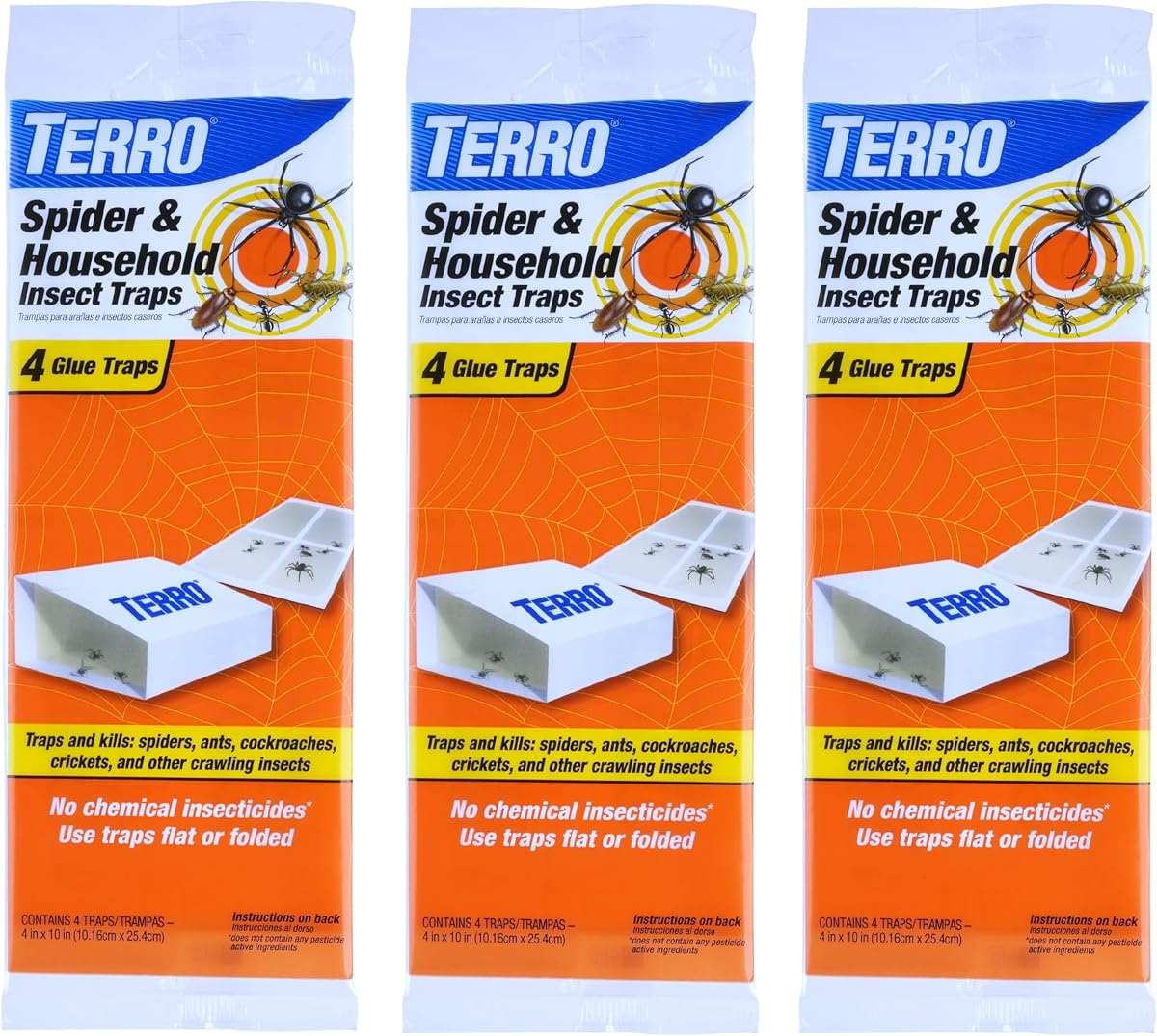
The TERRO T3206SR is a pack of 12 indoor traps designed for spiders, ants, cockroaches, centipedes, and other crawling insects. It carries a 4.2 rating and belongs in this roundup as a general indoor crawler option, not as a dedicated subterranean termite monitoring system.
We may earn a commission when you buy through this link, at no additional cost to you.
The traps can be placed flat for a larger catch area or folded to conceal captured insects from view. Suggested indoor locations include along baseboards, beneath furniture and appliances, and in kitchens, pantries, bathrooms, basements, and other areas where crawling pests are likely to travel.
Its main advantage is convenience. Twelve units allow distribution through multiple rooms, while the two configurations let users tailor the trap to the location. The product description also identifies brown recluse, black widow, and hobo spiders among the intended targets, though actual results depend on placement, the pest involved, and environmental conditions.
This is a reasonable addition for a household dealing with ordinary indoor crawling insects, but it should not be presented as a replacement for outdoor termite stations. Subterranean termites commonly travel through soil and enter structures through concealed pathways, which is precisely what dedicated underground monitoring products are designed to observe. Use TERRO for its stated indoor purposes and select a true termite station for the perimeter.
The 12-trap format makes room-by-room deployment straightforward. Positioning several units along common travel routes can also make it easier to identify where crawling insects are most active.
Flat placement offers broader exposure, while the folded configuration can make captured insects less visible. The choice depends on the room, the target pest, and whether appearance or coverage is the priority.
We may earn a commission when you buy through this link, at no additional cost to you.
The Aluminum Access Tool for Termi-te Bait Stations is an inspection accessory with a 4.7 rating, making it one of the highest-rated products in the guide. It is designed to open compatible bait-station lids quickly and consistently, which can be especially useful for homeowners or technicians managing several stations.
We may earn a commission when you buy through this link, at no additional cost to you.
The tool uses two protruding metal blocks. When placed over a station cover and turned counterclockwise, the blocks release the locking pads from the locking ring. This focused mechanism is intended to replace the less convenient use of a flathead screwdriver when a full set of stations needs regular inspection.
The product description also includes a useful handling reminder: wash hands and wear clean gloves before touching bait-system components. Tongs or a similar implement can help change placements, and avoiding human odors is important because contamination can compromise the effectiveness of a monitoring or decoy system.
This is a good accessory for anyone who already owns compatible Termi-te stations and finds their quick-lock lids difficult to open. It is not a standalone trap and should not be advertised as one. Confirm the lid design, test the fit carefully, and follow the instructions for the complete station system rather than forcing an incompatible cover.
The internal blocks engage the station's locking mechanism in a controlled way. This can reduce fumbling when inspecting multiple lids and make the routine process more predictable than using an improvised tool.
Fast, deliberate access helps users follow a service schedule without unnecessarily delaying inspections. The included hygiene guidance also emphasizes that station components can be sensitive to contamination from hands and tools.
We may earn a commission when you buy through this link, at no additional cost to you.
This listing offers wood replacement inserts for termite monitoring systems, with a 2.5 customer rating. The product is intended to support termite detection by providing natural wooden bases that can draw foraging termites into a station, but it should be evaluated primarily as a maintenance component rather than a complete trap.
We may earn a commission when you buy through this link, at no additional cost to you.
The description identifies 20 inserts measuring approximately 2.75 inches in diameter and three inches high, while the title says six pieces. That discrepancy should be checked with the seller before purchase. Buyers who require a specific quantity should rely on the package contents received rather than assuming the headline count is authoritative.
The inserts are described as free from chemical lures and designed with gaps aligned with termite feeding behavior. They are also described as stable in moist soil, making them relevant to gardens, farms, residential properties, and commercial buildings. Replacement reportedly requires no customized tools, which is valuable for routine station maintenance.
The main concern is the low rating and unclear package quantity. The product may suit a property caretaker who needs economical wood bases and has confirmed compatibility with a standard monitoring system. Do not expect the inserts alone to detect, treat, or eliminate termites, and do not assume the stated count matches the six-piece title without checking current package information.
The wood construction gives termites a familiar feeding material without adding a chemical lure. The described gaps are intended to align with feeding behavior and help make the inserts useful as station monitors.
The listing uses both a six-piece title and a description of 20 inserts. This inconsistency warrants a careful check of the package contents before ordering, particularly for buyers planning a large network of stations.
We may earn a commission when you buy through this link, at no additional cost to you.
The Twenty-Piece Termite Bait Station Refill Wood Insert product is designed for routine maintenance of monitoring systems. It has a 2.5 customer rating, so its appeal rests mainly on the stated quantity, standard dimensions, and simple replacement approach rather than on strong customer feedback.
We may earn a commission when you buy through this link, at no additional cost to you.
The listing describes 20 wood inserts measuring approximately 2.75 inches in diameter and three inches in height. Their uniform size and gaps are intended to suit standard subterranean monitoring stations, while the wood provides a natural feeding surface without chemical lures. The stated design also emphasizes stability in moist soil.
For property managers, the larger quantity can simplify the process of replacing depleted or weathered wood blocks across a broad station network. The product is described as suitable for residential properties, gardens, commercial buildings, and other monitoring applications. It does not contain termiticide, so it supports detection and bait-system upkeep rather than acting as a complete treatment.
This set is most appropriate for a compatible system and a buyer who understands the role of replaceable wood inserts. The low rating means expectations should remain conservative, and the absence of a complete station shell limits convenience for first-time users. Check dimensions, opening size, and system compatibility before purchasing, and replace inserts according to the monitoring schedule recommended for the overall system.
Twenty inserts support maintenance across more stations than a small replacement set. This can help property managers keep wood monitoring media available when components are consumed, damaged, or exposed to prolonged outdoor conditions.
The stated dimensions and uniform gaps are intended to support compatibility with standard monitoring systems. Buyers should compare these measurements with the internal dimensions of their stations and confirm that the inserts sit securely.
We may earn a commission when you buy through this link, at no additional cost to you.
The Termi-te Bait Station Cap Replacement is a five-pack of covers made for Advance Termi-te bait stations. Its 5.0 rating is the highest in the guide, and its focused protective role earns a place among the top picks despite being a replacement component rather than a complete monitoring station.
We may earn a commission when you buy through this link, at no additional cost to you.
Each cap is designed to sit over the top of the station and form a tight seal around the bait cartridge. According to the product information, the cover isolates the bait from outside conditions and helps protect the wooden base and inspection cartridge from exposure and damage.
Installation follows the station's quick-lock design. The cover is placed over the station, pushed down, and turned counterclockwise until the lock tab releases the locking ring. A new cover is then fitted and secured with the appropriate access tool. This is a replacement procedure, so owners should be comfortable with the system's quick-lock mechanism.
This five-pack is an excellent choice for Advance Termi-te users with damaged, weathered, or missing station covers. It offers a practical way to restore protection without replacing the entire station. It is less suitable for buyers whose property uses an unrelated system, and it does not monitor termites by itself. Confirm the cap design and locking method before ordering.
A missing or damaged cap can leave the bait, wooden base, and inspection cartridge exposed. Replacing the cover restores the intended enclosure without requiring the owner to discard and reconstruct the entire monitoring station.
The cover's stated tight fit and durable materials are intended to withstand outdoor conditions. That protection helps preserve the internal components that make routine termite monitoring possible.
We may earn a commission when you buy through this link, at no additional cost to you.
The BB PRO kit contains 200 stainless steel mesh plugs intended to block carpenter bee entry holes in exterior wood structures. With a 4.5 customer rating, it is a useful structural-protection accessory, but it should not be confused with a station that detects subterranean termites.
We may earn a commission when you buy through this link, at no additional cost to you.
The plugs are described as a friction-fit physical barrier that can stand alone or serve as a permanent finish after liquid foam, killer spray, or powder treatment. Their 304 stainless steel construction is presented as resistant to rust, chew damage, and cosmetic staining on wood, making them suitable for decks, siding, fascia boards, eaves, and log or cedar surfaces.
The bulk package includes a specialized installation tool and extension pole adapter. Buyers are instructed to insert the plug from the ground into an existing hole, creating a flush fit without climbing a ladder. The approach depends on accurately matching the plug dimensions to the opening, and the product should not be expected to detect termites or evaluate station activity.
This kit is best for property owners or contractors dealing with carpenter bee entry damage who also want a durable physical closure. It may protect vulnerable wood from repeated insect entry, but it does not replace termite monitoring. Because the title also references wasp and termite damage, users should distinguish the kit's actual blocking function from broader pest treatment and consult a qualified professional when the infestation is active.
Friction-fit mesh plugs fill existing holes without relying on a temporary surface patch. When correctly sized, this creates a lasting barrier against the entry activity the product is specifically designed to address.
The included tool and extension pole adapter are intended to make installation possible without a ladder. This is especially helpful on large properties with multiple elevated entry points.
We may earn a commission when you buy through this link, at no additional cost to you.
The Advance Termi-te Bait Station Access Tool is a dedicated hand tool for opening and closing the quick-lock caps used on Advance Termi-te bait stations. It has a 4.4 customer rating and provides a straightforward solution to a common maintenance task: accessing a sealed station for inspection or bait replenishment.
We may earn a commission when you buy through this link, at no additional cost to you.
The tool is described as compatible with most stations. It grips the cover, holds it while the station is inspected, and releases the lid through a simple turn of the wrist. That design addresses the difficulty of opening a tightly sealed station and can make regular service faster for owners managing several units.
Durability and handling are additional selling points. The product information describes high-quality, heavy-duty material, a comfortable grip, and resistance to deformation under varied environmental conditions. It also presents the tool as a useful extension of the Advance bait system rather than a universal replacement for every monitoring station.
This accessory is a good choice for Advance Termi-te users who want convenient access to the station lid. It will be most valuable when paired with a complete monitoring or bait program and used according to that system's service instructions. Confirm the lid style, practice opening the cover without disturbing surrounding material unnecessarily, and avoid using force on a station that does not appear compatible.
The gripping design allows the tool to hold the cover while the user looks inside or handles bait. This can make inspection more efficient, especially when multiple stations need service during the same visit.
A dependable opening tool makes it easier to follow a regular inspection and replenishment schedule. The accessory helps with access, but the buyer must still use the correct bait and treatment process for the installed system.
We may earn a commission when you buy through this link, at no additional cost to you.
Choosing a termite trap or monitoring accessory starts with defining the job: detecting activity, maintaining an existing bait system, opening stations, replacing protective parts, or blocking exterior insect entry holes. Compatibility, placement, inspection needs, and environmental conditions matter more than a broad label.
Termite traps can refer to multiple product types, including underground monitoring stations, replacement stakes, wood inserts, and accessories used during bait-system service. A complete station may include a shell, wood food source, inspection cartridge, and protective cap, while a replacement listing may contain only one or two of those elements. A general indoor bug trap is also marketed toward crawling insects but does not monitor subterranean termites around a foundation. Buyers should begin by asking whether they need initial monitoring, ongoing station maintenance, easier inspection, or physical protection of a drilled opening.
Replacement wood inserts, caps, and access tools are often designed around a particular station architecture. Buyers should compare the product title, dimensions, lid-locking method, and internal component arrangement with the stations already installed. The Termi-te replacement caps, for example, are described specifically for Advance stations, while the six-pack monitoring stations are intended to accept Trelona or Advance attractant. Compatibility is essential because a slightly different insert or cap may not sit correctly, seal properly, or operate with the existing access tool.
Monitoring and treatment are separate functions. Several products in this guide contain no termiticide and exist to reveal activity, hold bait, or improve access to a bait station. A wood insert may offer a feeding surface but does not by itself eliminate termites. A station advertised as a detection and killing stake performs two functions, while a generic indoor insect trap targets crawling household pests rather than termites moving through soil. Understanding this distinction prevents buyers from expecting a replacement component or monitor to provide complete elimination on its own.
Outdoor monitoring stations must tolerate soil, moisture, weather, and repeated contact with the surrounding ground. The Advance monitor calls for placement two to three feet from the foundation and ten to 15 feet apart, while the Spectracide replacement stakes use similar perimeter spacing guidance. Products intended for wooden structures, gardens, farms, orchards, and dams should be installed where wood-interacting insects are likely to travel. Buyers should also consider whether the soil is stable, whether the station can remain upright, and whether the cap or shell provides the protection expected in exposed locations.
A trap that is difficult to open may be checked inconsistently, while a station opened in a way that disturbs termites may compromise the treatment process. The six-pack monitoring stations use a simplified, key-free structure specifically to reduce disruption. Dedicated access tools can make quick-lock lids easier to open and help users hold the cover during inspection. Whichever product is selected, the owner should know how to inspect it without spilling bait, shifting wood blocks unnecessarily, or contaminating sensitive components with human odors.
The number of components in a listing may not be obvious from the title alone. One wood-insert listing has a six-piece heading but a description that mentions 20 inserts, so a careful buyer should verify what will be received. Other packages include several shells, lids, bases, wood blocks, marker flags, locator shields, or active stakes. Complete monitoring stations may also be sold individually rather than as a broad perimeter kit. Reviewing the package list prevents both shortfalls and unnecessary purchases, especially when maintaining many stations.
Wood inserts and other consumable components may need replacement more often than outer shells or tools. Properties with many stations, difficult terrain, or regular exposure to moisture may consume supplies faster. A larger insert set can be practical for routine maintenance, while a small pack may be sufficient for occasional repairs. Protective caps serve a different role and should be replaced when broken or damaged so the bait and inspection cartridge remain protected. Choosing according to service frequency helps avoid both an undersupply and a cluttered reserve.
A good product should make monitoring easier rather than adding a complicated procedure. Useful characteristics include visible activity indicators, simple assembly, key-free access, quick-lock tools, marker flags, and replaceable components. The Spectracide stakes offer a pop-up indicator, the six-pack stations include flags, and both access-tool listings focus on opening sealed lids quickly. These design details matter because a monitoring program is only useful when the owner can inspect it regularly, identify locations, and service components correctly.
Begin by identifying the monitoring system, its compatible bait or attractant, and the product manufacturer's placement directions. For the Advance monitor, place stations in the ground ten to 15 feet apart around the home and approximately two to three feet from the foundation. Spectracide replacement stakes should be placed two to three feet from the home and no more than 10 feet apart. Mark every location and keep a simple inspection log so that movement, damage, termite activity, and bait condition can be tracked over time.
Inspect stations on a regular schedule and handle their components carefully. Open quick-lock lids with a compatible access tool, avoid unnecessary disturbance of termites or bait, and do not move a station simply for convenience. Wash hands and wear clean gloves before handling sensitive bait-system parts, as the supplied tool guidance notes that odors can compromise a decoy or monitoring system. Replace wood inserts when worn or depleted, fit caps firmly over the station top, and make sure all pieces are seated as intended.
Do not treat a visible indicator as proof that the infestation has been eliminated. If activity appears, document the affected stations and inspect the property for other signs before following the treatment plan associated with the installed system. Keep replacement caps, wood inserts, and access tools dry during storage, check them for damage, and never force a component that does not fit. When station design or compatibility is uncertain, seek advice from a qualified pest professional rather than mixing products without confirmation.
Not necessarily. Some products detect activity, some hold compatible bait, and others kill foraging termites, but their roles and effectiveness depend on the system, placement, infestation level, and treatment plan. Use a trap as part of a consistent monitoring and treatment program, and seek professional help when activity is confirmed or the scope of the infestation is unclear.
A termite monitoring station is installed outdoors in soil and is designed to observe subterranean termites around a structure. An indoor bug trap targets crawling household insects in rooms, under furniture, or along baseboards. The TERRO multi-insect traps in this guide are useful for general indoor pests, but they do not perform the same perimeter monitoring function as a dedicated termite station.
Follow the instructions for the exact station model. The supplied Advance monitor recommends spacing stations ten to 15 feet apart around the home and approximately two to three feet from the foundation, while the Spectracide replacement stakes should be placed no more than 10 feet apart and two to three feet from the home. Consistent spacing improves coverage and makes inspections easier.
You can replace compatible components, but the part must match the station's design and dimensions. Wood inserts, caps, and access tools are often model-specific, so check the brand, measurements, and locking mechanism before ordering. A replacement component should support the existing system; it should not be assumed to work with a different brand.
Bait and monitoring components can be sensitive to foreign odors and contamination. The supplied access-tool guidance specifically recommends washing hands and wearing clean gloves before handling a station. Clean handling also helps preserve the integrity of bait, wood blocks, inspection cartridges, and other components during routine service.
Record the station and date, avoid repeatedly disturbing the active station, and inspect other monitored locations. Visible activity indicates that termites are interacting with the station, not necessarily that the entire infestation has been removed. Follow the treatment instructions associated with the system, and contact a qualified pest professional if the situation is extensive or cannot be confidently managed.
They can be valuable when an existing station is difficult to open or its cover has cracked or degraded. Replacement caps help protect internal bait and inspection materials, while access tools make quick-lock stations easier to inspect and service. Their value depends on having a compatible station and a recurring maintenance need.
No. The BB PRO product is a physical closure for existing carpenter bee entry holes and can also finish holes after other treatments. It may protect vulnerable wood from repeated entry, but it does not contain a monitoring cartridge, attractant, or termite activity indicator. A proper termite station is still needed for subterranean monitoring.
The Spectracide Terminate replacement stakes stand out as the most complete termite-focused pick because they combine a visible activity indicator with a stake designed to kill foraging termites. The six-pack Trelona-compatible stations offer an economical way to establish several monitoring points, while the five-pack Termi-te replacement caps provide especially strong customer feedback and protect compatible Advance stations.
Prioritize compatibility before every other consideration. A correctly sized wood insert, properly locking cap, or usable access tool can make a monitoring system easier to service, but the wrong component may not function as intended. Buyers should also distinguish between detection, bait support, and physical entry-hole blocking, and should follow consistent placement and inspection guidance to get meaningful results.
Finally, check current product details, package contents, ratings, availability, and prices before purchasing, since listings and station designs can change. Current prices should be confirmed on the linked product page. The right termite trap is the one that matches the installed system, fits the monitored area, supports consistent inspection, and advances a responsible monitoring and treatment plan.