SEQURE M10-25Q
4.8Editor score
QMC5883L compass
Multiple positioning modes
Solder or plug connections
Explore the best GPS modules for drones in 2026, comparing satellite support, compass features, protocols, flight-controller compatibility, size, and installati
GPS modules give drones dependable position data, satellite navigation, and the heading reference needed for return-to-home and autonomous flight. A suitable module must match the aircraft, flight controller, antenna placement, and navigation requirements, so board size and headline chipset specifications alone do not tell the whole story.
This guide compares ten GPS and GNSS modules designed for FPV drones, fixed-wing aircraft, robotics, and compatible flight-control systems. We considered satellite support, update rates, compass integration, protocol compatibility, dimensions, power requirements, mounting options, and practical platform restrictions, with particular attention to how each module fits real drone builds.
The rankings show which options stand out for compact racing builds, feature-rich FPV aircraft, fixed-wing rescue systems, and Pixhawk-based projects. Ratings and product details can change over time, and prices fluctuate as well, so confirm the current listing, connector type, protocol settings, and flight-controller support before purchasing.
4.8Editor score
5.0Editor score

4.6Editor score
The comparison below highlights the most important differences among the ten modules, including GNSS constellations, compass hardware, protocol support, update rate, physical dimensions, and the drone platforms each unit is designed to support.
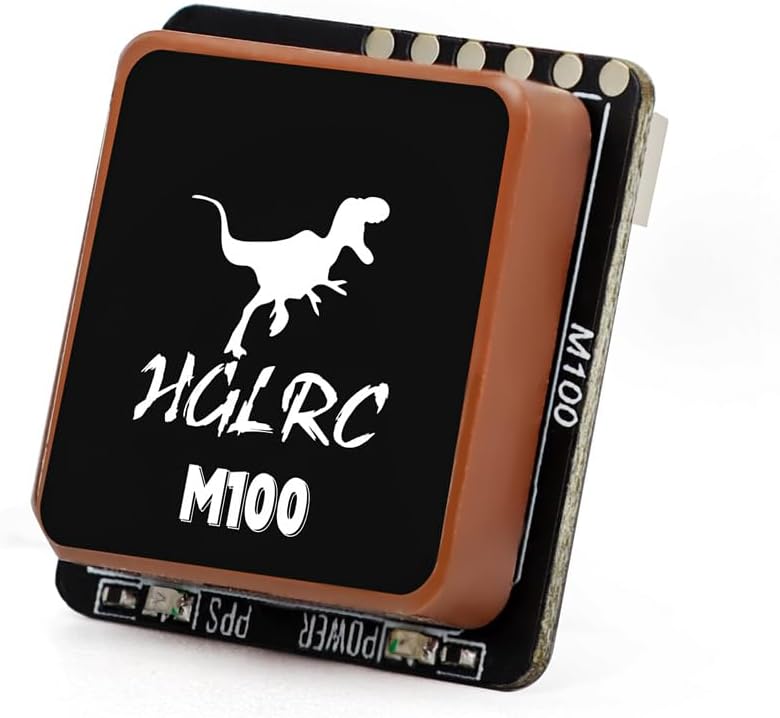


The HGLRC M100 Pro combines a tenth-generation positioning chip, a QMC5883L compass, and an expanded 120-channel receiving capability. Its 4.6 rating reflects generally positive buyer feedback, while the feature set makes it particularly relevant to FPV fixed-wing aircraft that need heading and position information for dependable navigation.
We may earn a commission when you buy through this link, at no additional cost to you.
The broad channel count is the module's defining specification. Receiving channels support the process of identifying available satellite signals, potentially improving acquisition behavior across different constellations and signal conditions. The ceramic antenna and upgraded chip are also designed around the needs of compact aircraft, where preserving weight and mounting space is important.
The principal caveat is that the supplied information does not spell out protocol support, physical dimensions, or connector details. Buyers using INAV, Betaflight, ArduPilot, PX4, or a proprietary flight controller should therefore verify the interface and configuration requirements before installation. The compass also needs to be placed away from motors, ESCs, batteries, and other sources of magnetic interference.
This is a strong choice for fixed-wing FPV builders who specifically want expanded reception and an integrated compass. It ranks highly as a feature-focused module, but pilots should confirm wiring and flight-controller compatibility before ordering. Once those details align, the combination of navigation sensing and a tenth-generation receiver makes it a compelling premium-oriented option.
The 120-channel receiver is the M100 Pro's most distinctive feature. More available channels can help the module evaluate a broader range of satellite signals during acquisition, which is valuable when working across several GNSS systems or changing signal environments.
The QMC5883L compass supplies the magnetic heading reference needed for direction-aware navigation. Proper placement away from interference sources remains essential for dependable heading readings in a working drone.
We may earn a commission when you buy through this link, at no additional cost to you.
The HGLRC M100-5883 is a small GPS and compass module built around an upgraded tenth-generation chip. It carries a 4.5 rating, supports GPS, Galileo, and BeiDou positioning, and weighs only 7.73 grams, making it appealing for compact FPV fixed-wing builds where every gram and millimeter matters.
We may earn a commission when you buy through this link, at no additional cost to you.
Its ceramic antenna and external expansion PCB are intended to improve the module's ability to receive satellite signals. The three-mode positioning system can draw on GPS, Galileo, and BDS satellites, while the QMC5883 compass provides direction data. A compact 21-by-21-millimeter footprint also leaves more room for battery, electronics, and airflow inside a small airframe.
The available specifications do not state the output protocol, UART configuration, connector arrangement, or whether it supports a 10Hz update rate. Those details can determine whether the module will connect directly to a given flight controller. As with any combined GPS and magnetic compass, the unit should be mounted where motors, current-carrying wires, and magnets will not distort the heading signal.
The M100-5883 is best suited to builders who prioritize a tiny, lightweight module with a tenth-generation receiver and integrated compass. It offers a more clearly documented size and weight than several alternatives, making it easier to plan around. Confirm electrical and protocol requirements first, then choose it for compact fixed-wing or FPV applications with tight space constraints.
At 21 millimeters square and 7.73 grams, the module is designed to fit where larger GNSS boards would be inconvenient. The small footprint is particularly useful for fixed-wing FPV aircraft with limited internal volume and strict weight targets.
GPS, Galileo, and BeiDou support gives the receiver access to three major satellite constellations. That breadth can assist acquisition and positioning when signals from different systems are available in the operating area.
We may earn a commission when you buy through this link, at no additional cost to you.
The HGLRC Mini M100 is a compact GPS module explicitly designed for 2- to 7-inch FPV racing drones. It has a 4.6 rating and combines a ceramic antenna with an externally expanded PCB, while accepting a broad 3.3- to 5-volt DC input range for easier integration with different drone electrical systems.
We may earn a commission when you buy through this link, at no additional cost to you.
Onboard power and PPS indicators make the operating state easier to examine during setup. A PPS signal can provide a useful timing reference when the flight controller and navigation software are configured correctly. Supporting aircraft from 2 inches through 7 inches gives the module a wide practical range, from very small freestyle or racing builds to larger multirotors with more room for a navigation system.
Its specifications do not mention an integrated magnetic compass, satellite constellations, protocol, or update rate. If your aircraft requires heading information for autonomous flight or return-to-home, you may need a separate compass and must configure the flight controller accordingly. The listed 3.3-5V input range is helpful, but connector type and signal levels should still be verified.
The Mini M100 is a practical choice for pilots adding GPS to a small FPV aircraft without accepting a large navigation package. Its clear status lights, broad voltage input, and stated size compatibility simplify early installation. It is best for builders who know their flight-controller protocol and can determine whether an external compass is required.
The stated support for 2- through 7-inch drones makes this module more versatile than units designed for one narrow platform. Builders should still check available mounting space, antenna orientation, and wire clearance before finalizing a layout.
Separate power and PPS indicators help confirm that the module is energized and receiving timing information. These visible cues can shorten setup and make troubleshooting more straightforward.
We may earn a commission when you buy through this link, at no additional cost to you.
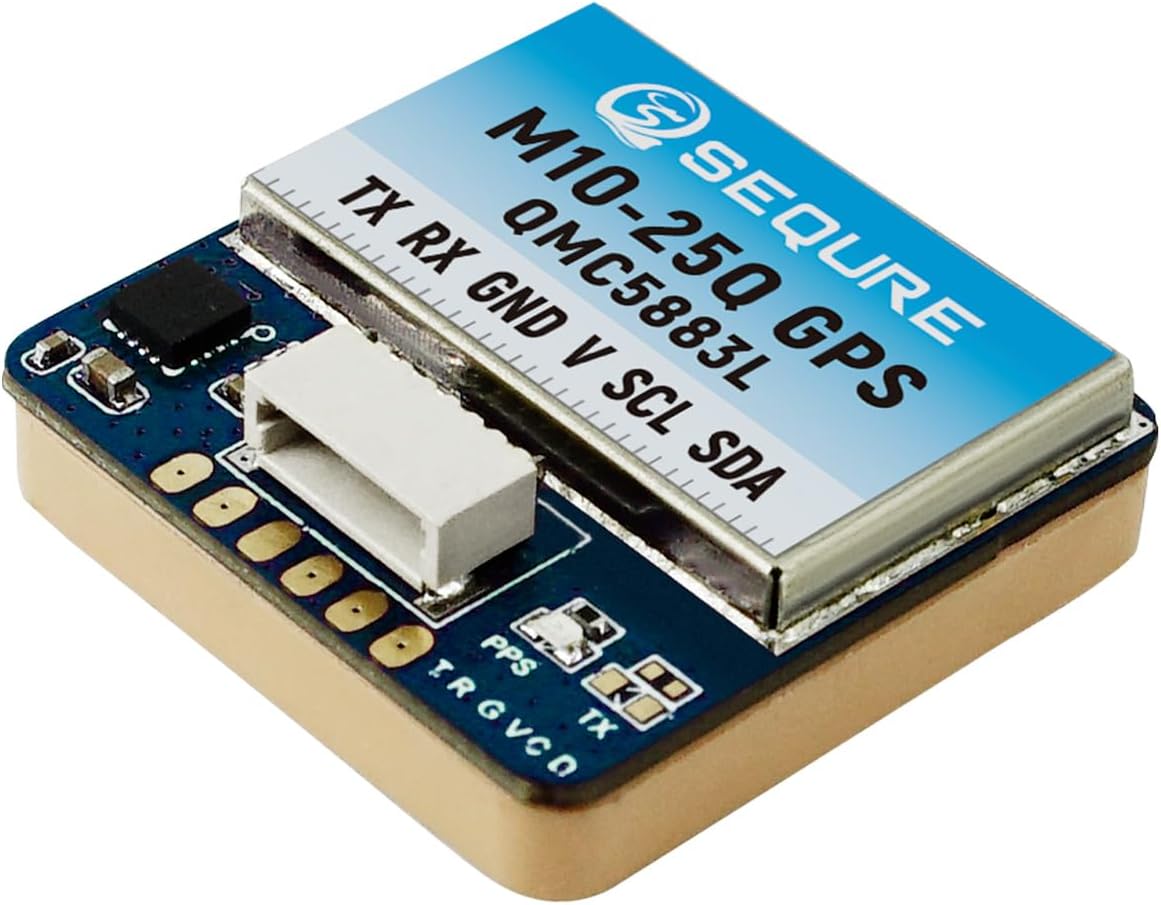
The SEQURE M10-25Q is a tenth-generation FPV GPS module with a 4.8 rating, a QMC5883L compass, and both plug-and-play and solderable connection options. Its 10Hz output rate and support for GPS, GLONASS, BDS, Galileo, SBAS, and QZSS make it one of the most feature-rich choices in this comparison.
We may earn a commission when you buy through this link, at no additional cost to you.
Multi-constellation support can improve the number of signals available for positioning, while the 10Hz rate suits navigation systems that process location data frequently. The ceramic antenna and expanded PCB are intended to strengthen reception. Buyers also gain installation flexibility because the module can be connected with a plug or soldered directly into a custom setup.
The product is described as best suited to 5-inch and larger UAVs, so pilots of tiny racing drones should look carefully at available space and mounting options. The specifications do not state operating-temperature limits, exact dimensions, or the precise connector arrangement. The QMC5883L compass also needs careful placement away from magnetic interference to deliver useful heading data.
This module is a strong all-around pick for FPV pilots who want broad constellation support, rapid position updates, and an integrated compass. It earns our budget recommendation because it combines several useful features without requiring a separate compass. Confirm the physical connector, flight-controller settings, and antenna position before installation, especially on a compact custom build.
A 10Hz output frequency provides regularly refreshed position information for the flight controller. The six supported satellite systems offer a broad signal pool, which can be useful in varied surroundings.
The choice between a plug-in connection and direct soldering allows builders to work with different build preferences. This is useful during prototyping and makes the module approachable for a custom FPV installation.
We may earn a commission when you buy through this link, at no additional cost to you.
The JeeFly M8N is a high-sensitivity 72-channel Ublox M8N GNSS receiver designed for Pixhawk, PX4, and F4 or F7 flight controllers. It includes a built-in compass, mounting base, and 270-millimeter cable, and its 10Hz update rate targets responsive navigation, autonomous missions, and return-to-home functions.
We may earn a commission when you buy through this link, at no additional cost to you.
The receiver can track GPS, GLONASS, BeiDou, and QZSS signals simultaneously, with a stated capability of following more than 26 satellites. The supplied accuracy figures are 0.5 meters generally and 30 centimeters under ideal conditions. LED indicators also distinguish power state from satellite-search and lock status, helping users monitor the receiver during setup.
Compatibility is not universal. The listing explicitly says the module does not support APM and that some Pixhawk models may require a firmware update. Because it is intended for larger flight-control ecosystems rather than the smallest racing builds, cable routing and antenna placement need adequate space. The current customer rating is not listed, so the technical specifications carry more weight in this evaluation.
The M8N is a strong option for autonomous FPV aircraft, RC platforms, robots, and Pixhawk-based projects that need multi-GNSS tracking and a mature flight-control connection. Its combination of high channel count, 10Hz updates, status LEDs, and a long cable makes installation and troubleshooting approachable. Verify the exact Pixhawk model, connector pinout, and firmware before committing to the installation.
The 72-channel receiver and simultaneous use of four major GNSS systems provide a substantial signal-processing foundation. That is valuable for autonomous aircraft and robots whose navigation depends on consistent position updates.
The included 270-millimeter cable can simplify routing to compatible flight controllers, while the blue lock and red power LEDs provide an immediate visual indication of receiver status. Pinout compatibility should still be confirmed for the chosen controller.
We may earn a commission when you buy through this link, at no additional cost to you.
The Readytosky M10 is designed specifically for the Pixhawk 2.4.8 flight controller and includes a separate external compass and GPS holder. Its 4.2 rating is lower than the leaders, but the focused compatibility and external compass arrangement may make it a practical match for builders who already use that controller.
We may earn a commission when you buy through this link, at no additional cost to you.
The module uses a new-generation M10 receiver with low power consumption and a stated ideal-environment positioning accuracy of 1.5-meter CEP. Onboard flash preserves configuration changes after power is removed, reducing the need to repeat configuration steps. The external compass also gives builders more freedom to locate the magnetometer away from motors and power electronics.
The most important limitation is explicit: the GPS can only be used with a Pixhawk flight controller and cannot work with other controllers. That narrow focus reduces its appeal for the broader drone audience, particularly anyone using INAV, Betaflight, ArduPilot, or PX4. Connector orientation and the specific Pixhawk 2.4.8 version should also be checked before installation.
For a pilot building around the Pixhawk 2.4.8, this module offers a logical combination of M10 positioning, an external compass, a holder, and persistent configuration. It is not a universal choice, and its platform restriction outweighs the otherwise useful feature set. Buy it when your exact flight controller is already known and the dedicated compatibility is worth more than broader options.
Onboard flash stores setup changes so they remain after the system loses power. This is convenient for projects where repeated compass or receiver configuration would otherwise be necessary.
Separating the compass from the GPS board allows it to be mounted away from interference-producing components. That control over magnetic sensor placement is especially valuable in multirotor builds with powerful motors and tightly packed electronics.
We may earn a commission when you buy through this link, at no additional cost to you.
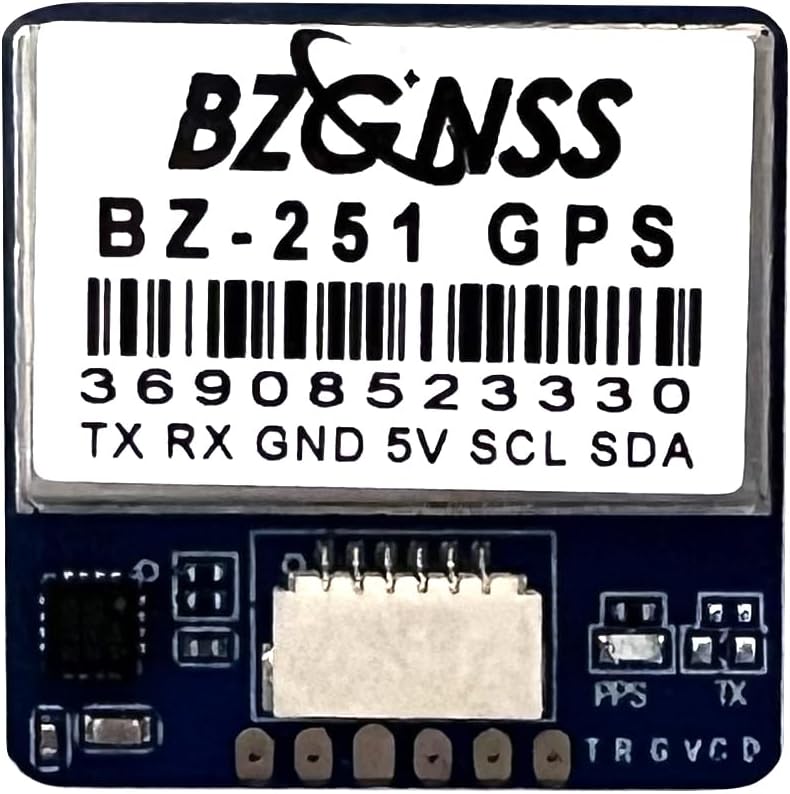
The BZGNSS BZ-251 Dual Protocol uses the Ublox M10 chipset to provide fast satellite acquisition and stable positioning for FPV rescue and fixed-wing aircraft. Its 5.0 rating is the highest numerical rating in the list, and it supports NMEA and UBX protocols with position updates available at up to 10Hz.
We may earn a commission when you buy through this link, at no additional cost to you.
Its strongest use case is providing dependable location information to a compatible flight controller for failsafe and automatic return-to-home behavior. The default GPS, GLONASS, and BDS configuration searches across three satellite systems and offers a stated 2D accuracy of 1.5 meters. Dual protocol support also gives installers more flexibility when matching receiver settings to a flight controller.
The module uses a thin ceramic antenna treated with an oil-spraying process intended to resist scratching and oxidation. The listing states compatibility with F4 and F7 flight controllers, but exact UART wiring, baud-rate settings, and connector details still need confirmation. Pilots should test the entire failsafe sequence in a safe environment rather than assuming a successful satellite lock proves return-home behavior works.
This is our editor's choice for pilots prioritizing dependable rescue navigation and protocol flexibility. The M10 receiver, 10Hz output, and multi-GNSS support form a well-balanced feature set for fixed-wing and FPV aircraft. It is also a sensible pick for anyone who wants a straightforward module without sacrificing configuration options.
Providing accurate location data is the foundation of automated return-to-home behavior. The BZ-251 is aimed squarely at fixed-wing and FPV rescue use, where a dependable failsafe response can be more valuable than extra physical features.
Supporting both NMEA and UBX protocols helps simplify matching the receiver to different flight-controller configurations. A 10Hz refresh rate also suits systems that process position updates frequently, although successful use still depends on correct wiring and configuration.
We may earn a commission when you buy through this link, at no additional cost to you.
The BZGNSS BZ-251 is a compact M10 dual-protocol GPS module aimed at RC FPV racing, fixed-wing, and long-range aircraft. It has a 4.4 rating, supports NMEA and UBX, and is listed as compatible with F405 and F722 flight controllers, making it a focused option for builds using those platforms.
We may earn a commission when you buy through this link, at no additional cost to you.
The module is described as lightweight and easy to mount, which is valuable on fixed-wing aircraft where every gram contributes to flight performance. Its built-in battery is intended to eliminate problems caused by poor battery connections during startup, while the M10 architecture and BDS support are designed for rapid satellite acquisition and dependable positioning.
Unlike the similarly named Dual Protocol BZGNSS product in seventh place, this listing does not state a 10Hz update rate, numerical accuracy, or built-in compass. That makes it difficult to compare raw performance specifications directly. The listed F405 and F722 compatibility also narrows the intended audience, so pilots using other flight controllers should confirm pinout and protocol requirements in advance.
The BZ-251 is best for compact fixed-wing and long-range builds using F405 or F722 controllers where a small module and easy installation matter. The integrated battery is a practical differentiator for field operation. It deserves consideration for those who value simple mounting and broad protocol support, though pilots needing a compass or specified high refresh rate may prefer the more detailed alternative.
The built-in battery is intended to reduce startup issues associated with an unreliable power connection. That can be particularly helpful when a fixed-wing aircraft is being prepared outdoors or launched in a location where repeated troubleshooting is inconvenient.
The small, lightweight design suits fixed-wing and long-range aircraft that need navigation data without carrying unnecessary bulk. Rapid satellite acquisition is valuable for missions where a quick lock reduces preflight waiting.
We may earn a commission when you buy through this link, at no additional cost to you.
The AERO SELFIE FK-C1 M9 is a 20-by-20-millimeter GNSS module weighing 7 grams, with an integrated IST8310 magnetic compass. It uses a ninth-generation M9 chipset and supports GPS, GLONASS, Galileo, and BeiDou, with a stated capability of working with up to 32 satellites.
We may earn a commission when you buy through this link, at no additional cost to you.
Its compact dimensions make it well suited to FPV and racing drones where internal space is limited. The integrated compass avoids the need to arrange a separate magnetometer, while the 80mA power figure and broad operating range of minus 20 to 80 degrees Celsius are useful for mobile platforms. A blue LED blinks at 1Hz after a three-dimensional GNSS fix is acquired, offering a simple installation check.
The ninth-generation chip is less recent than the tenth-generation receivers used by several competing products, and the current customer rating is not available. Protocol, connector, and update-rate details are also absent from the supplied information. While the integrated compass reduces one installation task, it still must be mounted away from motors and other magnetic interference.
The FK-C1 M9 is a good fit for small FPV aircraft that need GNSS and heading sensing in a single compact package. It is particularly attractive when adding a separate compass would be difficult. Confirm that your flight controller accepts the module's interface and that its configuration supports the available constellations before installing it.
At 20 millimeters square and 7 grams, the module preserves valuable space and weight in compact aircraft. Integrating the compass into that small footprint further reduces the number of separate navigation components.
The blue LED's one-hertz blinking pattern indicates a three-dimensional GNSS fix. This gives builders an immediate visual check that satellite positioning has been acquired before attempting a powered flight.
We may earn a commission when you buy through this link, at no additional cost to you.
The FK-D1 GNSS is a tenth-generation receiver for drones and robotics with a 10Hz update rate, support for up to 32 satellites, and a UART interface. It weighs 12 grams and includes a QMC5883L magnetic compass, combining position and heading sensing in a single unit.
We may earn a commission when you buy through this link, at no additional cost to you.
GPS, GLONASS, BeiDou, and Galileo support gives the module access to four major satellite constellations. Its high-gain 25-by-25-by-4-millimeter ceramic antenna is designed to support reception in challenging locations such as urban areas and dense natural cover. Onboard flash preserves user settings, avoiding the need to repeat configuration after every power cycle.
Software compatibility is a major strength, with support stated for INAV, Betaflight, ArduPilot, and PX4. Even so, pilots should confirm the appropriate firmware settings, UART assignment, baud rate, and connector arrangement. The 12-gram weight and 25-millimeter antenna make it less appropriate for the smallest racing aircraft than several ultra-compact alternatives.
The FK-D1 is a versatile choice for drone and robotics projects that need fast updates, broad constellation support, and compatibility with several common flight-control platforms. It is especially relevant to builders who want persistent settings and an integrated compass. Confirm the antenna placement and compass calibration, then select it when software flexibility matters more than minimum weight.
Compatibility with INAV, Betaflight, ArduPilot, and PX4 makes the FK-D1 useful across several common navigation ecosystems. Correct baud rates, protocol choices, and port assignments remain necessary for a successful setup.
Onboard flash stores user settings between power cycles. This reduces repetitive setup work and helps maintain a consistent receiver configuration across routine field operations.
We may earn a commission when you buy through this link, at no additional cost to you.
Choosing a drone GPS module requires balancing satellite capability, compass placement, electrical constraints, protocol support, and the flight controller being used. The most feature-rich receiver is not automatically the best choice if it cannot connect to the aircraft or fit the available space.
Start with the exact flight-controller model and the firmware it runs. The Readytosky M10 is restricted to the Pixhawk 2.4.8 and explicitly does not work with other controllers, while the JeeFly M8N supports Pixhawk, PX4, and F4 or F7 platforms but excludes APM. The FK-D1 states support for INAV, Betaflight, ArduPilot, and PX4, giving it unusually broad software reach. Other compact modules can be suitable for FPV builds, but their listings do not always identify supported protocols, so verify the flight-controller documentation before buying.
Multi-GNSS support allows a receiver to use signals from more than one satellite system. The SEQURE M10-25Q lists GPS, GLONASS, BDS, Galileo, SBAS, and QZSS, while the FK-D1 supports four major constellations and tracks up to 32 satellites. The JeeFly M8N combines four systems in a 72-channel receiver. Broader constellation access can be useful around buildings and wooded areas, although actual performance still depends on signal visibility, antenna quality, and placement. Do not assume a multi-constellation label guarantees a fix in every environment.
A magnetic compass supplies heading information, which is required for direction-aware navigation and many autonomous-flight features. The HGLRC M100 Pro, HGLRC M100-5883, SEQURE M10-25Q, FK-D1, and AERO SELFIE FK-C1 M9 list integrated compass sensors. The Readytosky M10 instead provides an external compass, giving installers more freedom to separate it from noisy electronics. Whichever arrangement is chosen, keep the magnetometer away from motors, ESCs, high-current wiring, magnets, and carbon fiber where practical, and complete calibration in the final aircraft configuration.
Update rate describes how frequently the receiver provides a new position solution. A 10Hz rate offers ten updates per second, which can benefit responsive navigation, autonomous missions, and return-to-home logic. The SEQURE M10-25Q, JeeFly M8N, BZGNSS Dual Protocol, and FK-D1 all state 10Hz support. Higher frequency does not automatically make the aircraft more accurate, but it can make position data more current. Ensure the flight controller, protocol, cable quality, and software settings can process the selected rate without introducing bottlenecks.
FPV racing aircraft leave little room for a navigation board, while fixed-wing and autonomous platforms often prioritize endurance and reliable positioning over minimum weight. The HGLRC M100-5883 and AERO SELFIE FK-C1 M9 are especially compact, measuring 21 and 20 millimeters square and weighing 7.73 and 7 grams respectively. The JeeFly M8N uses a larger antenna assembly and a long cable, while the FK-D1 weighs 12 grams. Select a size that leaves room for the antenna, wires, airflow, and safe antenna orientation rather than judging only by board dimensions.
The BZGNSS modules in seventh and eighth place support both NMEA and UBX, giving builders flexibility when matching receiver behavior to a flight controller. Some smaller HGLRC and SEQURE modules offer plug-and-play or solderable connections, but connector type and pinout are not always stated. Check whether the supplied cable or header matches the controller, whether the logic levels are appropriate, and whether the chosen firmware expects a specific baud rate. A physical fit is not the same as electrical or software compatibility.
Power requirements determine whether the module can share a regulator with the rest of the aircraft or needs separate conditioning. The HGLRC Mini M100 accepts 3.3-5V DC input, and the BZGNSS BZ-251 in eighth place uses a built-in battery intended to reduce startup problems from poor connections. The AERO SELFIE FK-C1 M9 specifies an 80mA power draw and an operating range of minus 20 to 80 degrees Celsius, while the JeeFly M8N claims a wider minus 40 to 85 degree range. Confirm electrical and environmental requirements against the intended flying environment.
The antenna is a central part of the GNSS system, so its design and placement can matter as much as the receiver chip. Ceramic antennas appear throughout this comparison, including the 25-by-25-by-4-millimeter high-gain antenna in the FK-D1. The BZGNSS Dual Protocol uses an oil-sprayed ceramic antenna intended to resist scratching and oxidation. Position the antenna with the recommended sky-facing orientation and keep it clear of carbon-fiber skins, batteries, and conductive frame parts. A clean, correctly mounted antenna also makes a meaningful difference during initial satellite acquisition.
Begin by identifying the flight controller's supported GNSS type, protocol, connector, and baud rate. Compare those requirements with the module specifications, then power the receiver on the bench before mounting it. Watch the status LEDs to confirm power and satellite acquisition, and use the flight controller's configuration interface to select the appropriate constellation and update-rate settings.
Mount the antenna where it has the clearest view of the sky, following the manufacturer's orientation guidance. If the module includes a compass, keep that sensor away from motors, magnets, ESCs, and current-carrying wires. Secure the board without covering the antenna, route cables to prevent vibration or sharp bends, and avoid placing conductive components directly over the patch antenna.
Complete compass calibration only after the aircraft is fully assembled, because nearby electronics and the airframe can affect the magnetic field. Test satellite acquisition with the motors off, then repeat the check in the intended flight area. Validate position stability, heading direction, and failsafe behavior before relying on autonomous flight or return-to-home. Periodically inspect connectors, mounting points, antenna surfaces, and configuration settings after crashes or major airframe changes.
A GPS module supplies position and often heading data that a flight controller can use for navigation, rescue logic, and return-to-home features. It does not automatically make a drone autonomous; the flight controller firmware and configuration must support the receiver and the required functions. A basic FPV freestyle craft may not need GPS, while fixed-wing and long-range aircraft often benefit from it.
No. Several modules in this guide include a QMC5883L or IST8310 magnetic compass, while the Readytosky M10 uses an external compass and other listings do not specify one. A compass is needed for reliable heading information, which supports direction-aware navigation. If the chosen module lacks one, confirm that your flight controller can work with a separate compass and that there is room to mount it away from interference.
NMEA and UBX are different ways of transmitting or interpreting GNSS data. NMEA uses a standardized sentence format, while UBX is associated with u-blox receiver configuration and binary data. Some modules support both, giving installers more flexibility. The flight controller firmware must be configured for the correct protocol and baud rate, and mismatched settings can prevent a valid position fix.
A 10Hz update rate means the receiver can provide position information ten times per second, making the data more current. It does not automatically reduce the fundamental error of the position solution or guarantee better accuracy. Antenna quality, satellite visibility, multipath interference, and system configuration still influence actual performance.
Mount the antenna with its recommended face pointing toward the sky and with the clearest available view of satellites. Keep it away from carbon-fiber plates, batteries, metal fasteners, and other conductive or shielding materials. Soft foam can provide vibration isolation, but it should not block the antenna or press on sensitive components. Test signal acquisition in the area where the aircraft will actually fly.
Some modules do, but compatibility depends on the electrical interface, UART settings, protocol, and firmware. The FK-D1 states support for INAV, Betaflight, ArduPilot, and PX4, while the JeeFly M8N supports Pixhawk, PX4, and F4 or F7 platforms but excludes APM. The Readytosky M10 is much narrower and is specified only for Pixhawk 2.4.8.
A satellite lock means the receiver has acquired enough signal information to produce a position, but it does not guarantee that the position or heading is accurate in the aircraft's installed environment. Magnetic interference, antenna placement, multipath reflections, an incorrect home coordinate, or an uncorrected compass can all affect navigation. Verify the home point and test failsafe behavior in a safe area before relying on it.
It depends on the flight controller, available space, and whether the drone needs heading-based navigation. Some compact modules include a compass, while others require a separate sensor. A separate compass can be easier to place away from interference, but it adds wiring, weight, and another calibration step. Tiny racing builds should prioritize adequate antenna clearance and reliable positioning over adding features they will not use.
The BZGNSS BZ-251 Dual Protocol stands out for its 5.0 rating, u-blox M10 receiver, NMEA and UBX support, and focus on dependable failsafe and return-to-home navigation. The SEQURE M10-25Q is an excellent budget-oriented all-rounder with a QMC5883L compass, 10Hz output, and broad satellite support, while the HGLRC M100 Pro offers expanded 120-channel reception for FPV fixed-wing applications.
Beyond those leading picks, the best module depends on the aircraft. The JeeFly M8N is appropriate for Pixhawk, PX4, and compatible F4 or F7 systems, the FK-D1 supports several common navigation platforms, and the ultra-compact HGLRC Mini M100 and AERO SELFIE FK-C1 M9 suit weight-sensitive FPV builds. Verify controller compatibility, connector details, protocols, antenna placement, and compass interference before ordering.
Product availability, specifications, ratings, and prices can change, so review the current listing before making a purchase. Comparing the module's physical dimensions and electrical requirements against the completed airframe is just as important as comparing chipset headlines. A correctly connected, properly placed, and thoughtfully configured module will be more useful than one with a longer feature list but an incompatible design.