
Donner Tutti Love Chorus
4.4Editor score
Warm classic analog chorus
Three practical effect controls
True bypass switching
Explore the best chorus vibrato pedals for guitars, comparing tone, controls, connectivity, modulation styles, and features for every budget.
Chorus and vibrato pedals create movement by subtly altering pitch, delay, and signal texture, giving clean guitars shimmer and making single notes sound richer. The best unit depends on whether you want a restrained doubling effect, a deep analog sweep, expressive tempo control, or a versatile modulation platform suited to changing genres.
We compared all ten pedals using their supplied specifications, control layouts, signal paths, connectivity, and customer ratings. The list covers dedicated chorus/vibrato designs, compact analog pedals, premium bucket-brigade models, and a multi-effect option, allowing readers to compare sound character and practical features without relying on personal testing claims.
Each review explains the pedal's strongest contribution, meaningful trade-offs, and likely audience. From the Donner Tutti Love to the BOSS CE-2W and Walrus Audio Julianna Deluxe, the picks show how modulation depth, LFO behavior, stereo routing, and control depth change the playing experience. Product availability and prices can change.
4.4Editor score
4.6Editor score

4.5Editor score
This side-by-side comparison highlights each pedal's core controls, sound approach, connectivity, and practical advantages, helping narrow the field before reading the complete reviews.




The MXR Uni-Vibe is a focused chorus and vibrato pedal built around a simple premise: deliver the recognizable movement of classic late-sixties modulation without turning the control panel into a laboratory. Its 4.4 rating reflects a well-liked balance of usable tones and straightforward operation, and the defining advantage is its relatively uncluttered interface.
We may earn a commission when you buy through this link, at no additional cost to you.
Only three knobs are needed to shape the effect, making the Uni-Vibe approachable during rehearsals, live sets, or quick pedalboard changes. True bypass is valuable for guitarists who want a transparent inactive signal, while the dedicated design keeps the function centered on chorus and vibrato rather than spreading attention across unrelated effects. It is a natural fit for players who already understand basic rate and depth adjustments.
The trade-off is limited depth. With no tap tempo, multiple LFO shapes, expression control, or stereo routing listed, it cannot match the Julianna Deluxe or EHX Eddy for experimental or performance-driven modulation. Its appeal lies in restraint: fewer settings can make it easier to build repeatable sounds, especially when a guitarist wants an established classic texture rather than an endlessly variable effect.
Choose the Uni-Vibe when musical simplicity, vintage character, and quick operation matter most. It is a strong candidate for a first chorus pedal, a compact pedalboard, or a player who wants one dependable modulation sound instead of a large feature set. Its restrained design makes it one of the most approachable options in this roundup.
The three-knob layout keeps the learning curve short. It is a strong option for guitarists who want a familiar modulation voice and can dial in a useful sound with minimal interruption.
True bypass supports players who care about preserving the guitar's baseline signal. This makes the Uni-Vibe easier to combine with other pedals without leaving an always-active effect in the chain.
We may earn a commission when you buy through this link, at no additional cost to you.
The FLAMMA FC05 is built for players who want more than one modulation sound in a limited pedalboard space. Its 4.2 rating comes with an unusually broad feature set: eleven classic modulation categories covering chorus, flanger, tremolo, phaser, vibrato, rotary, liquid, auto wah, stutter, ring, and low bit. The chorus and vibrato options sit inside a broader experimental toolkit.
We may earn a commission when you buy through this link, at no additional cost to you.
The full metal shell adds durability, while the tiny enclosure makes the pedal easy to carry between rehearsals, gigs, and recording sessions. That portability is especially useful for electric guitarists who rotate effects but do not want to give up flanger, tremolo, or rotary sounds. The bright color also makes the unit easy to identify on a crowded board.
The compromises are practical rather than creative. A 9V 150mA power supply is not included, so players must have an appropriate adapter or a pedalboard power source ready. A multi-effect format may also demand more time to learn than a pedal dedicated solely to chorus and vibrato. Those factors make the FC05 more relevant as a value-oriented modulation toolbox than a specialist studio chorus.
Buy the FC05 if pedalboard space is limited and you want to experiment with several moving effects. It is especially attractive for a guitarist building a starter board around one compact modulation unit. Those who want precise tone shaping in a single chorus should instead examine the Donner, MXR, or BOSS options.
Eleven effect types make this a practical multi-tool for guitarists who want flanger, tremolo, rotary, and other movements without carrying separate pedals. It broadens the creative range at the cost of specialization.
The compact metal housing protects the effects while remaining easy to transport. It is a practical choice for rehearsals, lessons, and gigs where board size matters.
We may earn a commission when you buy through this link, at no additional cost to you.
The Walrus Audio Julianna Deluxe is the most performance-oriented pedal in this group, offering tap tempo, three LFO shapes, a secondary LFO control, drift, and flexible routing. Its 4.5 rating indicates a well-received balance of sophisticated modulation and genuine musical flexibility, making it a compelling premium option for guitarists who use effects as part of an arrangement.
We may earn a commission when you buy through this link, at no additional cost to you.
Tap tempo is the standout practical feature. A guitarist can set the rate manually with the Rate knob or use the tap switch, which makes it easier to align moving textures with a performance. The momentary secondary LFO speed function allows temporary acceleration or slowing, while the Drift function gently moves the primary rate over time. Sine, triangle, and random LFO shapes produce noticeably different motion rather than merely repeating one animation.
Stereo flexibility also makes this more than a conventional one-output chorus. It can run mono in and mono out, mono in and stereo out, or stereo in and stereo out. That opens greater rhythmic and spatial possibilities, particularly for clean passages, ambient textures, and live rigs with room for a stereo signal path. The cost is added complexity compared with simple three-knob units.
The Julianna Deluxe suits players who want to manipulate modulation during a song rather than merely select a preset. It is well suited to ambient work, experimental rock, cinematic passages, and any performance where changing LFO behavior in real time adds value. For simpler needs, the MXR or Donner may be easier to operate, but expressive players receive considerably more range here.
Tap tempo and three selectable LFO shapes make it easier to relate modulation to the music. These controls support both rehearsed tempos and spontaneous changes during a performance.
The three supported input and output combinations offer practical options for stereo amps, recording systems, and effect loops. They also let a guitarist introduce width without abandoning a mono source.
We may earn a commission when you buy through this link, at no additional cost to you.
The Electro-Harmonix Eddy approaches chorus and vibrato through a bucket-brigade-based analog signal path, with a rating of 3.9. Its strongest distinction is the range of control over pitch movement: the pedal supports envelope control, expression-pedal control, LFO shape warping, and a dedicated tone control.
We may earn a commission when you buy through this link, at no additional cost to you.
Envelope and external expression control make the Eddy responsive in ways that a fixed-rate pedal cannot be. Instead of relying entirely on a knob setting, the guitarist can influence modulation rate and depth while playing. LFO shape warping moves beyond the standard waveform to asymmetric movement, which can create more irregular and organic textures. The Tone control adds another layer of refinement to the final signal.
Its lower 3.9 rating is the least favorable figure in the group, so prospective buyers should consider whether its dynamic features align with their playing style. A guitarist who only wants a stationary classic chorus may find the Eddy unnecessarily involved. The pedalboard-friendly footprint is positive, but the complement of controls remains more substantial than that of the MXR or Donner.
The Eddy is best for players who enjoy touching a pedal while performing and want an analog, dynamically responsive modulation sound. It may suit ambient, experimental, and textural music particularly well. Those seeking simple, repeatable tones should look toward the Donner or JHS 3 Series instead.
Envelope and expression control let the modulation respond to the performance rather than remain entirely static. This is valuable for expressive, evolving textures.
The ability to shift from standard to asymmetric LFO shapes broadens the range of movement. It can produce a less predictable character than conventional fixed-shape modulation.
We may earn a commission when you buy through this link, at no additional cost to you.
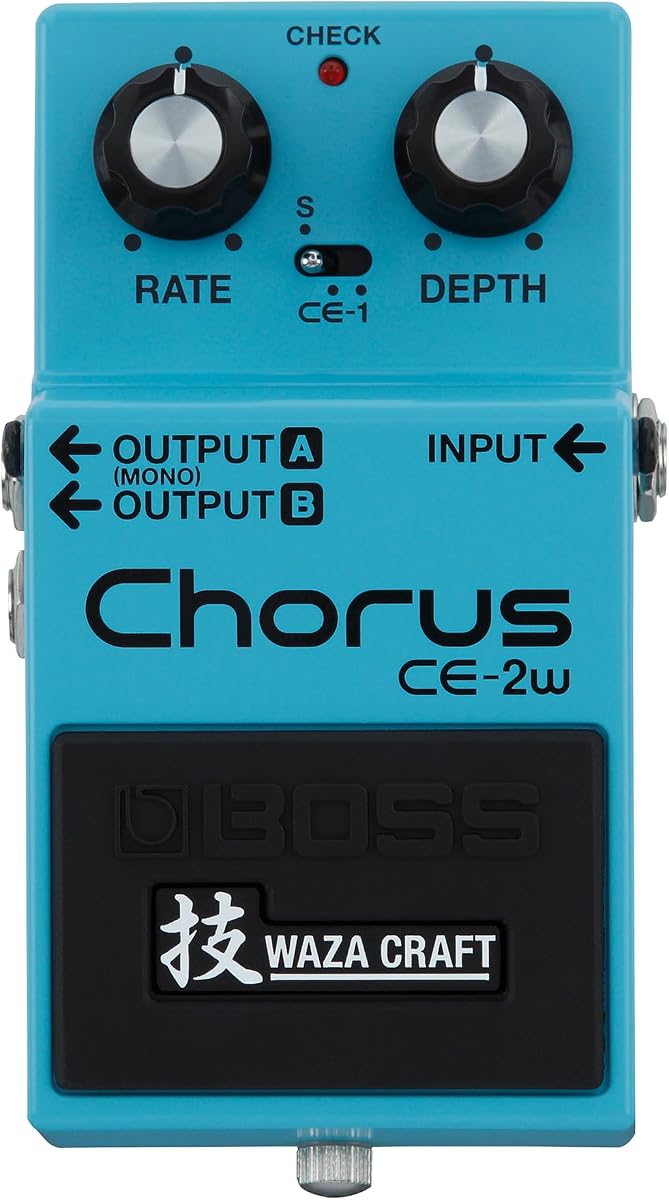
The BOSS CE-2W combines a premium all-analog circuit and bucket-brigade delay line with the refined control set of BOSS's Waza Craft line. Its 4.6 rating is among the strongest in the comparison, signaling broad satisfaction among users who value established chorus character and straightforward adjustment.
We may earn a commission when you buy through this link, at no additional cost to you.
The defining technical feature is the premium bucket-brigade circuitry, which provides the foundation for the pedal's chorus voice. Rate and Depth knobs allow fine adjustment in the pedal's operating modes, supporting anything from controlled movement to more pronounced modulation. As a dedicated chorus pedal, it focuses attention on one effect instead of spreading features across a larger menu.
The trade-off is that its performance-control set is less elaborate than the Julianna Deluxe's. There is no listed tap tempo, random LFO shape, drift function, or flexible stereo routing. For many players, that is a strength: a smaller set of meaningful controls can be easier to remember under pressure. The premium circuit and established BOSS design also make it more of a focused instrument than an experimental toolbox.
Choose the CE-2W when you want a refined, classic chorus that can handle both understated and obvious modulation. It suits players who appreciate BOSS pedal design, favor analog bucket-brigade coloration, and want a dependable centerpiece for the board. It is one of the strongest all-around recommendations in the roundup.
The all-analog BBD architecture is central to the CE-2W's identity. It gives the dedicated chorus a strong technical foundation for a recognizable, musical modulation voice.
Separate Rate and Depth controls make the essential sound-shaping decisions visible. The pedal offers enough precision for nuanced settings without an extensive interface.
We may earn a commission when you buy through this link, at no additional cost to you.
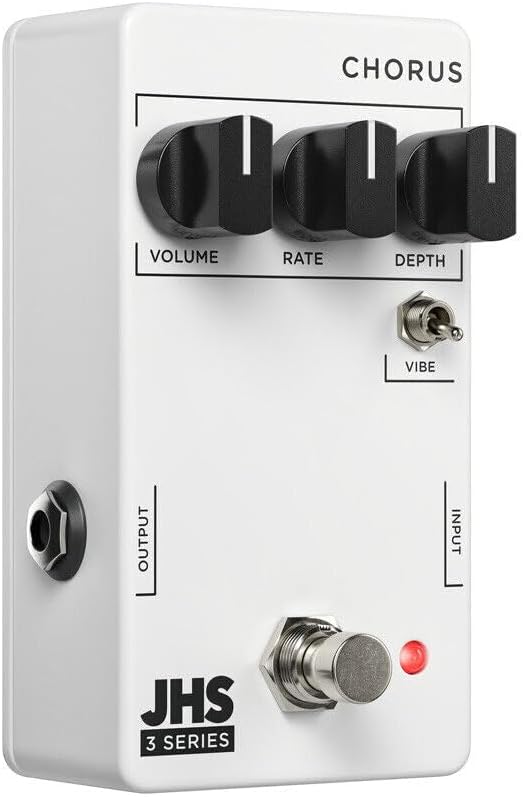
The JHS 3 Series Chorus provides classic chorus and vibrato sounds with a direct layout and a 4.6 rating, placing it among the most well-reviewed products here. Its key design choice is the Vibe toggle, which removes the dry signal to create a simpler true pitch vibrato without the underlying unmodulated voice.
We may earn a commission when you buy through this link, at no additional cost to you.
The Rate and Depth knobs work together to cover a wide range of results, from subtle doubling to pronounced seasick waves. This makes the pedal useful across clean passages, sustained chords, and melodic lead work where the balance between direct signal and modulation changes significantly. The Vibe mode provides a shortcut to a more pure vibrato texture without requiring another pedal.
Compared with the Walrus Julianna Deluxe, the JHS lacks advanced performance features such as tap tempo, drift, random waves, and multiple routing configurations. It is also a mono pedal, and the supplied information does not indicate a stereo output. The comparatively modest 70mA consumption can be helpful when planning power requirements, though the adapter is not mentioned in the supplied data.
Choose the 3 Series when you want an adaptable chorus-vibrato pedal that can shift between doubled and true vibrato sounds. It is a good match for guitarists who appreciate straightforward controls but need more tonal range than a single-mode chorus. It also performs well as an everyday modulation pedal because its central controls are easy to understand.
The Vibe toggle removes the dry signal, creating a more pure pitch effect. This gives players a quick transition between blended chorus and isolated vibrato.
Rate and Depth can move from subtle doubling to deep, unstable waves. Their combination offers a broad expressive range without complex menus.
We may earn a commission when you buy through this link, at no additional cost to you.
The Donner Tutti Love is a straightforward analog chorus pedal aimed at guitarists who want a familiar warm effect without a large feature set. Its 4.4 rating indicates a well-received product, and the combination of traditional tone, true bypass, and a practical control layout makes it an approachable option for beginners and value-focused players.
We may earn a commission when you buy through this link, at no additional cost to you.
The pedal uses a natural wave curve to reproduce a classic warm chorus associated with jazz, rock, and pop. Beyond the traditional Depth and Rate parameters, it includes a Level knob, giving the player direct control over how prominently the modulated signal appears. True bypass provides a transparent path when the pedal is switched off, and an LED indicates the active state.
The main limitation is scope. It is designed for chorus rather than advanced vibrato performance, with no listed tap tempo, expression control, multiple LFO shapes, or stereo routing. It also requires 9V DC power, and the power supply is not included. The aluminium-alloy enclosure is described as stable and strong, which is reassuring for regular transport.
The Tutti Love is a strong first pedal, practice-room choice, or straightforward board addition. Choose it when you need dependable warm chorus, want to support both electric guitar and bass, and prefer a simple control layout. It is also a sensible way to explore modulation without committing to a more complex or premium model.
The natural wave curve is designed to produce a classic, warm chorus suited to jazz, rock, and pop. It is a versatile starting point for clean guitar textures.
A dedicated Level knob gives the player direct control over the effect's presence. It is helpful when pairing the pedal with instruments or amplifiers that need different blend levels.
We may earn a commission when you buy through this link, at no additional cost to you.
The BOSS CH-1 Super Chorus has the highest customer rating in this roundup at 4.7, reflecting the enduring appeal of a clear, classic chorus pedal. Designed for guitar and keyboards, it emphasizes brilliant tone, definition, and enough modulation to explore neighboring textures such as vibrato and flanger.
We may earn a commission when you buy through this link, at no additional cost to you.
Its four main controls—Effect Level, EQ, Rate, and Depth—provide a straightforward way to balance the effect and shape its brightness. This is particularly important for lead guitarists, because the supplied description highlights clarity and edge that helps the sound cut through a mix. The pedal can move beyond a fixed chorus identity into more modulated territory when the controls are pushed.
Connectivity is another strength. The CH-1 offers mono input and stereo outputs, allowing use with dual amplifier setups and adding flexibility to larger rigs. It includes a five-year BOSS manufacturer warranty, another practical advantage for buyers. However, the optional PSA adaptor is recommended, and the classic control set has no listed tap tempo, expression input, or alternate waveform functions.
Choose the CH-1 for a dependable, articulate chorus with clear presence. It is particularly well suited to lead players, pedalboard builders, and anyone who values stereo output options without needing a complex interface. Its 4.7 rating makes it a strong confidence-oriented recommendation, although actual compatibility and sound should always be evaluated in the player's own setup.
The CH-1's clean, brilliant design and dedicated EQ control help the modulated signal remain present. This makes it useful when a lead needs definition rather than a heavily veiled background texture.
Mono input and stereo outputs support dual-amplifier configurations. The feature is valuable for players who want to use chorus as part of a wider stereo sound.
We may earn a commission when you buy through this link, at no additional cost to you.
The Walrus Audio Julia V2 is a feature-rich analog chorus and vibrato pedal built to cover everything from mild smoothing to pronounced seasick movement. Its 4.3 rating places it solidly within the group, while its most important feature is the Lag control, which sets the center delay time from which the LFO effect modulates.
We may earn a commission when you buy through this link, at no additional cost to you.
That center-delay control changes how the pedal's modulation is perceived. Instead of only adjusting speed and intensity, the guitarist can alter the underlying delay relationship and explore different tonal landscapes. The result is a broader range than a basic chorus pedal, spanning smooth and subtle textures as well as extreme movement without requiring multiple boxes.
The tradeoff is that the pedal does not list the same real-time performance tools as the Julianna Deluxe. Tap tempo, random LFO shapes, drift, expression control, and explicit multi-configuration stereo routing are not identified in the supplied information. The Julia V2 also carries a slightly lower rating than the leading BOSS, JHS, and EHX alternatives, so buyers may want to focus on whether its Lag-based sound design meets their needs.
The Julia V2 is a good fit for guitarists who want to move continuously between clean chorus and dramatic vibrato using dedicated controls. It is especially appealing for ambient, indie, experimental, and atmospheric playing. Players prioritizing tempo synchronization may favor the Julianna Deluxe, while traditionalists may prefer the MXR or Donner.
Setting the center delay time gives the guitarist another dimension of control. It influences the tonal relationship from which the LFO movement develops.
The pedal is designed to cover mild, smooth chorus and deeply seasick vibrato. That range makes it useful for gradual changes rather than a single fixed texture.
We may earn a commission when you buy through this link, at no additional cost to you.
The Universal Audio Brigade takes a different route from most pedals by emulating the iconic 1976 BOSS CE-1 Chorus Ensemble. Its 4.7 rating ties for the highest in the comparison, and the combination of bucket-brigade circuit modeling, vintage preamp modeling, and selectable bypass behavior makes it a strong choice for players attracted to classic analog chorus references.
We may earn a commission when you buy through this link, at no additional cost to you.
The pedal captures a bucket-brigade circuit for thick chorus and vibrato, then layers the character of a vintage analog preamp. This preamp component is more than decorative: it is intended to produce fuller tones and a period-inspired response. A Volume control also accompanies the true or buffered bypass option, giving the player more influence over the pedal's output and placement in the chain.
The tradeoff is focus. Brigade is centered on one recognizable circuit rather than offering tap tempo, expression control, random LFO shapes, or extensive stereo routing. Players seeking a compact hardware emulation of a celebrated vintage pedal will find that focus purposeful. Those wanting a broad experimental modulation platform may prefer the Julianna Deluxe.
Choose Brigade when the sound of a classic 1976 CE-1 is the goal but you prefer a modern pedal format. It is well suited to lush clean tones, warm chord movements, and vintage-oriented rigs. Its dual bypass choices are especially useful for players who need to account for different amplifier types and signal-chain behavior.
Brigade focuses on accurately emulating a known 1976 circuit. That specificity gives it a clear sonic target rather than a collection of loosely related modulation modes.
True and buffered bypass modes let the player match the pedal to different amplifier and signal-chain conditions. The volume control adds further flexibility over how the effect enters the signal path.
We may earn a commission when you buy through this link, at no additional cost to you.
The right chorus vibrato pedal depends on the sound you want, the controls you will actually use, and the signal path you have available. The following factors help separate simple analog utilities from expressive performance pedals and vintage emulations.
Chorus generally blends a delayed, pitch-modulated copy with the original signal, producing a widening or doubled texture. Vibrato moves the pitch more directly, and some pedals remove the dry signal when engaging a dedicated vibrato mode. The JHS 3 Series makes this distinction explicit with its Vibe toggle, while the MXR, Walrus pedals, BOSS CE-2W, and Universal Audio Brigade combine both functions in different ways.
First decide whether you mostly want a clean-guitar shimmer, melodic vibrato, or one pedal that can cover both. Pay attention to whether the dry signal remains present, because that changes how a pedal behaves under sustained notes, fast passages, and overdrive.
Rate determines how quickly the modulation moves, while depth determines how far the signal is altered. A narrow range of these controls can still cover useful territory, as seen with the MXR Uni-Vibe and Donner Tutti Love, but greater adjustment precision can help when matching a song or balancing a dense pedalboard. The BOSS CE-2W and JHS 3 Series both emphasize fine control through separate knobs.
Look for controls that are easy to identify and reset. If you play varied tempos, a tap-tempo function on the Julianna Deluxe may be more useful than additional depth. If you favor static pads and clean textures, simple rate and depth controls may be sufficient.
The low-frequency oscillator, or LFO, creates the repeating movement. Some pedals use a standard sine or triangle shape, while others add asymmetry, random motion, drift, or shape warping. The EHX Eddy can warp modulation into asymmetric forms, the Julianna Deluxe offers sine, triangle, and random shapes, and its Drift function gradually moves the rate. The Julia V2 adds a Lag control that changes the center delay relationship.
More waveform options are useful for texture and experimentation, but they are not automatically better. A focused analog pedal may be easier to trust on stage, while an advanced LFO system can reward deliberate use. Consider whether you want a repeatable classic sound or the ability to make modulation less predictable.
Pedal behavior changes with amplifier type, input impedance, and other effects in the chain. The MXR Uni-Vibe, Donner Tutti Love, and BOSS CH-1 are identified as true-bypass designs, while the Universal Audio Brigade offers true or buffered bypass. The CH-1 and Julianna Deluxe also provide stereo output options, and the latter supports several mono and stereo input combinations.
Check the outputs your amplifier or recording setup can accept. A stereo-output pedal can add width but requires suitable downstream routing. If you use long cable runs, a boost with high impedance, or a chain of pedals with different bypass systems, the ability to choose buffered operation may be valuable.
Several pedals in the list use analog modulation architectures. The Donner relies on an analog chorus design, the EHX Eddy uses a bucket-brigade-based analog signal path, and the BOSS CE-2W features a premium all-analog BBD line. Universal Audio Brigade models a vintage BBD circuit and includes analog preamp modeling. These approaches are closely associated with classic chorus and vibrato textures.
Analog is not automatically better or worse than digital processing, but it is an important stylistic choice. Guitarists seeking vintage bucket-brigade movement should pay close attention to the circuit description. Players seeking broad preset flexibility or a wide range of modulation types may find a digital multi-effect more convenient.
A three-knob pedal supports quick decisions and repeatable sounds, making it appropriate for beginners, cover players, and busy stages. The MXR Uni-Vibe and Donner Tutti Love take this focused approach. By contrast, the Julianna Deluxe supports tap tempo, temporary rate changes, and evolving modulation, while the Eddy accepts envelope and expression control. These features suit players who actively shape effects during performances.
Do not purchase a complex pedal merely because it has more controls. Decide how often you perform and whether you will practice with it. If the relevant controls serve songs you play, complexity becomes a useful tool; otherwise, a simpler interface may be more dependable and less distracting.
Durability, enclosure size, and power requirements are practical concerns. The FLAMMA FC05 uses a full metal shell and a compact format, making it portable, but it requires 150mA and does not include a power supply. The JHS 3 Series consumes 70mA, while the Donner runs on 9V DC with its adapter excluded. The BOSS CH-1 recommends an optional PSA adaptor for operation.
Confirm your pedalboard's available power before buying, and calculate current requirements when using a daisy chain. Check the stated footprint to ensure the enclosure will fit between other pedals, especially if a right-angle connector or tight cable routing is involved.
Chorus and vibrato pedals are not substitutes for an entire studio production chain, and their perceived value can depend heavily on the guitar, amplifier, pickup positions, and other pedals involved. A pedal that sounds excellent in one context may behave differently in another. The included ratings indicate customer sentiment, not a universal hierarchy or a personal listening-test result.
Use the comparison to narrow your shortlist based on architecture, controls, and routing. Then check the manufacturer's current specifications, power requirements, warranty information, and availability before purchasing. Product details and prices can change over time.
Begin with the chorus or vibrato section turned down if the pedal includes a level control, then set Rate and Depth to modest positions before adding the effect. This prevents a sudden burst of modulation. Use clean guitar tones to hear the underlying movement clearly, and adjust the blend until the effect supports the note without masking its fundamental pitch.
Once the basic sound is balanced, explore one parameter at a time. Increase Rate for faster movement, raise Depth for stronger pitch changes, and engage a true-vibrato mode when you want less of the original dry signal. On performance-oriented pedals, try tap tempo, drift, random shapes, or expression control deliberately, then return to a dependable setting for songs that require consistency.
For care, keep the enclosure dry, avoid placing it where liquids or perspiration can enter the jacks, and tighten connectors without forcing them. Use the specified power supply, confirm polarity where required, and inspect the cable connections periodically. Clean the enclosure with a soft, dry cloth, and refer to the manufacturer's instructions before opening a pedal or changing internal settings.
Chorus usually blends a delayed and pitch-modulated copy with the original dry guitar signal, creating a wider or doubled sound. Vibrato more directly changes the pitch of the signal, either with or without the dry signal included. Some pedals combine both, and the JHS 3 Series can remove the dry signal for a truer pitch-vibrato character.
Bucket-brigade delay lines are strongly associated with many classic analog chorus and vibrato pedals. The BOSS CE-2W uses premium all-analog BBD circuitry, the EHX Eddy has a bucket-brigade-based analog path, and the Universal Audio Brigade models a vintage BBD circuit. The architecture contributes to a particular modulation character, though it is only one part of the final sound.
The MXR Uni-Vibe and Donner Tutti Love are among the simplest options, each using a focused three-knob layout. The JHS 3 Series also stays approachable with Rate, Depth, and a Vibe toggle. Players seeking tempo automation, evolving LFO shapes, or expression control may prefer the Julianna Deluxe or EHX Eddy despite their greater complexity.
A stereo-output pedal can create a wider chorus texture and works well with dual amplifiers or a stereo recording path. The BOSS CH-1 and Walrus Julianna Deluxe provide stereo options, with the Julianna supporting several input and output combinations. If your rig is mono, a focused mono pedal may be simpler and entirely adequate.
Yes, and the Donner Tutti Love is explicitly described as suitable for both electric guitar and bass. Other modulation pedals can also work with bass, although the ideal settings depend on the instrument, amplifier, and desired clarity. Start with a shallow depth so low-frequency notes remain defined.
Start with a modest depth and raise it gradually while playing sustained notes and chords. Subtle settings often provide more useful movement than extreme settings, particularly when other effects are present. Increase depth for solos, ambient passages, or intentional seasick textures, but return to a lower level when a clean and defined fundamental is essential.
Requirements vary by model. The FLAMMA FC05 requires 9V at 150mA, the JHS 3 Series consumes 70mA, and the Donner Tutti Love runs on 9V DC, while the listed power supply is not included. The BOSS CH-1 recommends an optional PSA adaptor. Always confirm the model's requirements and polarity before connecting power.
A dedicated pedal offers fewer distractions, a clearer control layout, and a straightforward signal path for one main effect. The FLAMMA FC05 provides eleven modulation types in a compact enclosure, making it efficient for experimentation. A dedicated unit may be more appropriate when chorus is used every day and the other modulation modes are rarely needed.
The Donner Tutti Love is the practical budget selection for a warm, simple chorus with true bypass. The BOSS CE-2W stands out as the premium classic choice, combining a strong rating with a refined all-analog bucket-brigade circuit. For expressive control, the Walrus Audio Julianna Deluxe offers the richest performance toolkit through tap tempo, multiple LFO shapes, drift, secondary modulation, and flexible routing.
Prioritize the type of movement you want, the controls you will use, and the way the pedal connects to your rig. A three-knob model can be more dependable than a feature-rich pedal for a simple stage setup, while advanced LFO tools make sense for ambient, experimental, and deliberately textured performances. Stereo output and bypass selection are also important when building around a complex signal chain.
Before ordering, verify current specifications, power requirements, enclosure size, and product availability. Ratings provide useful context, but they do not replace listening to the pedal in your own guitar and amplifier setup. Prices and configurations can change, so check the current listing and compare the final cost with the features you will actually use.