
HP 14-inch HD Chromebook
4.4Editor score
Anti-glare 14-inch display
Quad-core Intel processor
Up to 14-hour battery
A laptop for a junior high student must balance schoolwork, communication, entertainment, and portability without overwhelming a young learner with complicated setup. The right model offers a comfortable keyboard, a clear display, dependable battery life, and enough flexibility for assignments, browser-based lessons, and communication with teachers.
We compared all ten featured laptops by examining their processors, memory, storage, displays, connectivity, portability, operating systems, and included software. The list covers Chrome OS and Windows 11 options, with models ranging from lightweight school Chromebooks to fuller laptops with more memory, larger storage, and desktop-style productivity features.
Each review explains the configuration and trade-offs so families can match a computer to a student's workload and budget. Ratings reflect the supplied customer feedback, while practical considerations such as keyboard size, screen quality, ports, and battery claims determine which models stand out. Prices and configurations can change.
4.4Editor score
4.6Editor score

4.3Editor score
As an Amazon Associate we earn from qualifying purchases.
The comparison below highlights each laptop's operating system, performance, display, and portability. Use it to identify the most suitable balance for a junior high student rather than choosing solely by screen size or processing speed.



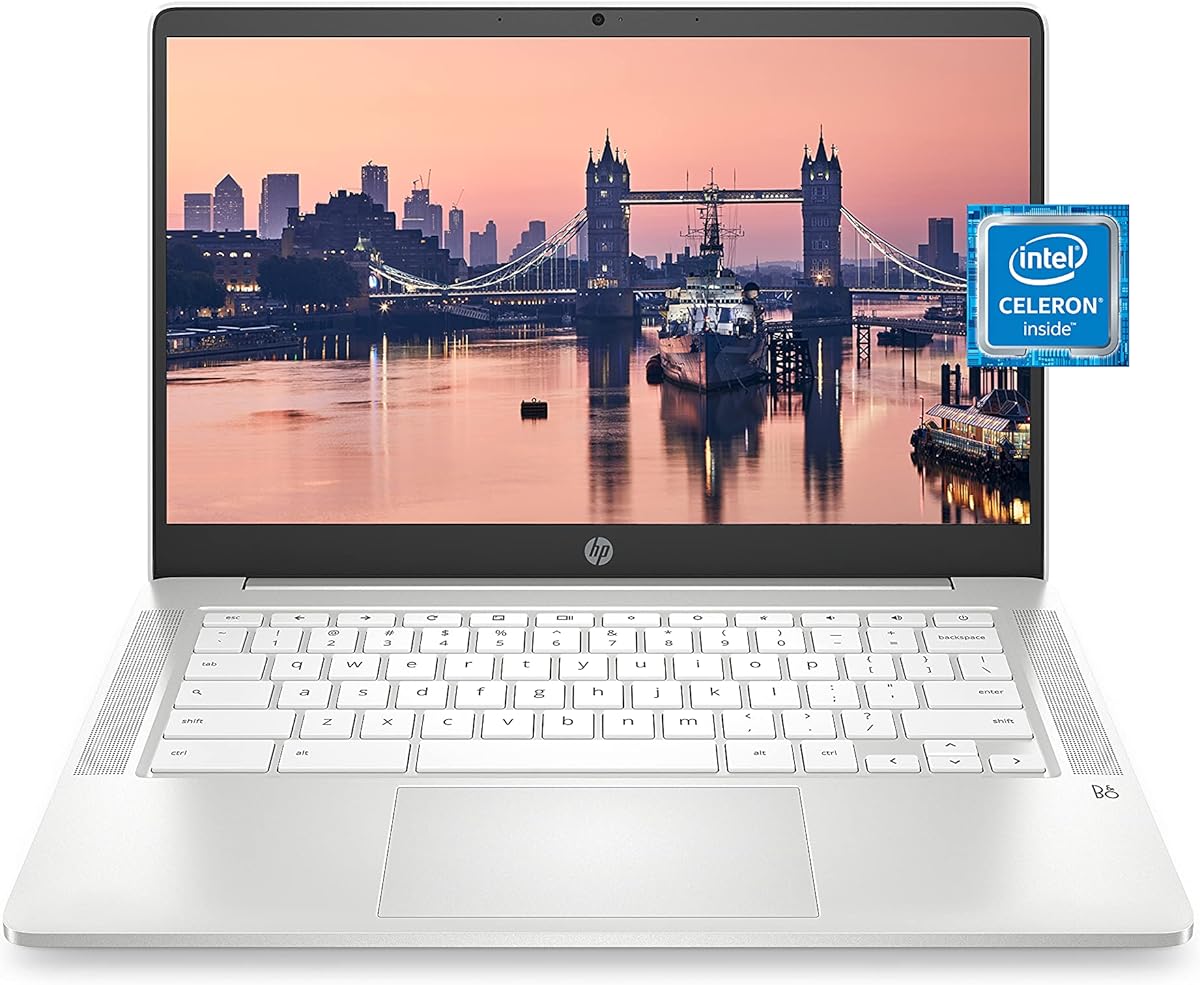

This HP Chromebook pairs a 4.4 rating with a configuration built around the needs of a cost-conscious junior high student. Its Intel Celeron N4120 is a quad-core processor with four threads, a 1.1GHz base clock, and boost capability up to 2.6GHz. It is a straightforward option for web-based lessons, Google Workspace documents, browsing, video calls, and lightweight productivity apps.
We may earn a commission when you buy through this link, at no additional cost to you.
The strongest benefits are portability, endurance, and connectivity. The 14-inch anti-glare display at 1366 by 768 resolution is comfortable for prolonged school use, while the listed 14-hour battery figure makes it suitable for carrying between classes or working away from a charger. Two USB-A ports, one USB-C port, HDMI, and a headphone jack provide enough flexibility for common school accessories.
The trade-offs are equally clear. A 1366 by 768 screen is less detailed than a full HD panel, and 64GB of eMMC leaves limited room for large collections of offline media or files. The 4GB of LPDDR4x memory is adequate for Chrome OS and multiple tabs, although demanding applications are not its primary strength.
This is a strong recommendation for a student whose school experience is centered on web-based work and who values battery life over a high-resolution display. It is also a sensible first computer for a younger learner because Chrome OS keeps the interface approachable. For advanced software, extensive local files, or a larger workspace, consider a model with more memory and storage.
The advertised 14-hour battery life provides useful confidence for long school days. A student can move between classrooms, study areas, and home with less concern about finding an outlet, although actual runtime varies with screen brightness, network activity, and workload.
USB-A, USB-C, HDMI, and audio connectivity cover many student needs. These ports make it easier to connect a wired mouse, headphones, an external display, a flash drive, or other classroom equipment without relying entirely on adapters.
We may earn a commission when you buy through this link, at no additional cost to you.
This HP Stream earns a 4.2 rating and offers a more complete Windows package than a typical entry-level Chromebook. Its Intel N150 processor is designed for efficient everyday work, while 4GB of DDR4 memory supports common browsing, document, and communication tasks. A student who needs Microsoft applications or a conventional desktop interface will find the setup more familiar.
We may earn a commission when you buy through this link, at no additional cost to you.
Its unusual strength is the bundled ecosystem. The included one-year Office 365 subscription provides access to Microsoft's productivity suite, while the seven-in-one docking station adds 1TB of storage. The package also includes a 32GB microSD card with adapter, a Type-C data cable, a three-in-one charging cable, and a cleaning cloth. This is useful for a student setting up a shared desk or keeping files accessible through the dock.
There are limitations. The built-in 128GB UFS drive is modest, and 4GB of RAM may become restrictive when many demanding applications are open together. The 1366 by 768 anti-glare screen is fine for documents and lessons but does not offer the detail of a full HD panel. The docking station also takes up desk space compared with a simple laptop setup.
This laptop suits a junior high student who wants Windows, Office 365, and several accessories without purchasing each item separately. It is less compelling for a child whose work is entirely browser-based, since a Chromebook can provide a simpler experience. For a family valuing an all-in-one package, however, the included dock and storage make the configuration particularly convenient.
The seven-in-one dock is the defining feature. It gives the student a central connection point for displays, peripherals, storage, and charging, reducing the need to reconnect accessories every time the laptop moves.
Windows 11 and one year of Office 365 make this a comfortable transition for students accustomed to desktop software. The included subscription supports Word, Excel, and PowerPoint workflows, while the dock's 1TB storage adds room for project files.
We may earn a commission when you buy through this link, at no additional cost to you.
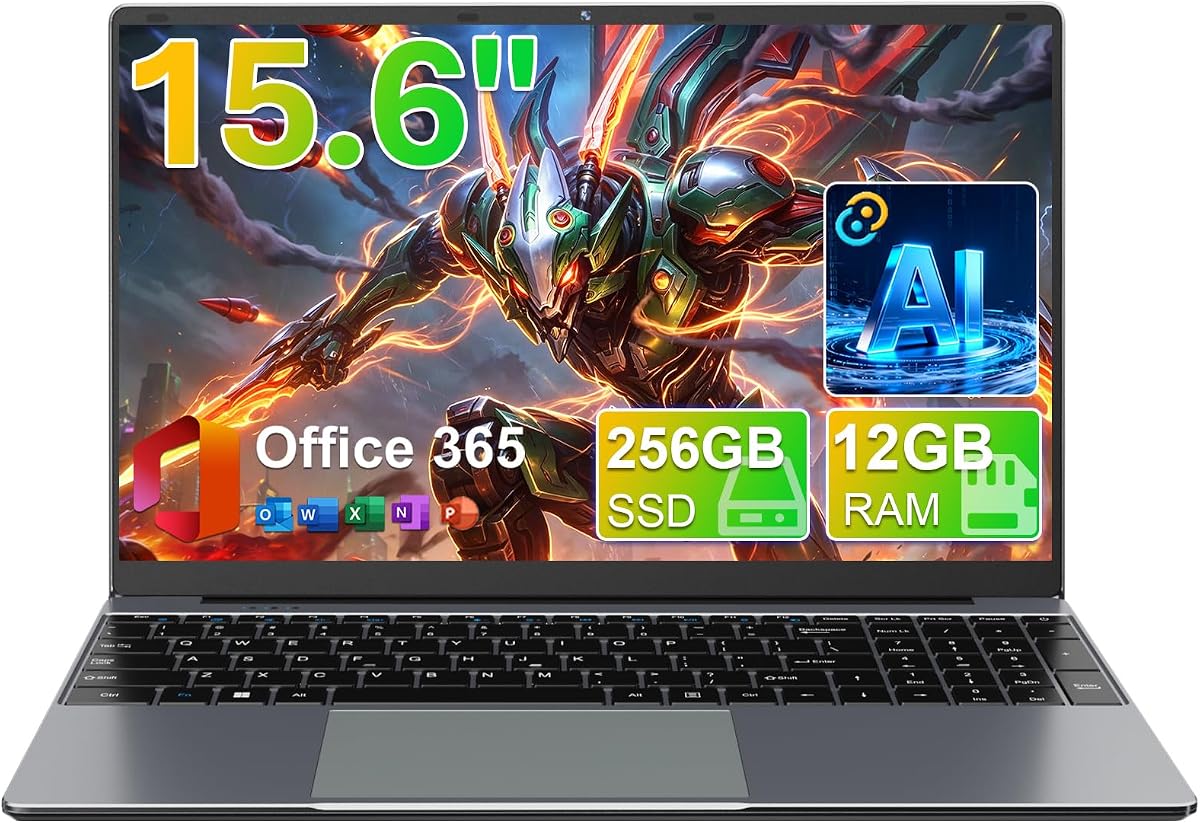
With a 4.6 rating, this 15.6-inch student laptop is the strongest all-around choice in the group. It combines a full HD display, 12GB of RAM, a 256GB solid-state drive, and a flexible 180-degree hinge. That combination covers the major needs of a junior high student without requiring a large, expensive workstation.
We may earn a commission when you buy through this link, at no additional cost to you.
The 1920 by 1080 IPS panel is a significant step up for detailed reading, video calls, worksheets, and entertainment. Its 16:9 aspect ratio and narrow bezels provide a useful balance of screen area and portability. The 12GB of memory also provides more breathing room than the 4GB configurations found on many competing school laptops.
Its Celeron J4105 quad-core processor is not designed for demanding gaming or intensive professional software, so buyers should match expectations to school use. Storage is more flexible, however: the laptop supports SSD expansion up to 2TB and TF card expansion up to 1TB. The 7000mAh battery, 5G Wi-Fi, Bluetooth 4.2, USB 3.2, Type-C, and Mini HDMI further strengthen the package.
This is the best general recommendation for a junior high student because it balances screen quality, memory, storage, and everyday connectivity. It also works well for a family that prefers a traditional laptop but does not need a high-end processor. Students who mainly use web applications can still benefit from the larger display and extra memory.
Twelve gigabytes of RAM gives the student room to keep browser tabs, documents, messaging tools, and media open. That headroom is especially useful as assignments become more involved, while the solid-state drive supports quick access to locally stored work.
The full HD IPS screen is easier on the eyes for long reading and gives teachers, classmates, and students more room to share material. The narrow-bezel design helps the larger resolution remain visually manageable in a portable computer.
The 180-degree hinge allows the display to lay flat, which can be helpful during a group project, tabletop use, or a video call. It adds flexibility without changing the basic laptop form factor.
We may earn a commission when you buy through this link, at no additional cost to you.
This Lenovo Chromebook has a 4.2 rating and an unusually sharp 14-inch full HD touchscreen. The 1920 by 1080 IPS panel offers wide viewing angles, an LED backlight, and touch navigation that is useful for educational applications, diagrams, and casual browsing.
We may earn a commission when you buy through this link, at no additional cost to you.
The MediaTek Kompanio 520 is an eight-core processor with four 2.0GHz A73 cores and four 2.0GHz A53 cores. It emphasizes efficient everyday use and is suited to web browsing, Google Classroom, remote learning, and video communication. Wi-Fi 6 improves wireless connectivity, and the integrated 720p camera includes a privacy shutter for greater control during online classes.
Memory and storage are the main limitations. At 4GB of RAM and 64GB of eMMC, the Chromebook is appropriate for cloud-centered schoolwork but leaves less space for offline files than several alternatives. The selection of ports is practical, with USB-A, USB-C, a microSD reader, and a headphone-microphone combination jack.
Choose this model for a student who values a high-resolution touchscreen, a comfortable portable size, and modern wireless features. Its 2.86-pound weight and 0.73-inch thickness make it easy to carry between classes. It is less compelling for a student who must install traditional Windows applications or keep a large media library entirely on the device.
The full HD touchscreen provides a more interactive way to work with annotation tools, drawing applications, and classroom platforms. It also makes casual use more comfortable for browsing, media, and group collaboration.
The integrated 720p camera and physical privacy shutter are useful for students who attend online lessons. The shutter can cover the camera when it is not needed, offering a simple visual reminder that the lens is blocked.
We may earn a commission when you buy through this link, at no additional cost to you.
The Lenovo IdeaPad 3i Touchscreen combines a 4.4 rating with a refined 14-inch display and a capable MediaTek Kompanio 520 processor. It is designed for students who want a lightweight Chromebook capable of handling browser-based lessons, communication, and everyday entertainment.
We may earn a commission when you buy through this link, at no additional cost to you.
Its display is one of the strongest in the group. The 1920 by 1080 anti-glare panel includes 300 nits of brightness and 100% sRGB color coverage. That makes it a good fit for color-aware school projects, presentations, and media. Touch navigation, a 720p camera with privacy shutter, Wi-Fi 6, and Bluetooth 5.1 complete the feature set.
The octa-core processor provides a solid foundation for Chrome OS, and the advertised battery life reaches 13 hours. Storage totals 128GB by combining 64GB of eMMC with an attached 64GB SD card. As with most 4GB Chromebooks, heavy multitasking can reveal limits, while the eMMC portion still has limited built-in capacity.
A particularly reassuring detail is the auto-update expiration date of November 2026, indicating a defined support window. This model is a strong recommendation for a student who values display quality, touch interaction, and long advertised battery life. It is less suitable for traditional desktop software, but for web-first learning it feels polished and well equipped.
The 100% sRGB panel is a meaningful advantage for presentations, photos, and color-sensitive assignments. Full HD resolution and 300-nit brightness also make the screen easier to use for detailed reading than a basic HD panel.
Chrome OS support through November 2026 provides clarity for families planning several years of school use. Automatic system updates reduce the need for manual operating-system maintenance.
We may earn a commission when you buy through this link, at no additional cost to you.
This Royal Blue HP laptop has a 4.2 rating and focuses on cloud services, familiar Windows operation, and a portable form. Its Intel N4102 processor is intended for browsing, online classes, office tasks, and streaming, making it appropriate for everyday junior high workloads.
We may earn a commission when you buy through this link, at no additional cost to you.
Microsoft 365 and 1TB of OneDrive cloud storage are useful additions for a student who works across assignments, shared documents, and online learning. A dedicated Microsoft Copilot key provides quick access to the included assistant, while the 720p HD camera uses temporal noise reduction to support clearer video calls. Dual array microphones are also included.
The main compromises are the 1366 by 768, 220-nit anti-glare display and the use of Windows 11 S Mode. S Mode is designed around Microsoft Store applications, so a student needing specialized desktop software may need to change the installation mode. The listing also refers broadly to storage and hardware without supplying a precise RAM figure, which should be verified before purchase.
This model is best for a student who uses Microsoft 365, stores work in the cloud, and values online calls and familiar Windows tools. Its 3.24-pound weight, Wi-Fi 6, and up to 11.5 hours of advertised video playback support an active school schedule. Buyers prioritizing a sharper display should examine alternatives with full HD resolution.
The included 1TB OneDrive allowance allows students to keep documents and assignments in the cloud. This can reduce pressure on local storage while simplifying access from school, home, and shared devices.
Noise reduction, a 720p camera, dual microphones, Wi-Fi 6, and Bluetooth 5.4 cover the main needs of online learning and communication. The Copilot key also provides a convenient route to everyday writing and research assistance.
We may earn a commission when you buy through this link, at no additional cost to you.
The HP 14a-na0226nr Chromebook carries a 4.3 rating and is a proven-looking choice for a student who needs an uncomplicated school computer. Its Intel Celeron N4120 quad-core processor, 4GB of RAM, and 64GB of eMMC storage align closely with the capabilities of other basic Chromebooks in this guide.
We may earn a commission when you buy through this link, at no additional cost to you.
Its standout advantage is battery endurance. HP advertises up to 14 hours of use, and HP Fast Charge can raise the battery from zero to 50% in approximately 45 minutes. The thin 14-inch anti-glare display is portable and practical for classrooms, while Intel UHD Graphics 600 supports smooth 4K content and everyday entertainment.
The 1366 by 768 resolution is the biggest visual limitation. Storage is also modest, so students should keep larger files in cloud storage and manage downloaded media carefully. Wi-Fi 5 and Bluetooth remain usable, although they are older than the Wi-Fi 6 options elsewhere in the list. A one-year limited hardware warranty is included.
This Chromebook is a good fit for a junior high student whose main tools are web browsing, Google Classroom, online assessments, and communication apps. Long battery life and fast charging make it especially convenient for a full academic day. It is less suitable for software installation or detailed visual work, but for a browser-first education it covers the essentials.
The advertised 14-hour runtime gives students room to move through a schedule without frequently seeking an outlet. Actual results depend on brightness, streaming, and the number of active web applications, but the claim is especially relevant for a school computer.
HP Fast Charge can reach approximately 50% in 45 minutes. That makes short charging stops more practical when a student needs enough power to finish the day of classes.
We may earn a commission when you buy through this link, at no additional cost to you.
The Dell 15.6-inch laptop is the premium selection in this guide, with a 4.3 rating and a configuration that extends beyond basic school use. Its Intel Core 3 100U processor and 8GB of RAM provide more headroom for browser-heavy lessons, Microsoft applications, research, and multitasking than the common 4GB school-laptop configuration.
We may earn a commission when you buy through this link, at no additional cost to you.
The full HD display gives documents, videos, and presentations a clear and spacious canvas. Dell ComfortView software is included to help reduce harmful blue-light emissions during extended viewing. For written work, the roomy keyboard, separate numeric keypad, calculator hotkey, and lifted hinges create a more productive workspace.
The tradeoff is portability. A 15.6-inch laptop is larger and heavier than the 14-inch alternatives, and the supplied information does not state its weight or storage capacity. It may also cost more than entry-level Chromebooks, making value-conscious families more likely to focus on a simpler model. Nevertheless, the processor and 8GB memory provide a more advanced foundation.
This is the right choice for a junior high student who expects coursework to become more sophisticated, needs a numeric keypad for math, or prefers Windows 11 Home without S Mode limitations. Dell's one-year onsite service adds reassurance for a family seeking hardware support. For light web-based schoolwork, a Chromebook may be simpler, but this Dell is better positioned for future academic growth.
The Intel Core 3 100U and 8GB of RAM create a stronger platform for heavier multitasking. A student can move among browser tabs, research pages, productivity applications, and communication tools with more memory available than the featured 4GB alternatives.
The full HD 15.6-inch panel provides room for dense pages and detailed media. ComfortView support, lifted hinges, a roomy keyboard, and the dedicated numeric keypad make longer study sessions more comfortable.
One-year onsite service means covered hardware issues that cannot be resolved remotely may be handled at the student's home, office, or other selected location. This can reduce the disruption associated with bringing a notebook in for service.
We may earn a commission when you buy through this link, at no additional cost to you.
This HP Chromebook has a 4.4 rating and a 3.24-pound design that makes it easy for a younger student to carry. The Intel Celeron N4000, 4GB of RAM, and 32GB of eMMC form a basic but functional platform for web browsing, Google Workspace, online classes, music, and movies.
We may earn a commission when you buy through this link, at no additional cost to you.
Battery life is the principal strength. HP advertises up to 13 hours and 30 minutes of wireless streaming, depending on use. The anti-glare 1366 by 768 screen reduces reflections in bright rooms, while the Wide Vision HD camera and dual array digital microphones support online communication.
The 32GB storage capacity is the clearest weakness and is smaller than every other configuration in the guide. A student must keep documents in cloud storage, avoid excessive downloads, and manage local files carefully. Wi-Fi 5 and Bluetooth 5.0 are also dated compared with the latest wireless options, and the N4000 is not intended for demanding software.
Choose this model when low weight, long advertised battery life, and a simple Chrome OS experience matter most. It is especially suitable for a first laptop used for school websites, assignments, and video calls. As files and applications accumulate, however, a model with greater storage or memory will offer more room to grow.
At 3.24 pounds, the Chromebook is light enough for younger students to move between classes without undue strain. Its thin, portable form also works well in a backpack or shared family workspace.
The 32GB eMMC drive is adequate for a browser-first student but limited for downloaded videos, large project folders, and offline content. Using cloud storage and an external drive can help preserve free space.
We may earn a commission when you buy through this link, at no additional cost to you.
The HP Essential Laptop has a 4.4 rating and a well-rounded modern configuration for a junior high student. Its Intel N150 processor has four cores, four threads, a 6MB L3 cache, and boost capability up to 3.6GHz. It is designed for browsing, streaming, document editing, online learning, and routine multitasking.
We may earn a commission when you buy through this link, at no additional cost to you.
The 4GB LPDDR5 memory is more current than the LPDDR4x found in several Chromebooks, although 4GB remains a modest amount for a Windows system. Storage is 128GB UFS, and one year of Microsoft 365 Personal provides Word, Excel, PowerPoint, and cloud storage. A dedicated Copilot key and AI noise reduction add convenient tools for writing and video calls.
Connectivity is particularly strong. The USB-C port supports DisplayPort 1.2, allowing a student to connect an external monitor with the correct adapter or cable. Two USB-A ports, HDMI 1.4b, a headphone-microphone jack, and an SD card reader cover many accessories. Wi-Fi 6 and Bluetooth 5.4 are also modern standards.
This is an excellent general pick for a student who needs Windows without moving to a premium processor tier. It remains light at 3.24 pounds, and the anti-glare 14-inch screen works well for schoolwork. The main compromises are the 1366 by 768 resolution and limited memory, so students should remain focused on web, office, and communication workloads rather than demanding software.
LPDDR5 memory, Wi-Fi 6, and Bluetooth 5.4 create a more modern foundation than older Chromebook configurations. These specifications support efficient everyday use and compatibility with current school wireless networks and accessories.
The USB-C port includes DisplayPort 1.2 support, giving students a path to a larger monitor for extended writing or study. The two USB-A ports also make it convenient to connect a mouse, keyboard, flash drive, or other peripheral.
A one-year Microsoft 365 Personal subscription supplies the core applications used in many school assignments. The cloud-storage component also helps students keep documents available across compatible devices.
We may earn a commission when you buy through this link, at no additional cost to you.
The best school laptop is not necessarily the most powerful one. It should be comfortable, secure, manageable, and powerful enough for the student's actual classes, with attention given to display quality, memory, battery life, and family workflow.
Chrome OS is built around web browsing, Google services, Android applications, and automatic updates. It is usually the simplest choice for a junior high student whose classes rely on Google Classroom, Docs, Sheets, Slides, browser-based assessments, and communication tools. It also tends to place a greater emphasis on security and straightforward maintenance. Windows offers a much broader range of traditional software, desktop interfaces, games, and specialized learning applications, but it generally demands more attention to updates, storage management, and software installation. Families should check school instructions and the required applications before deciding. A child who needs only browser-based tools may find Chrome OS easier, while a student who will use Microsoft Office, programming environments, or Windows-specific educational software may prefer a Windows laptop.
An entry-level Intel Celeron or MediaTek Kompanio processor is generally appropriate for browser-based assignments, office documents, streaming, and communication. The Celeron N4120, N4000, N4102, N150, J4105, and MediaTek Kompanio 520 configurations in this guide all target efficient everyday use rather than intensive gaming or professional workloads. A more capable Intel Core 3 100U adds headroom for heavier multitasking and a broader range of traditional applications. Processor speed should be considered alongside memory, because a faster chip cannot fully compensate for an undersized memory configuration in every workload. The goal is reliable performance for the student's classes, not a specification race.
Memory determines how comfortably a student can keep browser tabs, documents, video calls, and other applications open at once. Most Chromebooks in this guide use 4GB, which is workable for web-centered learning but provides less room under heavier workloads. The 12GB configuration in the 15.6-inch FHD student laptop stands out for multitasking, while the Dell's 8GB is well suited to a broader mix of school applications. Windows systems with 4GB may feel more constrained than Chromebooks with the same amount because of the wider variety of background software. For a student approaching high school-level coursework or keeping many tabs and applications open, moving above the entry-level memory tier can produce a more comfortable experience.
A 14-inch laptop is often easier for a junior high student to carry and usually offers a more intimate workspace than a 15.6-inch model. A 15.6-inch display gives students more room for split-screen research, worksheets, and presentations but occupies more bag space. Resolution matters as well: the featured full HD panels provide sharper text and images than the 1366 by 768 HD displays found on several budget models. Anti-glare treatment is useful in classrooms because it reduces reflections under bright lighting. Touchscreens can be helpful for interactive applications and drawing, but they are not required for ordinary school assignments.
A school computer may spend much of the day away from an outlet, making advertised battery life a major practical consideration. Several models here claim 13 to 14 hours of use, while the HP Essential lists up to 11 hours of video playback and 7.5 hours of streaming. Actual runtime depends on brightness, network quality, video, and application load, so these figures should be treated as comparative guidance rather than exact promises. Portability also involves weight and thickness. The Lenovo Flagship Chromebook weighs 2.86 pounds, while several HP models are listed at 3.24 pounds. A lighter laptop can be easier for a younger student to carry, although screen size and keyboard comfort remain important.
Local storage determines how many documents, photos, videos, and applications can remain available offline. The featured 32GB and 64GB eMMC configurations are the most constrained, while 128GB and 256GB solid-state drives provide more room. The 15.6-inch student laptop supports SSD expansion up to 2TB and TF card expansion up to 1TB, while the HP Stream includes a one-terabyte docking-station drive. Cloud storage is valuable for school collaboration, but families should still leave some local capacity for system files, browser data, and downloaded assignments. A student who works primarily online can manage a smaller drive with good habits, while media-heavy users need more space.
A useful port selection lets a student connect headphones, a mouse, an external drive, a charger, and an external display with less inconvenience. USB-A, USB-C, HDMI, and a 3.5mm audio jack form the common core, and several featured models also include an SD card reader. USB-C DisplayPort support is especially helpful for students who want to work on a larger monitor. Wi-Fi 6 and Bluetooth 5.4 offer more current wireless capabilities than older Wi-Fi 5 and Bluetooth 5.0 configurations. Families should also check the school's required authentication method and ensure the selected laptop supports the necessary connection standards.
A school laptop should be dependable enough for daily transport and use. Look for a comfortable keyboard, a sturdy-feeling hinge, a webcam with a privacy shutter when available, and a warranty or service plan that matches the expected years of use. The Dell includes one-year onsite service, while several Chromebooks include limited hardware warranties and defined Chrome OS update windows. Parental controls can help younger students manage browsing, app installation, and screen time, but the correct setup depends on the operating system and family preferences. A shared charging and storage plan is also useful, since it makes accidental loss or damage less disruptive.
Begin by configuring accounts, updates, privacy settings, and a secure sign-in method before handing the laptop to a student. Create separate user profiles if siblings share the machine, enable automatic system and browser updates, and connect only to trusted networks. For a younger learner, review app permissions, content filters, and screen-time controls together so the family understands the settings rather than treating them as a one-time setup.
Organize coursework into folders by class or semester and use cloud storage for active assignments. Keep downloads in a dedicated folder and remove duplicate videos, installers, and completed project files when local space becomes limited. A USB drive or SD card can provide additional storage for large media, but important schoolwork should remain synchronized so it is not lost if a removable device is damaged or left behind.
Treat the display, keyboard, ports, and battery with basic care. Clean the screen with a soft microfiber cloth, avoid placing drinks near the computer, and use a case or padded sleeve for transport. Do not leave the laptop in a hot car or directly under sunlight. Charging to a partial level during the day and unplugging it when the school provides safe outlets can help reduce unnecessary battery strain, though following the manufacturer's guidance remains the most important rule.
A Chromebook is usually easier for a junior high student whose classes use Google Classroom, online documents, web assessments, and communication apps. It also tends to require less maintenance and has strong built-in security and automatic updates. A Windows laptop is the better choice when schoolwork requires Microsoft Office, traditional desktop applications, programming tools, or other software that does not fit the Chrome OS model. The student's actual course requirements should guide the decision.
Four gigabytes of RAM is sufficient for ordinary browser-based schoolwork, several tabs, and standard communication tools. It becomes less comfortable as the number of applications and open tabs increases. Eight or 12 gigabytes provides more room for multitasking and a longer useful life, making the Dell and 15.6-inch full HD student laptop stronger choices for heavier workflows. The operating system and number of simultaneously open applications matter more than the memory number alone.
A 14-inch laptop is generally easier to carry and works well for most school tasks. A 15.6-inch model provides a larger canvas for research, split-screen work, and detailed documents, but it takes up more room in a backpack. A full HD display also produces a sharper image than a 1366 by 768 screen. Students should consider their eyesight, preferred workspace, and school-bag size rather than assuming the larger screen is automatically better.
A touchscreen is useful for touch-oriented learning tools, drawing, interactive diagrams, and casual media use, but it is not essential for standard typing, research, or video calls. The Lenovo touchscreens in this guide pair touch interaction with full HD displays, making them compelling for students who value that flexibility. If the budget is limited, a conventional non-touch laptop can provide better performance and longevity for ordinary schoolwork.
A student using mainly cloud-based school tools can work with 64GB, provided the family manages downloads and leaves room for system files. The featured 32GB model requires especially careful storage management. At least 128GB is more comfortable for offline documents, photos, applications, and media, while 256GB offers additional flexibility. A microSD card, external drive, or bundled docking-station storage can supplement the internal drive, but important files should also be backed up.
Advertised figures are useful for comparing models, but real runtime depends on screen brightness, video streaming, wireless activity, and the applications in use. A student should treat the maximum claim as a best-case scenario and expect different results under heavier workloads. Carrying a compact charger or power bank can provide useful backup on long school days, particularly for the larger and more power-hungry Windows configurations.
A dedicated computer can make schoolwork and family communication easier to organize, but it is not essential for every student. A shared family laptop may work when schedules allow and the student only needs basic browser tools. A dedicated device becomes more valuable when the student needs a personal login, a stable place to store assignments, a consistent setup, or the ability to work independently without interrupting another family member's tasks.
Confirm the school's required software, account setup, wireless authentication method, and any rules about personal devices before classes begin. Test the camera, microphone, speakers, keyboard, browser, required applications, and video-call platform at home. Update the operating system, create a secure password, enable appropriate parental controls, and arrange a simple folder system so the student can locate assignments from the first day.
The HP 14-inch HD Chromebook is the best budget choice for a web-focused student who values long advertised battery life and a simple setup. The 15.6-inch FHD IPS student laptop is the best overall pick because its full HD display, 12GB memory, 256GB solid-state drive, and flexible hinge provide a particularly balanced school setup. The Dell 15.6-inch FHD laptop is the best premium option, with the strongest processor, 8GB of memory, a full HD display, a numeric keypad, and onsite service.
For most junior high students, the right priorities are manageable weight, a comfortable keyboard, a clear display, dependable connectivity, and enough memory for several applications. Chromebook buyers should consider full HD touchscreens, Wi-Fi 6, and long update support when available. Windows buyers should check for modern processors, 8GB of memory, storage expansion, and the full suite of applications required by the school rather than paying only for a larger screen.
Before purchasing, compare the current configuration, included software, warranty terms, and accessory details on the retailer's listing. Product specifications, customer ratings, bundles, and prices can change, so the information available at the time of purchase may differ from the data covered in this guide. Use the comparison table to narrow the field, then verify that the selected laptop meets the student's class requirements and family workflow.