
64GB exFAT32 USB 3.0 Flash Drive
4.5Editor score
USB 3.0 transfer performance
Included USB-C adapter
Keychain and metal housing
Exfat USB Flash Drive guide comparing ten models for speed, capacity, connectors, durability, security, cross-platform compatibility, and everyday value.
An exFAT USB flash drive is a portable storage device designed around a file system that handles large files and works across many modern computers, tablets, and compatible mobile devices. The best model balances capacity, transfer speed, connector flexibility, durability, and dependable file management without making setup unnecessarily complicated.
This guide compares ten flash drives using the supplied specifications, ratings, compatibility information, and design details. It considers USB-A and USB-C designs, different capacities, read and write performance, bundled software, physical construction, and practical features such as adapters, keychains, lanyards, encryption, and backup applications.
Each selection identifies a distinct use case, from value-focused everyday storage to rugged high-capacity models and compact premium options. Product ratings and specifications can change as manufacturers update listings, while market conditions can also affect availability and pricing, so readers should confirm the current details before making a final purchase decision.
4.5Editor score

4.7Editor score

4.6Editor score
The comparison highlights the differences that matter most when selecting an exFAT flash drive: usable capacity, connection style, stated transfer performance, portability, and security. Several drives explicitly list exFAT as their default format, while others provide dual connectors or adapters for broader use.


The 64GB exFAT32 USB 3.0 Flash Drive combines a practical 64GB capacity with a USB 3.0 interface and a 4.5 rating. Its standout feature is the included USB-C adapter, which lets the standard USB-A drive connect to compatible USB-C equipment without requiring a separate cable. A keychain is also included for immediate portability.
We may earn a commission when you buy through this link, at no additional cost to you.
The stated read speed of 95-120MB/s and write speed of 35-45MB/s are meaningful improvements over a basic USB 2.0 drive when handling documents, photographs, and compressed video. The textured metal housing is designed to dissipate heat while adding an anti-slip texture, making the device suitable for school, office, photography, events, and travel.
Compatibility is one of its strongest selling points. The listing states support for Windows, Mac OS, and Linux, along with USB 3.0, 2.0, and 1.1 devices. Because the default format is exFAT, it is positioned as a straightforward shared-storage option, although formatting it on the intended device is recommended to avoid recognition or access errors.
This is the best choice for buyers who want useful speed, broad compatibility, and a bundled adapter without moving to a larger or more advanced model. It is particularly helpful for students, travelers, and office users who need a straightforward way to carry files between compatible computers without overcomplicating their setup.
Including a compact USB 3.0 adapter gives the drive flexibility across both USB-A and USB-C ports. Users can carry one small accessory instead of relying on a specific cable, making the setup easier to use across changing workspaces and travel destinations.
The textured metal shell serves a practical purpose beyond appearance by encouraging heat dissipation during transfers. Combined with the stated USB 3.0 performance, it creates a well-rounded drive for routine office documents, coursework, photos, and media files.
We may earn a commission when you buy through this link, at no additional cost to you.
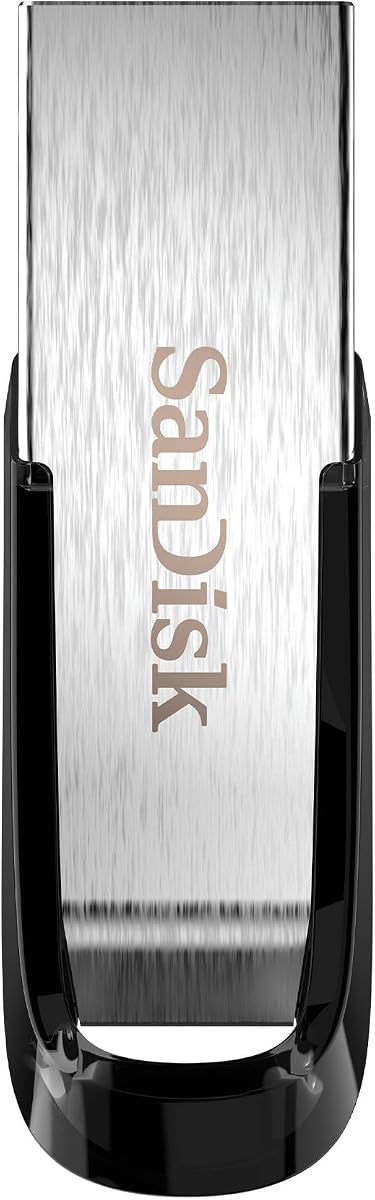
The SANDISK 128GB Ultra Flair is a well-established USB 3.0 flash drive with a 4.6 rating and stated read speeds of up to 150MB/s. Its metal casing gives it a more substantial feel, while the 128GB capacity offers enough room for a working collection of documents, photographs, music, and smaller video files.
We may earn a commission when you buy through this link, at no additional cost to you.
Performance is the primary attraction. The product information says a full-length movie can be transferred in less than 30 seconds when used with a USB 3.0 host and a suitable 1.2GB MPEG-4 file. It can also deliver transfer performance up to 15 times faster than a standard USB 2.0 drive, although real results depend on the host device, file attributes, and usage conditions.
Privacy support strengthens an otherwise straightforward design. The drive's password-protection feature uses 128-bit AES encryption and is compatible with listed Windows versions and Mac OS X 10.9 or later. Mac users must download the supporting software, adding a setup step that Windows users may not need.
Choose the Ultra Flair when fast transfers, a familiar USB-A format, and optional file encryption are the priorities. It suits people who work primarily with laptops and desktops and want more capacity and performance than the entry-level drive in this list without moving to a dual-connector design.
Its advertised read performance is well suited to moving sizable project folders and media libraries between compatible USB 3.0 computers. A faster host device is important for reaching the stated results, so older USB 2.0 ports will limit overall transfer time.
The supported encryption feature is valuable for tax documents, contracts, school records, or personal archives. Buyers using supported Mac systems should install the relevant SanDisk utility before relying on password protection.
We may earn a commission when you buy through this link, at no additional cost to you.
The SAMSUNG BAR Plus 3.1 combines a 4.7 rating with 128GB of storage and read speeds of up to 300MB/s. It offers an unusually balanced package of speed, rugged construction, and refined styling, making it a strong general-purpose choice for users who move files regularly and expect the drive to travel.
We may earn a commission when you buy through this link, at no additional cost to you.
The stated performance could move a 3GB 4K UHD video to a compatible PC in about 10 seconds under the conditions described by the manufacturer. Its metal body is built to withstand water, shocks, temperature changes, magnets, and X-ray exposure, while the integrated keyring helps prevent the drive from being misplaced.
Samsung backs the drive with a five-year limited warranty, adding useful confidence for storage used for work, school, backups, or personal archives. The product is designed for straightforward plug-and-play use, but buyers should still verify the connector type and host-device support before ordering.
This is the strongest all-around recommendation in the guide. It suits professionals, students, photographers, and travelers who want more than basic transfer speed without needing a dual USB-C design. The rugged body and long warranty are particularly valuable for anyone planning to keep the drive in a bag, pocket, or shared work environment.
The protective body addresses several common travel and workplace hazards at once. It is a sensible choice for a drive expected to pass between desks, travel in luggage, or remain connected to equipment in a less controlled setting.
A five-year limited warranty makes the BAR Plus feel appropriate for regularly used storage rather than only temporary file transfer. Capacity can still be expanded with files from computers, tablets, televisions, and other compatible USB hosts.
We may earn a commission when you buy through this link, at no additional cost to you.
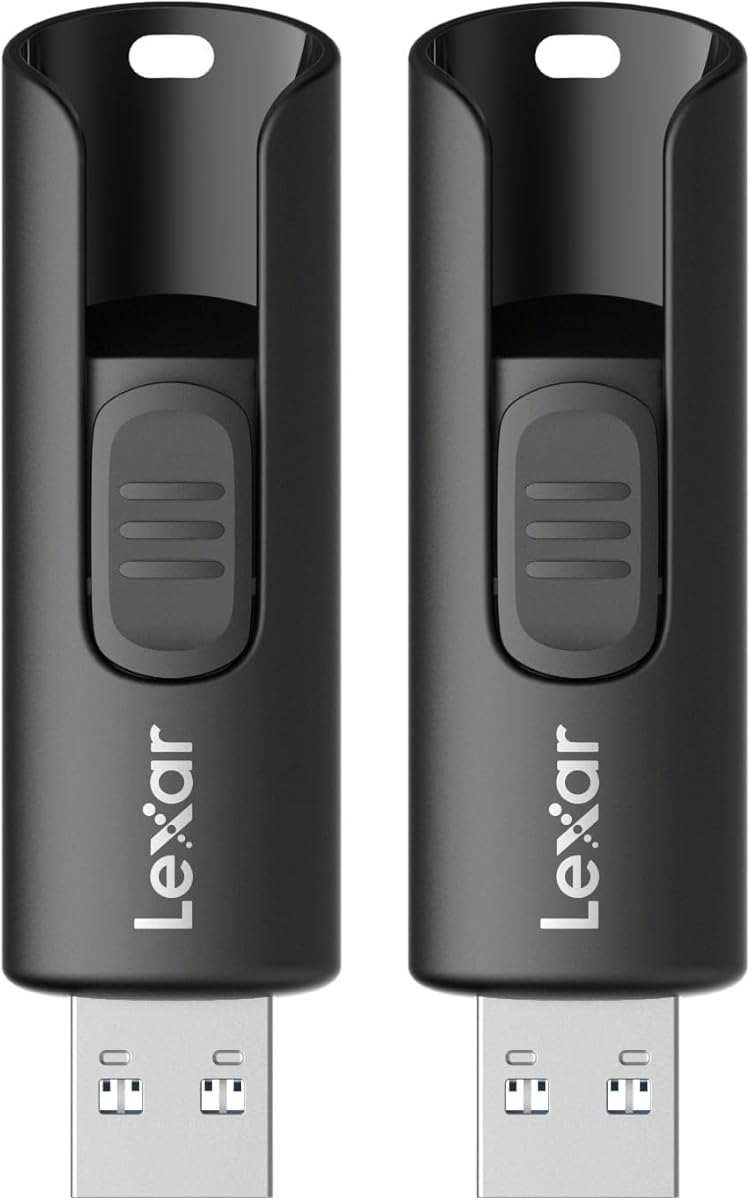
The Lexar A30E 128GB 2-Pack includes two 128GB USB Type-A drives and carries a 4.6 rating. It is designed for people who want a spare drive, separate personal and work storage, or the ability to keep one unit at home and another in a travel bag.
We may earn a commission when you buy through this link, at no additional cost to you.
Each lightweight drive is only 7.41 grams and uses a push-button retractor, helping protect the connector while keeping the overall package slim. Transfer speeds reach up to 100MB/s according to the listing, making the set suitable for everyday documents, photographs, and general media transfers.
Lexar DataShield adds password-protected storage with automatic encryption. Files placed in the protected safe are erased securely when removed, while the package itself works with tablets, laptops, Macs, and traditional Type-A devices without requiring installation for ordinary file access.
The two-drive format is the main reason to choose this model over a single 256GB alternative. It is useful for separating projects, lending one drive, or maintaining an offline backup. Those who want the highest possible transfer rates should consider one of the dual-interface premium models instead.
A two-pack can prevent work and personal files from sharing the same device. It also provides a convenient way to maintain a basic secondary copy of important documents without depending entirely on cloud storage or a computer's internal drive.
The retractable design keeps the USB-A plug covered when the drive is carried in a pocket or pouch. Its low weight and lanyard loop make the two units easy to organize, label, and distribute.
We may earn a commission when you buy through this link, at no additional cost to you.
The Lexar D50E 128GB Solid State Dual Drive is built around the idea that a portable storage device should work with both modern USB-C and traditional USB-A equipment. Its 4.5 rating, 128GB capacity, and built-in dual connectors reduce the need to carry an adapter for many common tasks.
We may earn a commission when you buy through this link, at no additional cost to you.
The listed read speed reaches 400MB/s and the write speed reaches 360MB/s, positioning it as a solid-state flash drive for demanding transfers. The product information describes those figures as four times faster than USB 3.0 under the manufacturer's internal testing conditions, though actual results depend on the connected equipment and files.
One especially useful feature is the Lexar App Photo Backup function for iOS and Android. It provides a convenient method for moving and managing media, although the listing notes that iCloud content backup is not yet supported. The durable metal housing helps protect both exposed connectors from ordinary wear.
Choose the D50E for photographers, mobile creators, and mixed-device users who want direct USB-C and USB-A access in one package. It is a better fit than an adapter-based budget model when frequent connector changes and faster file handling are central to the workflow.
The integrated USB-A and USB-C connectors make the drive useful across modern laptops, older desktop systems, and compatible mobile devices. This avoids the risk of leaving a small adapter behind while working across different types of ports.
The companion app adds value for people who regularly move phone photos and videos. It does not replace every cloud workflow, but it can simplify local media transfers while keeping the drive's cable-free form factor.
We may earn a commission when you buy through this link, at no additional cost to you.
The MOSDART 128GB USB 2.0 Flash Drive 2-Pack provides two 128GB drives with a 4.5 rating. Its appeal lies in straightforward local storage, broad operating-system support, and the inclusion of two lanyards, making it practical for school, business, manuals, music, photos, movies, and everyday file transfer.
We may earn a commission when you buy through this link, at no additional cost to you.
The default exFAT format is a useful detail for users who regularly move the drives among Windows, Linux, and Mac systems. The listing states that no additional drivers are required, simplifying deployment in offices, classrooms, and other shared environments where installing software may be inconvenient.
Unlike the faster models in this guide, this set uses USB 2.0. That makes it more appropriate for documents and moderately sized media than for repeated transfers of very large video files. The cap can be secured to the opposite end during use, reducing the chance that it will be misplaced, while the LED provides a visible activity cue.
Buy the MOSDART set when affordability, two-drive convenience, and simple cross-platform formatting matter more than maximum throughput. It is a sensible choice for distributing materials, keeping separate collections, or providing a simple drive to another user who does not need advanced encryption or USB-C connectivity.
The blue and orange color differences make the pair easy to identify, and each drive has its own lanyard. That is helpful when one unit is assigned to work, another to school, or when both are placed into circulation among colleagues or family members.
The stated default exFAT configuration supports straightforward use across the listed operating systems. Users should still handle each drive safely and avoid ejecting it while files are being transferred.
We may earn a commission when you buy through this link, at no additional cost to you.
The SANDISK Extreme PRO 512GB Dual Drive is the performance-focused selection in this guide. Its 4.6 rating, 512GB capacity, and stated read speed of up to 1,000MB/s make it suitable for creative professionals, large media collections, and users who regularly move substantial working files.
We may earn a commission when you buy through this link, at no additional cost to you.
The listing states write speeds of up to 900MB/s, creating a compelling specification for high-resolution video, RAW photographs, compressed archives, and other demanding files. USB-C and USB-A connectors are integrated, allowing the same drive to work with contemporary and traditional laptop or tablet ports without an adapter.
A sophisticated metal housing supports the premium positioning, while encryption technology and the SanDisk Memory Zone app add security and organization features. The app supports auto backup, file management, and retrieval, making this more than a passive file container for users who take advantage of its software.
This is the best choice when transfer speed is the top priority and the connected device can support the expected performance. Buyers with smaller files or occasional transfers may find the BAR Plus or another model more convenient, but professionals who continually move large assets will appreciate the Extreme PRO's combination of capacity and speed.
The high stated read and write rates are most meaningful for video editors, photographers, developers, and others working with multi-gigabyte assets. A compatible USB 3.2 or faster host is necessary to approach the advertised performance.
A 512GB drive can reduce the need to move project files constantly between machines. The Memory Zone app's backup, management, and retrieval tools add useful organization for users who treat the drive as part of a broader workflow.
We may earn a commission when you buy through this link, at no additional cost to you.
The TEWENE 64GB exFAT USB 3.0 Thumb Drive offers a compact way to carry everyday files between USB-A and USB-C devices. It has a 4.3 rating, 64GB of capacity, and a distinctive clip that can attach to a keychain, bag, or laptop without requiring a separate lanyard.
We may earn a commission when you buy through this link, at no additional cost to you.
The listing identifies the interface as USB 3.1 Gen 1, with read speeds up to 85MB/s and write speeds up to 30MB/s. Those figures support routine transfers of coursework, photographs, office documents, and travel memories, although the write rate is not intended to compete with the high-end solid-state models.
An included USB-C adapter broadens the list of compatible smartphones, laptops, tablets, and car audio systems. The small package and practical clip design are particularly useful for commuters, students, and office workers who need storage that remains attached to a bag rather than disappearing inside a pocket.
This is a straightforward option for light-duty storage where portability matters more than maximum throughput. The lower rating compared with the other selections should be considered, but the supplied specification still shows a capable USB 3.1 Gen 1 design with useful read performance and a convenient adapter-based format.
The integrated clip gives the drive more ways to remain visible and accessible than a loose thumb drive. It can be secured to fabric or a laptop edge, helping prevent the small device from being left behind.
The 64GB capacity and stated USB 3.1 Gen 1 speeds cover routine document, image, and media transfers. Larger video projects or repeated large-file transfers are better served by higher-capacity dual-interface models.
We may earn a commission when you buy through this link, at no additional cost to you.
The SSK 128GB USB C Flash Thumb Drive combines 128GB of capacity with USB-C and USB-A connectors. Its 4.4 rating and stated read speed of up to 550MB/s make it a strong option for moving high-resolution photographs and videos between compatible computers, tablets, and phones.
We may earn a commission when you buy through this link, at no additional cost to you.
The listing also states a write speed of up to 500MB/s, which is useful for saving large media files onto the drive. A zinc alloy shell resists falling and abrasion, while the double-head protective cover helps shield both interfaces. The design also emphasizes heat dissipation during sustained activity.
The default exFAT format supports use with Windows, Linux, Mac OS, and compatible Android systems. Plug-and-play operation means no software is required for ordinary storage expansion. Mobile compatibility depends on the device supporting USB-C host or OTG functionality, and the product explicitly does not support Lightning ports.
Choose the SSK when USB-C mobile use and high throughput both matter, but the drive's 128GB capacity is not essential. It is a compelling middle ground between basic flash drives and the highest-capacity premium models, especially for users who regularly exchange photos and videos with compatible USB-C phones or tablets.
The integrated USB-C plug allows compatible phones and tablets to use the drive without a separate adapter. This is particularly useful for offloading large photo collections or sharing videos during a trip when internet access is limited.
The shared protective cover and zinc alloy housing address the wear associated with frequent plugging and removal. The metal construction also supports the drive's stated heat-dissipation role during demanding transfers.
We may earn a commission when you buy through this link, at no additional cost to you.
The SAMSUNG FIT Plus 256GB combines a 4.7 rating with 256GB of storage in a notably compact form. Its low-profile body makes it a natural choice for laptop bags, wallets, and keychains, while the stated read speed of up to 300MB/s provides performance comparable to the larger BAR Plus.
We may earn a commission when you buy through this link, at no additional cost to you.
The drive is built for demanding use, with a listing that identifies it as shockproof, waterproof, temperature-proof, X-ray-proof, and magnetic-proof. A keyring is integrated into the design to help prevent loss, and Samsung includes a five-year limited warranty for added reassurance.
Its small shape does not limit the range of compatible devices. The product information identifies laptops, tablets, televisions, car audio systems, and gaming consoles as potential uses. Buyers will need a USB-A port, however, and the drive does not include a USB-C adapter.
Choose the FIT Plus when you want substantial capacity in a drive that is easy to carry every day. It offers an excellent combination of compactness, speed, durability, and warranty coverage, making it particularly useful for students, commuters, and media collectors who need more storage than a basic 64GB model.
The seamless, low-profile design is less likely to snag in a pocket or protrude from a laptop sleeve. Its keyring adds a simple way to keep it attached to a bag or cable loop.
The stated resistance to impacts, water, temperature changes, magnets, and X-ray exposure supports use in varied environments. A five-year limited warranty reinforces the drive's suitability for frequently used personal and professional files.
We may earn a commission when you buy through this link, at no additional cost to you.
The most useful exFAT flash drive is the one that fits your devices, stores the files you expect to carry, and performs reliably for your typical workflow. Capacity, interface speed, connector design, file-system support, and physical protection should be considered together.
Capacity should reflect the size of the files you need to carry, not merely the largest collection you can imagine. A 64GB drive is convenient for assignments, documents, and a moderate selection of photos, but it can fill quickly with high-resolution video. The 128GB models offer more breathing room for school projects or professional files, while the 256GB and 512GB choices are better suited to extensive media libraries and local backups. Two-drive packs can also divide work, personal, and archival files across separate devices.
Choose enough room for your active files plus reasonable temporary growth. Avoid filling a flash drive completely, since remaining free space can help reduce performance and storage-management problems.
The interface generation determines how quickly data can move when the host device and file type support the full standard. The basic MOSDART model uses USB 2.0, while other selections range from USB 3.0 and 3.1 to USB 3.2 and higher solid-state performance. Published read and write figures are useful comparisons, but they are not guaranteed results for every file, computer, or connection.
Match expected speed to your workload. Standard documents do not require extreme throughput, but moving large video, RAW images, or archives benefits from faster USB 3.2 or dual-interface solid-state models.
Most flash drives use USB-A, while modern laptops and many tablets increasingly rely on USB-C. A drive with integrated USB-C and USB-A connectors offers the simplest cross-device experience. Adapter-based designs can also work across both connector types, but the adapter must be carried and may be lost or left behind. A USB-A-only model remains useful on many desktop computers, cars, televisions, and older laptops, provided the device accepts the drive.
Check every computer and mobile device you expect to use before ordering. For phones and tablets, verify USB host or OTG support rather than assuming every USB-C port can read external storage.
exFAT is useful because it supports large files and is recognized by many modern Windows and macOS systems. It also appears as the default format for several selections, including the 64GB USB 3.0 drive, MOSDART set, and SSK dual drive. Linux support may depend on the system and configuration. A drive can technically hold exFAT while being formatted differently, so buyers should distinguish file-system capacity from the preloaded format.
Choose a model that explicitly states exFAT support when sharing files across mixed systems. Formatting the drive on the intended device is also a sensible way to confirm that the operating system recognizes it correctly.
Flash drives travel in pockets, bags, toolboxes, and shared environments, so physical construction matters. The SAMSUNG BAR Plus and FIT Plus are described as resistant to multiple environmental hazards, while the Lexar D50E and SSK use metal housings. Other models add lanyards, clips, retractable mechanisms, or attachable caps to help prevent loss and protect exposed connectors.
Match the construction to the environment. A slim drive suits frequent pocket use, while a more rugged model is preferable for travel, fieldwork, or storage that may be passed between users.
Some flash drives include software-based password protection, encryption, or secure storage areas. The SANDISK Ultra Flair supports 128-bit AES encryption, and the Lexar A30E includes DataShield for a password-protected safe with automatic encryption. The SANDISK Extreme PRO also includes encryption technology and companion management tools. These features can help protect sensitive documents, but they add software and setup considerations.
Treat security features as an additional layer rather than a substitute for proper backups. Confirm that your operating system is supported, install the required software, and test the protection workflow before storing irreplaceable files.
Application support can make a flash drive more useful for media management. The Lexar D50E includes Photo Backup functionality for iOS and Android, while the SANDISK Extreme PRO supports the Memory Zone app for automatic backup, file management, and retrieval. These additions are most useful to users who regularly move photos and videos or want a structured backup routine.
Check app requirements and operating-system support before purchase. If you only need basic plug-and-play storage, a simpler model may be easier to deploy across multiple computers.
A limited warranty provides added confidence in a portable storage device, particularly when it holds work or personal archives. Both selected SAMSUNG models are backed by five-year limited warranties, while the 64GB exFAT32 model includes a stated lifetime support service team. Warranty terms do not replace routine backups, so important files should still be maintained elsewhere.
Look for clear support terms, responsive seller assistance, and physical protections that match how the drive will be used. Reliability is a combination of hardware design, careful handling, and maintaining more than one copy of irreplaceable data.
Before first use, connect the drive to the computer where it will be used most often and check its format in the operating system's storage manager. If the listing states exFAT as the default, confirm that your system recognizes it. Reformat the drive if you need a different arrangement, naming convention, or compatibility profile, and back up any existing files before changing the format.
Copy important files, wait for the transfer to finish, and use the system's safe-eject command before unplugging the drive. Never remove it while files are actively being written, and avoid using the drive as the only location for irreplaceable photographs, financial records, or important work documents. For frequently changed files, a cloud service or separate computer drive can provide another layer of protection.
Keep the connector clean and dry, and use the protective cap, retractor, clip, or shared cover according to the model's design. Do not bend the exposed plug or force it into a port. For dual-interface drives, cover both connectors before carrying them. Store the flash drive in a cool, dry place when it is not in use, and periodically inspect important folders for corrupted or missing files.
exFAT is a file system designed to handle large files and removable storage across many modern operating systems. It is especially useful when a single video or archive exceeds the practical file-size limits associated with some older file systems. Windows and recent macOS versions generally support it readily, while Linux support can depend on the distribution and configuration. Confirm compatibility before relying on one drive across every device in your workflow.
Yes, exFAT is generally supported by modern Windows and macOS systems, making it a practical shared format. The drive must also use a connector accepted by the computer, and you may need a USB-C adapter when a USB-A drive is used with a MacBook that only has USB-C ports. Check the listing's connector and accessory details before traveling or transferring important files.
For a drive that moves between Windows and Mac systems, exFAT is usually more convenient because NTFS can be read by macOS but is not formatted as readily there without extra steps. exFAT also removes some of the file-size limitations that affect older file systems. If the drive will be used only on Windows computers and needs NTFS-specific features, that platform requirement may justify a different format.
No. The file system influences how data is organized, while the flash drive's controller and USB interface largely determine transfer performance. A USB 2.0 drive will remain limited by its interface even with exFAT, and a faster USB 3.2 model can use exFAT without becoming slow merely because of that format. Actual results also depend on the host device, file size, and background activity.
Some models can be used with compatible mobile devices, particularly the dual USB-C and USB-A designs. The phone or tablet must support external USB storage or OTG, and the operating system must recognize exFAT. Lightning-based devices do not work with the USB-C models in this guide because their charging and accessory connection standard is different.
The right amount depends on file resolution, length, and how often the files are moved. A 64GB drive can be useful for documents and a modest media collection, while 128GB is more comfortable for regular photo and video transfers. The 256GB and 512GB choices suit larger archives, professional projects, or users who want to carry more media between devices.
Advertised speeds are usually maximum figures measured under favorable conditions with suitable host hardware. Your computer's USB generation, the drive's controller, file size, fragmentation, background processes, and the direction of the transfer can all affect results. Large sequential files generally reveal a drive's capabilities more clearly than many tiny files copied through a file browser.
A two-pack is convenient for separating work from personal files, keeping a spare at home, or sharing a drive with another person. One larger-capacity drive can offer more physical simplicity and may be easier to organize if its total capacity is enough. Consider how you will label, use, and back up the devices rather than focusing only on the combined capacity.
The 64GB exFAT32 USB 3.0 model is the most practical value-oriented choice, especially when a bundled USB-C adapter and keychain are useful. The SAMSUNG BAR Plus stands out as the best overall option thanks to its 4.7 rating, rugged metal construction, strong stated read performance, and five-year limited warranty. For large creative files and demanding transfers, the SANDISK Extreme PRO Dual Drive offers the highest stated speeds and substantial capacity.
Prioritize the connector type, capacity, and interface generation that match your actual devices and workload. Dual USB-C and USB-A designs reduce adapter hassles, higher-capacity options provide room for large media collections, and software features such as encryption or photo backup can add value for sensitive or mobile-focused workflows. For mixed-system use, verify exFAT support and safe-eject practices.
Specifications, ratings, software support, and market conditions can change, so readers should confirm the current listing and included accessories before ordering. Comparing the current product details with the intended devices and the size of the files to be stored will lead to the most dependable exFAT USB flash drive choice.