
KFD 12V-24V ResMed AirSense 11 Car Charger
4.3Editor score
65W DC output
Supports 12V-24V inputs
AirSense 11 and AirMini
2.6M total cable
USB-C PD and car adapter
Explore the 10 best battery to run Cpap machine options for ResMed AirSense 11, AirMini, travel, camping, outages, and backup power, with compatibility
A battery to run a CPAP machine must match the device, power source, connector, and expected runtime. The right setup matters because a cable that fits physically may still deliver inadequate voltage, current, or negotiation. This guide focuses on practical options for ResMed AirSense 11 and AirMini users who need travel, camping, vehicle, or outage backup power.
We compared the ten listed products by examining supported machines, input and output requirements, connector design, battery compatibility, cable length, certifications, and special connection procedures. The list includes purpose-built 24V cables, USB-C PD converters, cigarette-lighter adapters, multi-device vehicle converters, and Freedom CPAP Battery connection cables.
Each review shows what makes a particular product useful, where its compatibility is limited, and who is most likely to benefit. Ratings and technical details reflect the supplied listing information, while product configurations and compatibility can change, so readers should verify their exact machine and power source before purchasing.
4.3Editor score

4.8Editor score
4.7Editor score
The table below compares each option by its power path, supported CPAP models, battery or vehicle use, and key compatibility restrictions. Because most entries are power cables or converters rather than complete batteries, the power source must be selected separately.


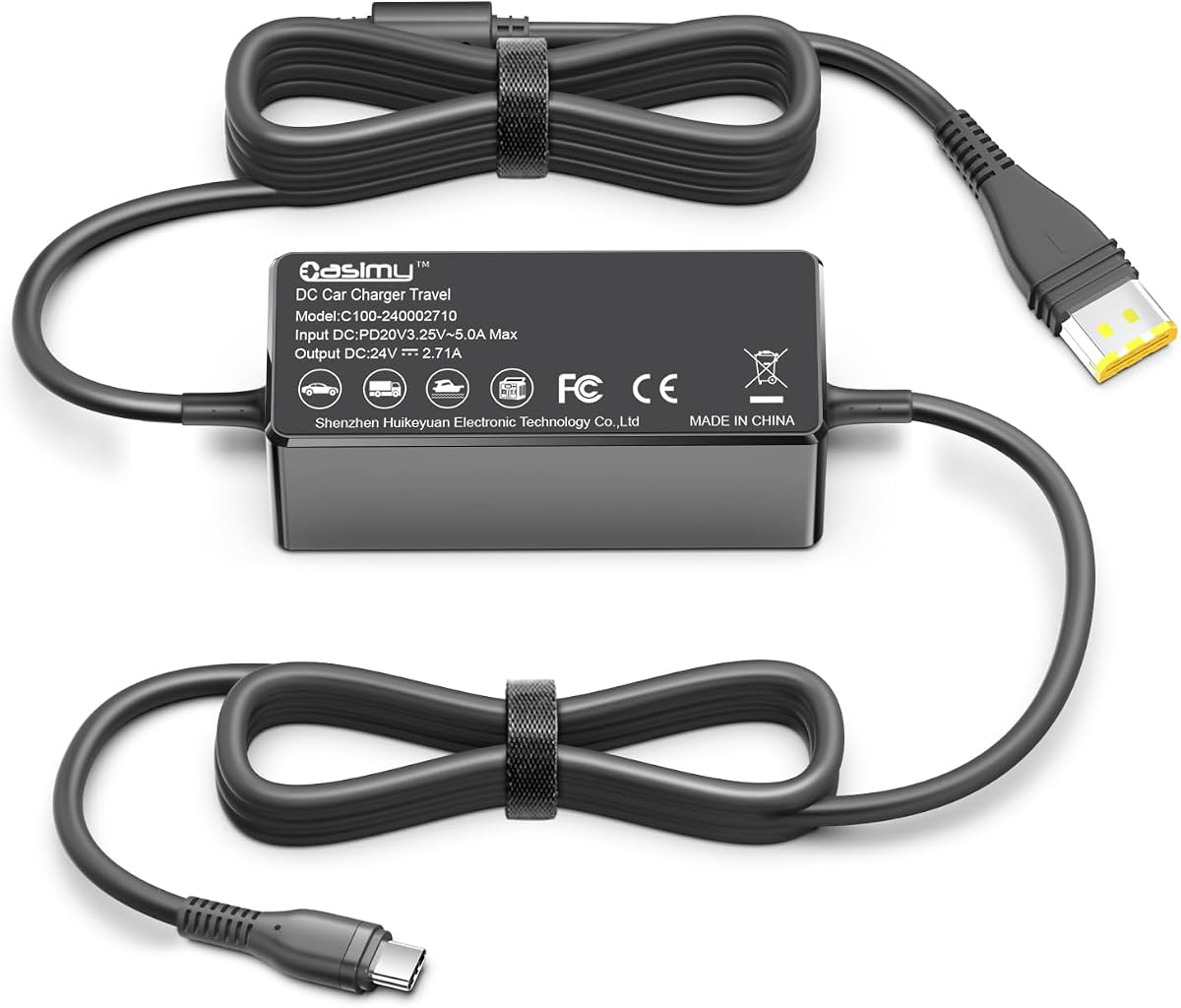


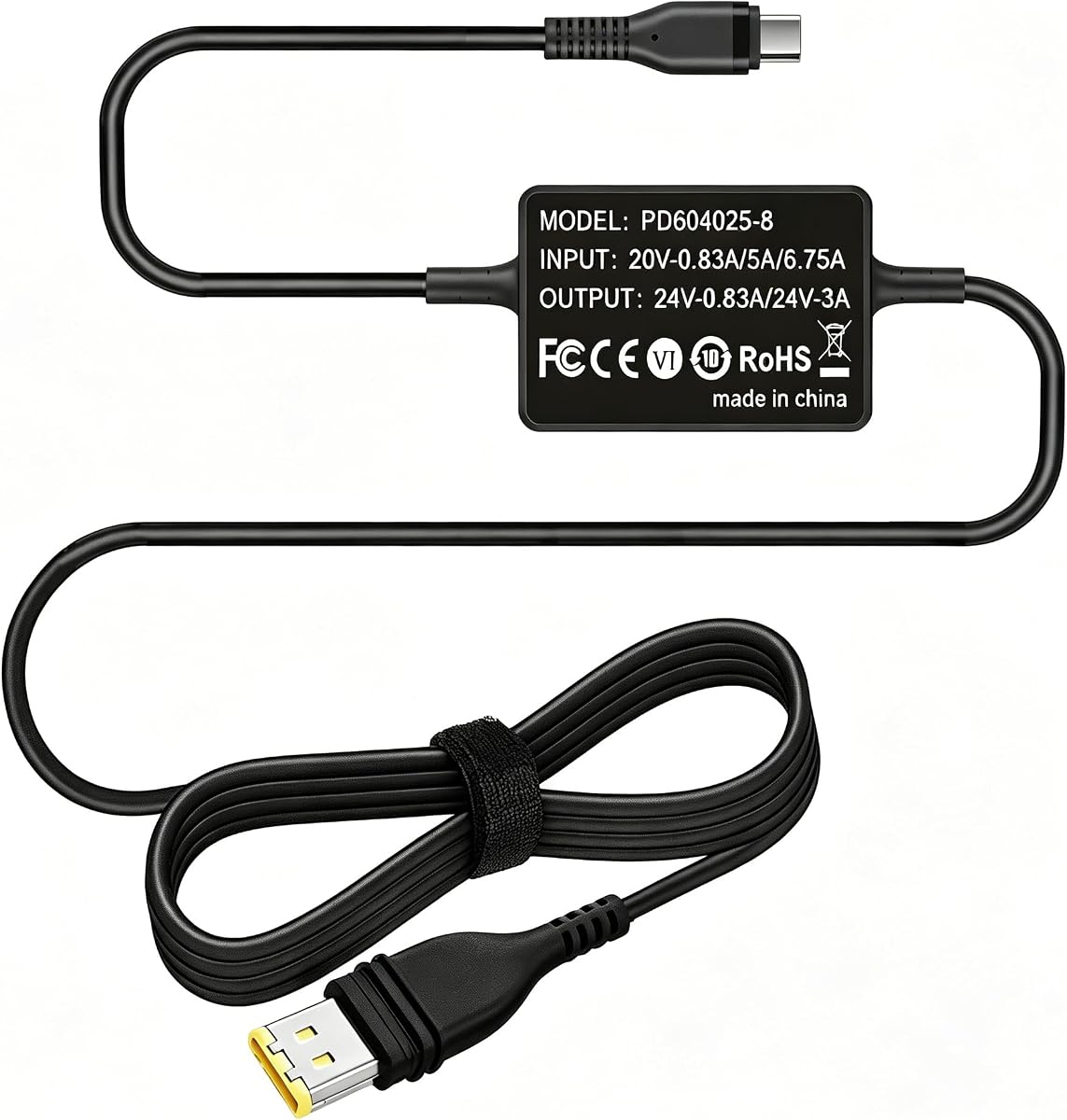
The KFD 12V-24V Car Charger is a flexible converter for ResMed AirSense 11 and AirMini owners who want one cable to work with a vehicle outlet, portable power station, power bank, or battery backup. It holds a 4.3 rating and is positioned as an accessible option because it combines a 20V USB-C PD input, cigarette-lighter connection, and 65W CPAP output in one design.
We may earn a commission when you buy through this link, at no additional cost to you.
Its stated input range is DC 12V-24V with up to 12A, while the included range references DC 9V-32V maximum. The output is DC 24V at 2.71A and 65W. That output is intended for the AirSense 11 family, including AirSense 11 AutoSet and Elite, as well as AirMini models identified by part numbers 38839 and 38831. The total cable length of 2.6 meters gives users room to position a power source away from the machine.
The primary trade-off is that not every USB-C power bank can supply the required 20V PD output and more than 65W. The listing explicitly warns that the source must provide a 12V-24V DC output rated for more than 65W. It is also incompatible with ResMed S9, S10, Philips DreamStation, Philips Respironics, and other listed systems, so buyers should not treat it as a universal CPAP cable.
This is a strong choice for someone who already owns a capable portable power station and wants a single AirSense 11 or AirMini power path for a car and backup battery. It is less suitable for users with older ResMed machines or a basic power bank that offers only low-wattage USB-C charging. Verify the exact output of the power source before ordering, then use the converter according to its connection instructions.
The combination of cigarette-lighter and USB-C PD inputs is useful for travel because the same system can draw from a vehicle or a compatible battery-based source. The source still needs to meet the stated voltage and power requirements.
The product targets AirSense 11 and AirMini models rather than the entire ResMed catalog. Its explicit exclusions reduce the chance of accidentally pairing it with an unsupported S9, S10, or Philips system.
We may earn a commission when you buy through this link, at no additional cost to you.
The 20V CPAP Power Cord combines a strong 4.7 rating with the requirements of modern USB-C power stations and power banks. Designed for ResMed AirSense 11, AirCurve 11 Elite, and AirMini machines, it converts a 20V USB-C PD source into the 24V DC output expected by the listed CPAP systems. It is particularly appealing to travelers who already carry a capable power station.
We may earn a commission when you buy through this link, at no additional cost to you.
The input specification calls for 20V at 3.25A and supports power ratings of 60W, 61W, or 65W. Importantly, the source must provide at least 20V and 65W through USB-C PD; 5V, 9V, and 15V supplies will not meet the stated requirement. The output side offers 24V at 0.833A and 20W or 24V at 2.71A and 65W, allowing the converter to be considered for different compatible devices and power arrangements.
The product's appeal is balanced by a fairly strict power-negotiation requirement. A wall adapter or power bank that supports only conventional USB charging will not be suitable. Its instructions recommend connecting the USB-C end, waiting three to five seconds, and then connecting the CPAP end. If the machine does not start, the user is instructed to disconnect everything, allow roughly 30 seconds for the power to clear, and repeat the sequence.
This is a compelling match for owners of a 20V PD power station who want a focused AirSense 11 or AirMini cable. It may be less convenient than a vehicle adapter because it cannot draw from a cigarette-lighter socket directly. Buyers should first inspect their power source's output label, confirm that it negotiates 20V at 65W, and check the machine model before purchasing.
Most contemporary travel power stations include a high-wattage USB-C port, making this a natural way to connect an AirSense 11 or AirMini without relying on a wall outlet. The port must support the full 20V PD requirement.
The specified connection order and waiting period make troubleshooting more predictable. These details are particularly useful when a device needs time to negotiate voltage before it begins drawing power.
We may earn a commission when you buy through this link, at no additional cost to you.
The Freedom CPAP Battery Compatible Cable is a simple 24V DC connection option made for the Freedom CPAP Battery 160Wh and compatible machine families. With a 3.9 rating, it is less strongly received than the leading converters, but it can still be a sensible choice for buyers who want a direct link between a recognized CPAP battery and a supported machine.
We may earn a commission when you buy through this link, at no additional cost to you.
The cable belongs to a broader set of machine-specific power choices at 12V, 24V, or 14V. Those variants are designed for leading systems including DreamStation, ResMed, and Transcend Micro. This Freedom 160Wh integration is described as providing consistent power delivery, while the plug-and-play format removes the need for tools or complicated setup in many cases.
Its main limitation is the specificity of the system. Buyers who already use the Freedom CPAP Battery may appreciate a straightforward, dedicated connection, while those seeking a universal cable for different power stations will find less flexibility. The lower rating also suggests that the cord or its value proposition may not appeal equally to every user, even when the underlying battery integration is appropriate.
The product is best for someone who already owns a Freedom CPAP Battery 160Wh and has confirmed that their CPAP model corresponds to the appropriate voltage option. It is less attractive for a mixed setup involving unrelated battery brands or portable stations. Check the connector and required voltage on both devices, and confirm compatibility with the seller if the exact machine and battery pairing is not clearly stated.
Using a cable engineered for the Freedom battery creates a more focused setup than a generic conversion cable. This can simplify planning for overnight use, travel, camping, and emergency preparation.
The available 12V, 14V, and 24V options cover different machine families. Selecting this 24V version without confirming the CPAP model and battery output could prevent the connection from operating as intended.
We may earn a commission when you buy through this link, at no additional cost to you.
The MAXOAK K5 K6 cable is a direct 24V DC connection for ResMed AirSense 11 and AirMini machines. It carries a perfect 5.0 listed rating, and its purpose is easy to understand: connect a compatible 24V CPAP battery or power station without relying on a USB-C negotiation process. That simplicity makes it attractive for camping and emergency kits.
We may earn a commission when you buy through this link, at no additional cost to you.
The 5.9-foot cable terminates in a 5.5mm barrel connection, with 2.5mm and 2.1mm sizes referenced in the compatibility information. It is specifically named for MAXOAK K5 and K6 CPAP batteries and the Medistrom Pilot-24 Lite, including several model and part-number variations. It can also work with other portable power stations, lithium battery packs, CPAP backups, and power banks that provide a 24V DC output with the appropriate plug.
The product is intentionally restrictive. The listing warns not to use it with 12V or 5V outputs and states that it is not for ResMed S10, S9, or S8 machines. Those warnings are important because the AirSense 11 and AirMini share a power ecosystem with older devices, and a visually similar cable may still be electrically unsuitable.
This is a good pick for someone who already uses a MAXOAK K5, K6, or Medistrom Pilot-24 Lite and wants a short, direct 24V lead. It is not the right choice for a person with a USB-C power bank or a 12V output. Confirm the battery's output label, the machine model, and the barrel connector dimensions before ordering, then run a short test before relying on the setup overnight.
A fixed 24V cable can be simpler than a PD converter because the user does not need to negotiate 20V over USB-C. It is especially useful for users with a battery already designed around 24V DC output.
The explicit support for MAXOAK K5, K6, and Medistrom Pilot-24 Lite models gives camping and backup users a short list of recognized power sources. Other 24V sources may also work if their connector and output meet the requirements.
We may earn a commission when you buy through this link, at no additional cost to you.
The 20V PD AirSense Converter is designed to turn a high-wattage USB-C source into a 24V CPAP connection for ResMed AirSense 11 and AirMini systems. Its 4.1 rating reflects a generally useful product with extensive power-station compatibility, although the requirements are strict enough that not every USB-C battery bank will work.
We may earn a commission when you buy through this link, at no additional cost to you.
The input is specified at 20V, 3.25A, with power ratings of 60W, 61W, or 65W. The output can provide 24V at 0.833A and 20W or 24V at 2.71A and 65W. The listing names a broad group of supported equipment, including Anker power stations, Jackery Explorer models, and BLUETTI models such as the EB3A, EB55, AC200MAX, and AC200P. It is also CE, FCC, and RoHS certified.
Compatibility is more complicated than that broad list suggests. Several Anker power banks are excluded, including the 313, 325, 335, 337, 347, 523, 525, and 535, along with the Anker 746 configuration identified as having a 100W AC outlet and a 45W USB-C PD port. The instructions also explain that a blinking converter may be negotiating PD voltage incorrectly, requiring the user to unplug it, wait around 30 seconds, and reconnect the CPAP end first.
This converter suits someone who owns one of the named portable power stations and wants a single cable for an AirSense 11 or AirMini. It is less attractive for users with an ordinary power bank or one of the excluded Anker configurations. The long compatibility list is useful, but checking the source's own USB-C output specification remains more dependable than relying only on the device brand.
Support for named Anker, Jackery, and BLUETTI systems makes the converter practical for travelers who may switch between power sources. Compatibility depends on the available port and its maximum PD output, not merely the brand name.
The listed reset sequence gives users a method for resolving a blinking status caused by an incomplete PD handshake. Disconnecting the converter and allowing the source to power down before reconnecting can resolve that particular issue.
We may earn a commission when you buy through this link, at no additional cost to you.
The PD USB-C CPAP Converter is a 20V-to-24V cable for running ResMed AirSense 11 and AirMini machines from a compatible battery, power bank, or portable power station. Its 4.2 rating indicates a practical middle-ground option, and the stated input and output figures make it easier to match with the power source before buying.
We may earn a commission when you buy through this link, at no additional cost to you.
The USB-C input is listed at 20V and 3.25A, accepting 60W, 61W, or 65W power levels. On the CPAP side, it offers 24V at 0.833A and 20W or 24V at 2.71A and 65W. The intended use is a 24V CPAP battery backup, battery system, power bank, or power station. Named compatible models include several Anker power stations, Jackery Explorer units, and BLUETTI systems including the EB3A, EB55, AC200MAX, AC200P, and AC180.
The exclusions are significant. The listing specifically says the cable is not compatible with Anker 313, 325, 335, 337, 347, 523, 525, 535, and 737 power banks, nor with the Anker 746 configuration that has a 100W AC outlet and a 45W USB-C PD port. The core restriction is the source's PD capability, so buyers should not assume that any USB-C port can provide the necessary 20V and 65W.
This cable is a good fit for a buyer with a named compatible portable station who wants a simple 20V PD input and a 24V CPAP output. It is less suitable for someone with a basic USB-A power bank or one of the listed excluded devices. Check the actual port rating, connect to a fully charged source, and allow enough time for the PD handshake before judging whether the CPAP starts.
The converter bridges a common 20V USB-C charging standard and the 24V supply expected by the targeted ResMed machines. That makes it relevant to both compact travel power stations and dedicated CPAP backup batteries.
The detailed exclusions show why device brand alone is an inadequate compatibility test. Confirm that the selected USB-C port can supply 20V at the required wattage and supports PD negotiation.
We may earn a commission when you buy through this link, at no additional cost to you.
The Freedom CPAP Battery Compatible Cable is a general accessory entry for users of the Freedom CPAP Battery 160Wh. It has a 3.0 rating, the lowest among the listed products, so it deserves careful consideration rather than being treated as a universal solution. The positive part of the design is its support for multiple machine-specific voltage options.
We may earn a commission when you buy through this link, at no additional cost to you.
The product family includes 12V, 24V, and 14V output cables intended for leading CPAP models such as DreamStation, ResMed, and Transcend Micro. The listing describes seamless integration with the 160Wh Freedom battery, reliable charging through an optional AC power adapter, and a compact, durable design for home use, camping, travel, and outages.
The key concern is uncertainty at the listing level. Unlike entries with more detailed electrical specifications, this description emphasizes the wider cable family and use cases but does not identify one exact connector or voltage for the selected listing. That makes precise machine matching less transparent. A user could select the wrong option unless the seller provides a clear compatibility chart or confirms the machine, battery, and connector combination.
The cable can be practical for a Freedom Battery owner who values a simple, purpose-built connection and has identified the correct voltage variant for their CPAP. It is a weaker choice for someone who cannot verify compatibility or needs a universal lead for multiple unrelated power sources. Ask for a model-to-cable match before ordering, and avoid assuming that the Freedom battery will accept any generic 12V, 14V, or 24V connector.
The Freedom battery and its matching cable can create a more coherent backup system than an improvised collection of adapters. That makes the product relevant for people building a dedicated overnight or emergency kit.
Because the listing covers several voltages and machine families, buyers should identify their exact CPAP model and intended connector. Seller confirmation is advisable when the product page does not make the pairing unmistakable.
We may earn a commission when you buy through this link, at no additional cost to you.
The EASYLONGER Car Adapter is the most multi-device option in this roundup, combining a 12V/24V cigarette-lighter converter with four CPAP cables and USB charging ports. Its 4.4 rating makes it a strong choice for road trips, vehicles, and travel kits where more than one CPAP or personal electronic device may need power.
We may earn a commission when you buy through this link, at no additional cost to you.
The included cables cover ResMed S9, AirSense 10 and AirCurve 10, AirMini and AirSense 11, and Philips DreamStation and DreamStation 2. The converter itself has three output ports: up to 84W through DC, 30W through USB-C, and 18W through USB-A. A one-button 12V/24V switch allows the user to select the appropriate mode, and the cigarette-lighter connection can be switched off when it is not in use.
The broad package comes with a tradeoff. Users who own only one modern ResMed machine may have three unnecessary machine cables, while the listed 84W DC ceiling is below the 65W power figure some of the dedicated AirSense 11 cables in this guide can deliver. The system also depends on a suitable 12V or 24V source, such as a vehicle outlet or a battery pack with the corresponding output.
This adapter is best for a traveler with a mixed device collection or a family using several generations of CPAP equipment. For someone operating only an AirSense 11 from a 65W battery, a dedicated 65W cable may be a more focused choice. Confirm that the selected DC cable matches the CPAP, set the voltage switch correctly, and avoid overloading the adapter with multiple high-demand outputs.
Four machine-specific cables allow the same vehicle converter to serve several popular ResMed and Philips systems. This reduces the need to carry separate adapters when traveling with more than one device.
The DC, USB-C, and USB-A outputs make the adapter useful beyond CPAP therapy. Users should still monitor the combined load and use the one-button switch to match the source voltage correctly.
We may earn a commission when you buy through this link, at no additional cost to you.
The KFD 12V-24V DC Adapter combines a 4.8 rating, a 65W output, broad input range, and an unusually long 3-meter cable. It is designed for ResMed AirSense 11 and AirMini machines and can draw from a power unit, wall adapter, portable power station, power bank, or battery pack. Its compatibility with the Medistrom Pilot-24 Lite adds another established CPAP battery option.
We may earn a commission when you buy through this link, at no additional cost to you.
The input is listed as DC 12V-24V up to 12A, with a wider stated range of DC 9V-32V maximum. Output is DC 24V at 2.71A and 65W. The product supports AirSense 11, AirSense 11 AutoSet, AirSense 11 CPAP, AirSense 11 Elite, relevant part numbers including 39205 and E1399, and AirMini machines 38839 and 38831. It is also listed as CE, FCC, and RoHS certified.
The 3-meter total cable is a meaningful advantage when the battery, vehicle outlet, or power station is not directly beside the machine. The trade-off is the explicit source requirement: the connected power device must offer a 12V-24V DC output and more than 65W. It is not compatible with the listed ResMed S9, S10, Philips DreamStation, Philips Respironics, or Philips System One 50 and 60 Series systems.
This is an excellent pick for an AirSense 11 or AirMini owner who wants one dependable-looking cable for a vehicle, a Pilot-24 Lite, or a sufficiently powerful portable station. The long lead and high-output rating make it especially practical for travel. Buyers should verify connector shape, voltage, current, and wattage at both ends, and should not rely on this product for unsupported older machines.
A 3-meter lead gives a CPAP user much more freedom when the power source is in a trunk, vehicle cargo area, tent, or separate room. The extra reach can also reduce strain on a fixed wall connection.
The stated 24V, 2.71A, 65W output aligns with the power requirements of the targeted ResMed systems. The source must exceed that output requirement rather than merely offering the same nominal wattage.
We may earn a commission when you buy through this link, at no additional cost to you.
The MAXOAK Medistrom 24V cable is a direct power lead for ResMed AirSense 11 and AirMini machines connected to a 24V CPAP battery or power station. Its 4.2 rating and extensive protection and warranty terms distinguish it from the otherwise similar direct 24V cable in fourth place.
We may earn a commission when you buy through this link, at no additional cost to you.
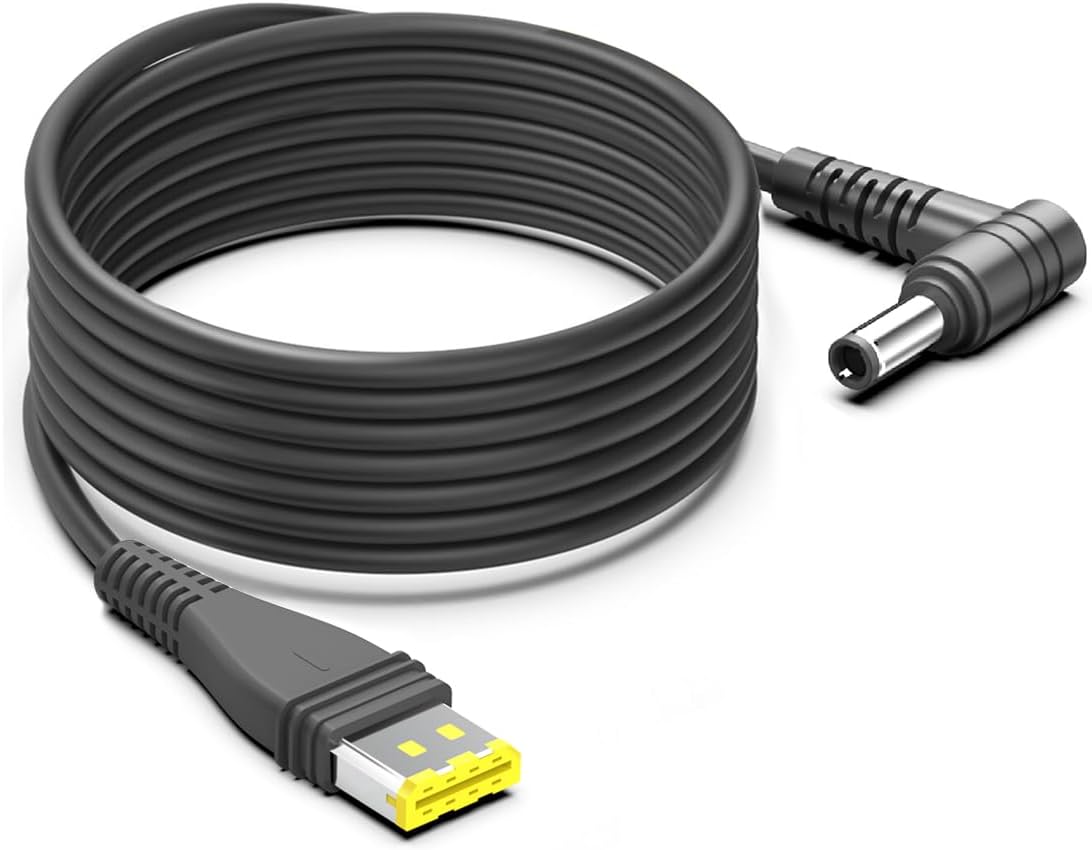
The 5.9-foot lead uses a 5.5mm barrel connection, with 2.5mm and 2.1mm dimensions referenced for compatibility. It supports MAXOAK K5 and K6 batteries and the Medistrom Pilot-24 Lite family, along with other 24V DC power stations, lithium battery packs, CPAP backups, and power banks. Supported CPAP configurations include AirSense 11, AirSense 11 AutoSet, AirSense 11 Elite, AirMini, and associated part numbers.
The standout feature is the stated protective design. The listing identifies UL, CE, FCC, and RoHS certification along with over-voltage, over-current, and short-circuit protection. It also includes a 60-month warranty and a 90-day return period, offering added reassurance for a component that will bridge valuable therapy equipment and external battery power.
This cable is a strong fit for a user with a compatible 24V battery, particularly a MAXOAK or Medistrom owner who values direct power and stated protections. It cannot be used with 12V or 5V outputs and is not intended for ResMed S10, S9, or S8 machines. Verify the battery's 24V output, the barrel plug size, and the CPAP model before installing it.
Over-voltage, over-current, and short-circuit protection add safeguards when connecting a CPAP to a portable battery. These protections cannot compensate for an incorrect output, so source selection remains essential.
The stated 60-month warranty and 90-day return period are notable advantages over many generic cables. Buyers should retain the product details and follow the recommended connection and storage practices.
We may earn a commission when you buy through this link, at no additional cost to you.
Most products in this guide connect a CPAP machine to a separate battery, power station, power bank, or vehicle outlet. Choosing correctly requires matching the machine, connector, voltage, current, wattage, and power-negotiation method before considering convenience or cable length.
AirSense 11 and AirMini compatibility should not be generalized to every ResMed or Philips machine. The products in this guide mention older systems such as the S9 and S10, as well as Philips DreamStation and Respironics, in different ways, and many explicitly exclude them. Look for the exact model family, part numbers, and connector markings rather than relying on the ResMed brand alone. If the listing does not clearly map the connector to your device, ask the seller for a compatibility confirmation before ordering.
In short, identify the exact CPAP model first and match every listed part number before considering the cable's other features.
A physically compatible plug can still cause failure or shutdown if the electrical output is wrong. The targeted AirSense 11 and AirMini systems are paired here with 24V outputs rated as high as 2.71A and 65W. Direct 24V cables should not be connected to 12V or 5V sources. The user must read the power source label and verify both voltage and current rather than looking only at connector size.
In short, choose a cable whose voltage and current exactly match the intended battery or station output.
Wattage is the combination of voltage and current, and it determines whether a converter can support the connected machine. Several products specify maximum outputs of 65W, while the EASYLONGER converter lists an 84W DC capability. The source should meet or exceed the converter's stated requirement; the KFD instructions specifically call for a source supplying more than 65W. Using a lower-output source may cause negotiation problems, blinking indicators, or an inability to start.
In short, treat wattage as a hard requirement and confirm the source can support the converter and CPAP together.
The 20V PD converters require more than a USB-C-shaped plug. Their source must support USB-C Power Delivery at 20V and the necessary wattage, which generally means 60W, 61W, or 65W for the listed products. The instructions explicitly warn against 5V, 9V, and 15V supplies. Some power banks and ports can provide high USB-C wattage but still fail to negotiate correctly with the converter, making the device and port specifications essential.
In short, confirm 20V PD negotiation, not merely USB-C physical compatibility, before using a power bank or station.
Direct 24V barrel cables are simple and suit named CPAP batteries such as MAXOAK K5, K6, and Medistrom Pilot-24 Lite systems. USB-C PD converters are more adaptable to modern portable stations but require careful port selection. Cigarette-lighter adapters support vehicle and some battery-pack use, while the EASYLONGER model includes several machine cables and additional charging ports. The most convenient option is the one matching the power sources already owned and the devices that need to travel.
In short, select the connection method that works with your existing power source without an extra adapter chain.
Cable length affects where a CPAP can be placed relative to the source. The KFD 12V-24V DC Adapter offers a 3-meter total lead, while the MAXOAK and Medistrom direct cables measure 5.9 feet. Longer leads provide placement flexibility in a vehicle, tent, or room, but they add bulk to a travel bag. A shorter cable may be more convenient for portable use and can reduce clutter around the machine.
In short, choose enough length for real placement needs without carrying unnecessary excess cable.
Several listings report CE, FCC, RoHS, or UL certification, and one product also lists over-voltage, over-current, and short-circuit protection. These details are useful when a converter sits between external power and therapy equipment, although certification does not make an incompatible connection safe. Users should avoid damaged cords, exposed connectors, unsupported output levels, and overloaded multi-port adapters. The power source and cable should always be used within their documented limits.
In short, favor documented protections and reputable certifications, but never substitute them for correct voltage matching.
The listed products are mostly cables and converters, so runtime depends on the capacity and efficiency of the separate battery. A higher-wattage converter is not necessarily a higher-capacity battery, and a power station with many ports may have a lower continuous output on the selected port. Users planning full-night therapy should confirm the battery's rated capacity, the converter's continuous output, CPAP power consumption, and any airline or transport restrictions that apply to their chosen battery.
In short, calculate runtime from the separate battery and CPAP load rather than expecting runtime to follow from the adapter alone.
Before connecting anything, confirm the CPAP model, cable output, source output, and connector size. For a direct 24V cable, check that the battery is designed for 24V DC and that its barrel connector matches. For a USB-C PD converter, confirm that the selected port supports 20V at 60W, 61W, or 65W as required by the listing. Do not use a 5V, 9V, 12V, or 15V source with a converter that specifically requires 24V or 20V PD.
Connect the system in the order recommended by its instructions. Several PD converters specify plugging the USB-C end into the source first, waiting three to five seconds, and then connecting the CPAP end. If the converter blinks or the machine does not start, unplug both ends, wait approximately 30 seconds for the power to clear, and reconnect the CPAP end first as directed. For vehicle adapters, set the 12V/24V switch to the correct source voltage before inserting the cigarette-lighter plug.
Run a short test before relying on the setup for an entire night. Start the CPAP, confirm the display and therapy indicators show normal operation, and listen for the expected sound of the blower. Check the source and cable for heat, unusual odor, loose connections, or visible damage. Store cords loosely away from sharp edges, keep connectors dry, and follow the battery manufacturer's charging, storage, and travel guidance. Recheck compatibility before pairing the same source with a different CPAP model.
No. The battery must provide the correct voltage, current, connector type, and in some cases USB-C Power Delivery output expected by the CPAP or its converter. A battery with enough stored energy can still be unusable if its output does not match the therapy machine. Check the exact model requirements and the cable specifications before making a purchase.
The products in this guide support AirSense 11 and AirMini configurations through either a direct 24V DC connection or a 20V USB-C PD-to-24V conversion. Compatible sources include selected MAXOAK K5 and K6 batteries, Medistrom Pilot-24 Lite models, and capable portable power stations. The source must meet the voltage, current, wattage, and connector requirements of the chosen cable.
Not with the direct 24V cables in this guide, which explicitly warn against 12V and 5V output. Some power banks with USB-C PD may work through a listed 20V converter, but only if the port supplies the required 20V and wattage. Several named Anker power banks are specifically excluded, so the exact model and port output must be checked.
The listing describes two output configurations: 24V at 0.833A for 20W and 24V at 2.71A for 65W. The appropriate choice depends on the CPAP model and its power requirements, with the 65W option serving the full-power AirSense 11 target. The battery or power station must be capable of supporting the selected configuration.
Many will not. The dedicated AirSense 11 and AirMini cables exclude older ResMed S8, S9, and S10 systems, and several also exclude Philips DreamStation and Respironics models. The EASYLONGER multi-device adapter is the notable exception because its package includes separate cables for several ResMed and Philips systems. Always follow the cable specifically marked for your machine.
The most common explanation in the supplied instructions is an incomplete or incorrect USB-C PD voltage negotiation. The source may lack 20V output, may not support the required wattage, or may need time to reset. Unplug the converter, allow roughly 30 seconds for it to power down, and reconnect the ends in the specified order before trying another port.
Most of the listed products are power cords, converters, or adapters that connect an existing battery, power bank, portable power station, or vehicle outlet to the CPAP. The Freedom entries are designed around the Freedom CPAP Battery 160Wh, but the batteries are not necessarily included. Buyers should check the package contents and add a suitable power source if it is not already owned.
Charge the battery fully using its approved charger, verify the output label, and test the complete CPAP connection before departure. A short functional test can reveal connector or negotiation problems while there is still time to solve them. Also check airline rules, campsite power restrictions, and the battery manufacturer's storage and temperature recommendations.
The strongest all-around choice in this guide is the KFD 12V-24V DC Adapter because it combines a high listed rating, 65W output, broad 12V-24V input, a long cable, and support for AirSense 11 and AirMini. The KFD 20V PD to 24V Car Charger offers similar compatibility with a shorter lead, while the 20V AirSense 11 Power Cord is a refined choice for owners of a 20V PD portable station.
Prioritize exact machine compatibility, source output, connector type, and required wattage before cable length or convenience. Direct 24V cables are easiest with named CPAP batteries, while USB-C PD converters offer broader use with modern power stations but demand more attention to port negotiation. A multi-device vehicle adapter can be valuable for mixed CPAP collections, though a dedicated 65W cable may better serve a single AirSense 11.
Finally, verify the current listing details, compatibility chart, package contents, and output specifications before ordering. Product configurations and supported accessories can change, so the machine model and power source should be matched against the latest information supplied by the seller.