
24 Cue Remote Stage Lighting Controller
4.6Editor score
Twenty-four cue channels
Fifteen receiver units
Up to 500-meter range
Explore the best Firework Igniter System options, comparing controllers, remote igniters, wiring, clips, and construction tools for safer, more reliable event
A firework igniter system connects pyrotechnic effects to a controller so an operator can trigger cues with greater control and less direct contact with ignition points. The right setup depends on the number of effects, venue layout, available wiring, operating experience, and whether the system is intended for stage performances, displays, or professional pyrotechnic work.
This guide compares remote stage controllers, electronic firing receivers, wireless ignition devices, talon-clip wiring, connecting leads, and construction tools. We evaluated the products using only their listed specifications, intended applications, control capacity, installation requirements, portability, and the information provided in customer ratings, while also considering important limitations and safety-related responsibilities.
The picks reveal three different ways to approach ignition: broad multi-cue control, compact remote operation, and dependable connecting hardware. Each review explains what the product is best suited for, who should consider it, and where it may fall short. Product listings and availability can change, so readers should verify current specifications, compatibility, venue rules, and local requirements before purchasing.
4.6Editor score
5.0Editor score
5.0Editor score
This side-by-side comparison covers complete remote firing controllers, individual wireless igniters, reusable wiring components, and rocket construction tools. Because these products perform different roles, the most useful choice depends on whether the priority is cue capacity, operating distance, installation flexibility, portability, or hardware construction.



This 24-cue remote stage lighting and effects controller receives a 4.6 rating and stands out as the most complete general-purpose system in the group. Its selling point is not merely remote triggering but coordinated control across stage lighting, fountain effects, fireworks equipment, and other electronic effects. The package combines one transmitter with fifteen receivers, giving an installer a substantial number of individual output positions.
We may earn a commission when you buy through this link, at no additional cost to you.
Three operating approaches are listed: control all, sequential control, and step control. That flexibility makes the system relevant to event operators who need to trigger several effects independently, advance through a programmed sequence, or step through cues one at a time. Groups can be configured, while the transmitter’s listed 500-meter range gives considerable separation between the operator and the effects equipment under suitable surroundings.
The tradeoff is that this is a battery-powered system with several receiver units to position, connect, test, and maintain. The transmitter uses six AA batteries, and each receiver uses four. A green testing indicator lamp is included on the receivers to help confirm successful connections, but the system still demands a methodical setup process and a clear plan for cable or radio placement.
This is the strongest all-around recommendation for stage events, weddings, fountains, and other multi-effect productions where cue count and operating flexibility matter. It is less attractive for a simple household display or a single ignition point. Operators should confirm compatibility with their existing effects, follow all pyrotechnic safety procedures, and ensure that a qualified person controls the show.
Control-all, sequential, and step modes let an operator match the firing approach to the timing of a performance. This is especially useful when an event combines lighting, fountains, and pyrotechnic cues that need to be grouped, advanced, or triggered independently.
The listed 500-meter range can keep the operator away from the ignition area, although actual performance depends on surroundings. Venue layout, obstructions, interference, and the placement of receivers should all be checked before relying on the full range.
We may earn a commission when you buy through this link, at no additional cost to you.
The 120 Cues Remote Control Electronic Receiver Box has a listed 5.0 rating and offers the greatest cue capacity among the remote electronic controllers in this guide. It is explicitly described as a 120-cue fireworks stage LED lighting controller, making it aimed at ambitious wedding performances, party shows, and other organized events that may need many separately controlled effects.
We may earn a commission when you buy through this link, at no additional cost to you.
Its most valuable feature is straightforward on paper: capacity for 120 cues from a remote-controlled receiver system. For a large installation, that number reduces the need to combine unrelated effects into a single output or repeatedly reconfigure a smaller controller. The included storage box also makes the system more practical for transport, storage, and organized event work than a loose collection of components.
The available product information is concise, so important technical questions remain. The listing does not state the operating range, receiver count, power method, programming process, connection type, or compatibility requirements in the supplied details. Buyers should therefore ask for current documentation rather than assuming it will work with an existing firing system or particular receiver modules.
For a professional production seeking a high-capacity, remote stage controller, this is the leading pick. It is less suitable for a small display where only a handful of cues are required or for an operator who needs detailed specifications before committing to a platform. Confirm connector types, power requirements, programming process, and applicable safety certifications with the seller.
A 120-cue capacity supports large event sequences without forcing many effects to share a limited number of channels. That makes the receiver box most useful when lighting, stage effects, and fireworks must be coordinated as part of a programmed performance.
A dedicated storage box helps protect the system during travel and keeps components together between events. It is a practical feature for mobile operators who repeatedly assemble and dismantle their firing equipment.
We may earn a commission when you buy through this link, at no additional cost to you.
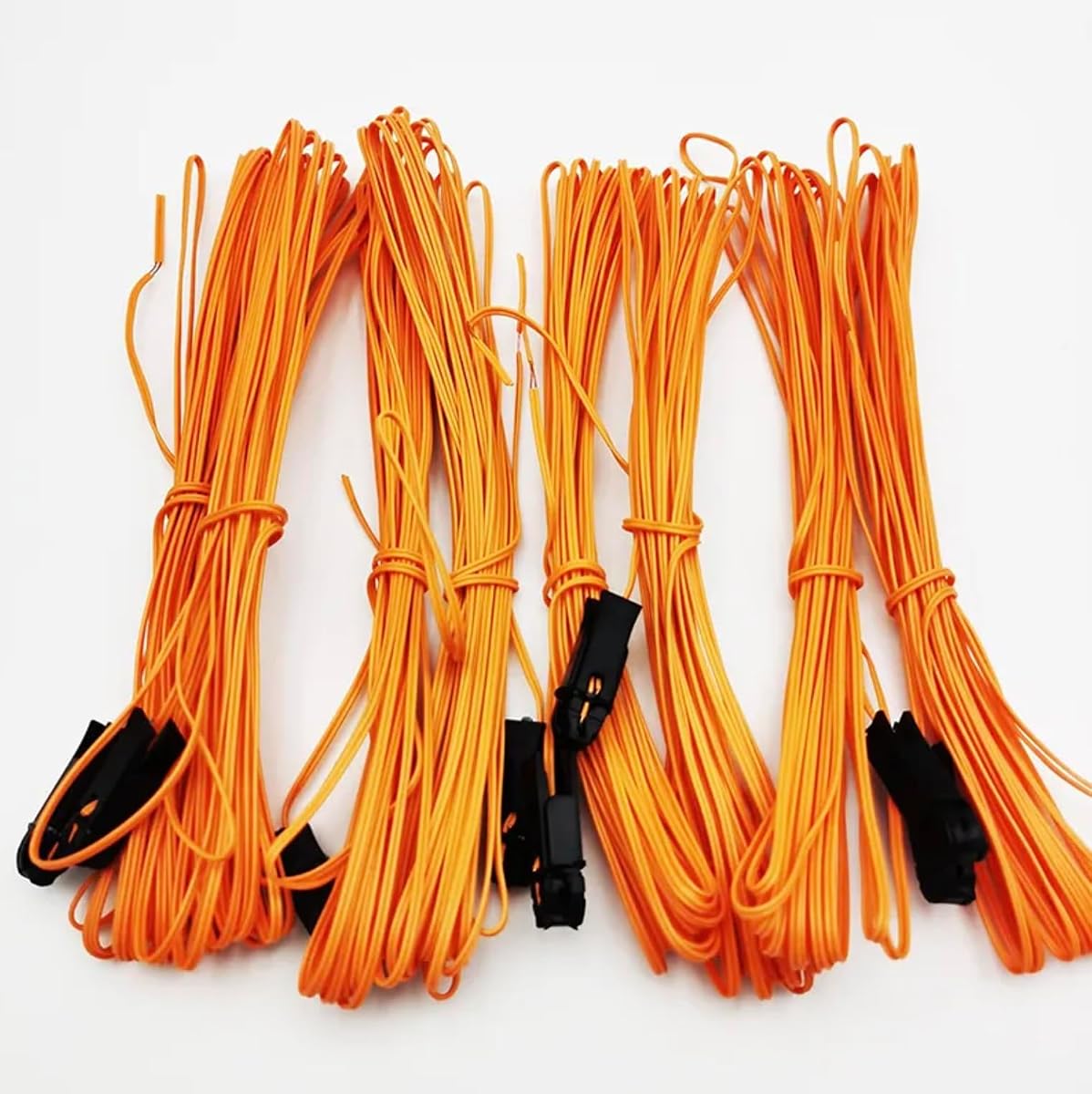
This 100-piece talon clip set carries a 5.0 rating and focuses on the physical connection between an igniter and an electric firing system. Instead of a complete controller, it provides 100 two-meter orange connecting wires fitted with black talon-style clips. It is a hardware-focused choice for displays, stage performances, weddings, and effects flower machines.
We may earn a commission when you buy through this link, at no additional cost to you.
The clips are designed to grip igniter wire securely without the need for manual twisting or splicing. That simplicity can reduce installation time and make it easier to organize multiple devices across a display. Each lead is two meters, or 78.74 inches, providing enough length to reach from a firing position to an effects machine while preserving a manageable physical footprint.
The important limitation is that this is not a remote control system by itself. It needs compatible igniters and an electric firing system, and the operator must understand the electrical arrangement of the display. Incorrect connections could cause a cue to fail or create an unsafe condition. The product is therefore best treated as essential connecting hardware within a broader firing setup.
This package is an excellent choice for installers who need a large quantity of consistent, ready-made leads or for operators who want to avoid preparing connections by hand. It suits multi-device displays better than a single lightweight effect. Confirm the clip geometry, wire compatibility, controller requirements, and all local pyrotechnic regulations before use.
The talon-style clamp grips the igniter wire without the twisting or splicing associated with making connections manually. For a large display, preassembled leads can simplify organization and reduce assembly time.
Two-meter leads give an installer room to separate a firing system from the affected effect. That spacing can improve layout flexibility, but the leads should be routed carefully to avoid entanglement, trip hazards, or damage.
We may earn a commission when you buy through this link, at no additional cost to you.
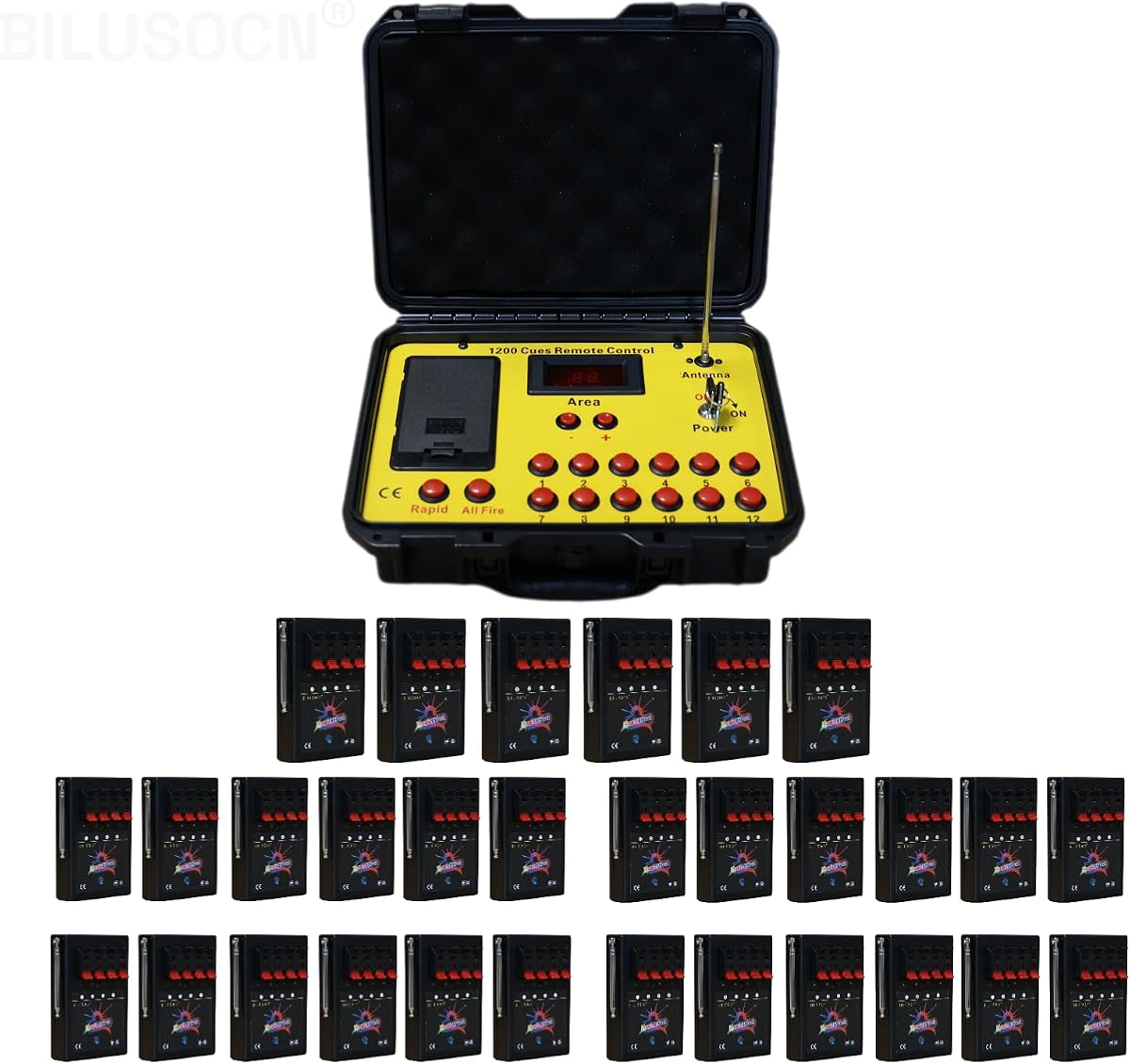
The 12 Cues Remote Control for Stage Effects Equipment has a 4.2 rating and offers a more compact alternative to larger multi-cue controllers. It is intended to control fireworks machines and other stage effects, giving operators a focused way to trigger a moderate number of cues without adopting a much larger platform.
We may earn a commission when you buy through this link, at no additional cost to you.
Twelve channels can be sufficient for a compact stage production, wedding finale, restaurant display, or effects sequence involving several machines. The remote format separates the operator from the effects, while the specific BILUSOCN branding suggests that compatibility with other equipment in the same range may be an important consideration.
The supplied information provides very few technical details beyond the 12-cue remote function and compatibility with fireworks machines. Buyers do not receive listed information here about range, power, programming, receiver quantity, output wiring, or enclosure construction. Those omissions make verification important, especially if the controller will be integrated into a professionally operated show.
This controller is most practical for a user who already knows the BILUSOCN ecosystem and needs a moderate number of remote cues. It is less compelling for someone who requires a highly documented, broadly specified system. Confirm connector compatibility, power requirements, operating range, and venue approval before selecting it over larger controllers.
Twelve cues are enough for a compact sequence without the complexity of a large controller. The format suits operators who need to coordinate a handful of stage effects but do not require dozens or hundreds of separate firing positions.
Remote control allows the firing action to be initiated away from the equipment itself. The exact separation possible should be confirmed because the supplied listing does not state a wireless range.
We may earn a commission when you buy through this link, at no additional cost to you.
This Remote Control Firework Igniter has a 2.6 rating, the lowest listed customer score among the products reviewed. Nevertheless, its core concept is distinctive: a compact, USB-rechargeable, flameless remote lighter designed for firing fireworks, candles, campfires, and outdoor barbecue ignition from a short distance.
We may earn a commission when you buy through this link, at no additional cost to you.
The unit measures 4.69 by 1.22 by 0.77 inches and weighs approximately 45 grams, making it easy to carry in a pocket or outdoor kit. It is constructed from zinc alloy and ABS materials, while the split-style ignition system helps keep hands away from the flame. A listed 32-foot range provides useful separation without attempting the long-distance reach of a full stage controller.
Its lower rating indicates that the product may not deliver the reliability, instructions, or overall performance expected by every user. The listing also mixes a firework igniter with broader lighter functions, so buyers should ensure that it is legally and technically appropriate for their particular effect. USB charging removes the need for disposable batteries, but charge availability and runtime still need to be planned.
This is best suited to a portable, small-scale setup where short-range wireless control and rechargeable convenience matter more than professional cue capacity. It is less suitable for a formal stage show or large display. Because the listed rating is low, operators should inspect the unit carefully, test it only in a safe and permitted context, and choose it only when its short range matches the intended layout.
USB charging and a compact 45-gram body make the igniter convenient for mobile use. It avoids disposable batteries and can remain part of a portable kit for outdoor events, camping, or barbecue ignition.
The listed 32-foot range provides useful separation for small setups. It is more appropriate for close-range personal control than for coordinating a large stage or expansive outdoor installation.
We may earn a commission when you buy through this link, at no additional cost to you.
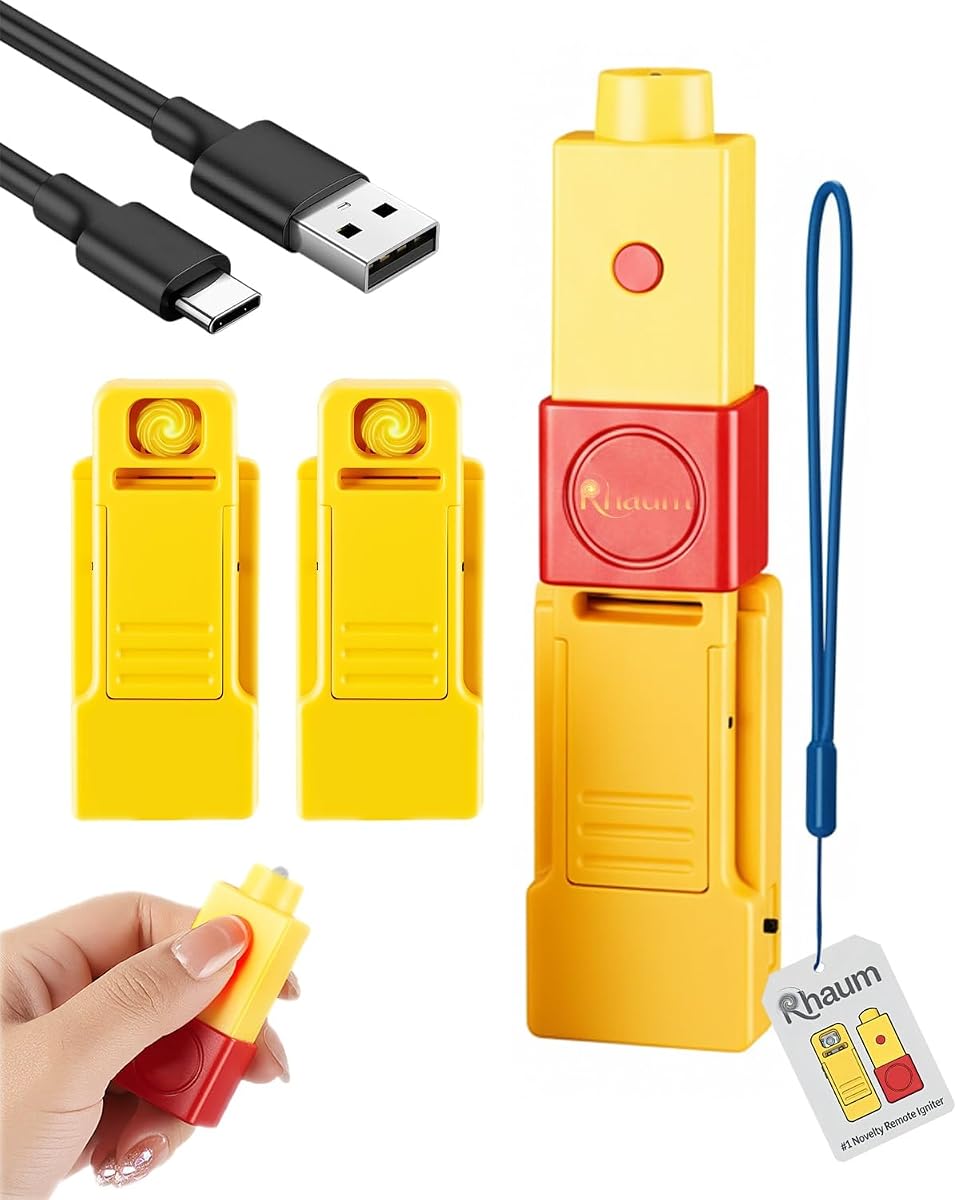
The USB Charging Remote Control Ignition Lighter has a 3.3 rating and combines a rechargeable electric lighter with remote operation. Although it is marketed for candles, grills, stoves, camping, survival, and kitchen use, the same remote-ignition concept can be relevant to small firework effects where hands-on ignition would otherwise be inconvenient.
We may earn a commission when you buy through this link, at no additional cost to you.
Its listed 10-meter effective distance is shorter than that of the other wireless igniter in the group. The package can include one or two igniters along with a remote control, depending on the selected configuration. USB recharging eliminates disposable battery changes, and the compact 4.37-by-1.02-by-0.78-inch body is easy to place in a pocket or bag.
The product is built from plastic and electronic components, with a bright yellow housing and a split-style design intended to keep the user’s hands away from the flame. Its 3.3 rating suggests mixed customer experiences, and the broad collection of intended applications may not provide the specialized assurance that a professional stage product would ideally offer.
This is a practical option for a small demonstration, consumer fireworks setup, or outdoor ignition task where portability and remote control are central. It should not be selected as the primary controller for a complex show. Users should verify the actual range, charging runtime, and compatibility with the intended ignition method, while observing all product and local safety requirements.
The USB-powered design removes the need to carry spare disposable batteries. That makes the device convenient for travel and compact outdoor kits, although the battery should be charged before every use.
The narrow, lightweight housing is easy to carry and the split ignition design adds separation between the hand and flame. Its limited range still keeps the product best aligned with close-range personal ignition tasks.
We may earn a commission when you buy through this link, at no additional cost to you.
The FireSmith 3lb Universal Core Burn Rocket Tools have a 5.0 rating and are intended for people who build their own rockets and fireworks. Unlike the remote controllers and wiring products elsewhere in this guide, this set is a collection of precision construction tools rather than an electronic ignition system.
We may earn a commission when you buy through this link, at no additional cost to you.
The tools are CNC machined from solid bronze and aluminum, materials selected for the demands of repeated workshop use. The universal designation suggests the tools are intended to support core-burning and rocket-motor construction tasks, providing reusable equipment for builders who want dedicated tools instead of improvised workshop implements.
The central limitation is that the set does not fire cues, connect igniters, or manage stage effects. It belongs earlier in the workflow, at the construction stage, and it should be used only by people with suitable knowledge and in a lawful, controlled environment. The three-pound designation appears in the product title, but the supplied information does not break down every included tool or its exact function.
This set is a strong recommendation for experienced hobbyists or professionals who need dedicated rocket and fireworks construction tools. It is not a substitute for a safe, approved firing controller, and it is not relevant to someone who only wants remote ignition. Buyers should confirm the exact tool inventory, compatibility with their motor-building methods, and all applicable construction regulations.
CNC-machined bronze and aluminum tools are built around repeatability and durability. They are more appropriate for a dedicated workshop than for improvised one-time handling of sensitive pyrotechnic components.
The set is designed around rocket motor and core-burning construction. It offers valuable support to builders who already understand the process, but it does not reduce the need for technical knowledge, careful workmanship, and legal compliance.
We may earn a commission when you buy through this link, at no additional cost to you.
The FireSmith 3lb Super BP Core Burn Rocket Tools are a specialized companion to the broader universal tool set. Their stated purpose is building fireworks and rocket motors, with the product title identifying them as Super BP core-burn tools. Like the other FireSmith option, they are workshop instruments rather than a firing or remote-ignition device.
We may earn a commission when you buy through this link, at no additional cost to you.
The tools are CNC machined from solid bronze and aluminum and are made in the United States. This construction focus is the primary reason to consider them: builders working with the specified core-burn approach may prefer tools designed specifically for that type of motor construction rather than a general-purpose assortment.
No numerical customer rating is available in the supplied product information, so this listing cannot be compared on that basis with the other products. The brief description also does not enumerate the individual tools. That makes it especially important for buyers to review the package contents carefully and confirm that the Super BP tools match the specific construction process they intend to use.
This set is best for an experienced builder who specifically wants dedicated core-burn tooling. It offers little value to a person seeking a wireless firework igniter, and it should never be treated as part of the live firing chain. Correct tool selection, safe construction practices, and compliance with applicable laws remain essential regardless of the equipment selected.
Tools intended for a defined core-burn format can support consistent construction within that process. Buyers should match the tooling to their established method rather than choosing solely from the product name.
Solid bronze and CNC-machined aluminum give the set a durable, purpose-built feel. The listed country of manufacture is also a useful point of comparison for builders who place importance on domestic production.
We may earn a commission when you buy through this link, at no additional cost to you.
The 100-piece 11.91-inch Connecting Wire set has a 4.1 rating and offers a straightforward supply of short leads for electric firing arrangements. Each wire measures 30 centimeters, also listed as 11.91 inches, making the set more suitable for compact layouts than long-distance connections.
We may earn a commission when you buy through this link, at no additional cost to you.
Short leads can be useful when an igniter and firing system are mounted close together, such as inside a compact stage machine, flower effect, tabletop display, or tightly arranged group of devices. The bulk quantity provides a convenient stock for multiple effects and future event use without requiring each connection to be fabricated separately.
The product data is very limited and does not describe connector type, wire gauge, insulation, color, or compatibility. Those details matter when the lead is intended to carry an ignition signal. Buyers should not assume that a generic connecting wire is electrically interchangeable with another system merely because its physical length fits.
This product is best for technicians who know their firing system and require many compact leads. It is less useful when effects are spread across a stage or outdoor field. Confirm connector compatibility, electrical requirements, and manufacturer guidance before integrating the wires into a live display.
The 30-centimeter length works well where the firing system and effects are positioned close together. Short leads can reduce clutter inside compact machines and keep the overall installation visually organized.
A pack of 100 provides useful backup stock for multiple displays. It is especially practical for operators who want consistent spare lengths available for maintenance and temporary installations.
We may earn a commission when you buy through this link, at no additional cost to you.
The 100-piece Extended Talon Wire set has a 5.0 rating and is designed to give electric display systems more room between equipment. Each cable is two meters, or 78.74 inches, and uses non-slip spring clamps at both ends to maintain a secure connection after attachment.
We may earn a commission when you buy through this link, at no additional cost to you.
Its listed benefit is layout flexibility. Longer leads can help separate closely packed effects, reduce the congestion created by numerous short cables, and improve use of stage or booth space. The product is listed for display systems, stage events, weddings, party celebrations, performances, and effect flower machines, giving it broad relevance across professional and event applications.
Spring clips are presented as a way to reduce accidental loosening after the jaws bite down on a compatible lead. This can make repeated setup and maintenance more convenient. However, no connector dimensions, electrical rating, wire material, or compatibility details are supplied, so the buyer should confirm that the clamps will fit the chosen ignition and firing components.
This set is an excellent option for installers who need standardized extended leads in quantity. It is more useful than short connecting wires when devices must be spread across a larger arrangement, although careful routing is still necessary to avoid entanglement or trip hazards. It should be purchased as part of a compatible firing system rather than treated as a universal standalone controller.
The two-meter length expands the distance that can be placed between connected equipment. This is valuable when dense placement would otherwise create tangled cables or make individual effects difficult to access.
Non-slip spring clips are intended to reduce loosening after attachment. The design can simplify repeated connections, provided the clip dimensions and electrical arrangement match the firing system being used.
We may earn a commission when you buy through this link, at no additional cost to you.
The right firework igniter system depends on scale, control requirements, installation layout, portability, and the user’s level of experience. Start by separating complete remote controllers from individual ignition devices, connecting hardware, and construction tools, then evaluate only the product type that solves the stage of the setup you actually need.
Cue capacity determines how many effects can be triggered independently or within a coordinated sequence. The 12-cue controller suits a compact production, the 24-cue system supports a broader multi-effect arrangement, and the 120-cue receiver box is aimed at high-capacity performances. Look for sequential, step, group, and control-all modes when the system must coordinate lighting, fountains, and fireworks in a timed show.
Choose enough channels for the planned design without paying for unnecessary complexity. More cues can be useful, but they may also require more receivers, programming attention, and physical setup work.
Wireless range determines how far the operator can be separated from the firing equipment. The stage controller lists a 500-meter range, the portable firework igniter lists 32 feet, and the USB lighter lists a 10-meter effective distance. Actual results can vary with obstacles, interference, antenna placement, and the surrounding environment.
Choose a range that exceeds the distance required by the venue with a suitable margin. Always confirm the signal in a controlled rehearsal rather than assuming the maximum listed figure will apply on site.
Power requirements affect preparation and reliability. The 24-cue controller uses AA batteries in its transmitter and receivers, while the portable wireless devices use USB-rechargeable batteries. Disposable batteries are convenient to replace but require inventory management, whereas rechargeable products need access to a charging source and a dependable pre-event charge.
Match the power method to the operating environment and expected runtime. Rechargeable equipment is convenient for portable kits, while battery-based systems may be easier to keep running in a setup that already uses standard battery logistics.
A controller is only useful if it can connect correctly to the chosen receivers, igniters, and effect machines. Some listings refer to a specific brand or describe compatibility with electric firing systems, while others provide little technical information. Connector type, signal requirements, receiver arrangement, and programming requirements all need confirmation.
Do not assume that a wire, clip, or remote igniter is interchangeable simply because it has a similar description. Ask the seller for current compatibility information and compare it with every component already in the display.
Connecting wire length determines how far an effect can sit from its firing system. The 30-centimeter leads in the short-wire set are useful for compact installations, while the two-meter talon-clip leads support more flexible spacing across a stage, booth, or display field.
Plan the physical layout before choosing a length. Longer cables improve positioning flexibility but still need to be routed and secured to avoid entanglement, accidental disconnection, damage, or trip hazards.
Portable systems benefit from compact dimensions, low weight, rechargeable power, and organized storage. The remote firework igniter weighs approximately 45 grams and includes an LED light, while the high-capacity receiver box is accompanied by a storage box suited to repeated event transport.
Choose a format that can be packed, carried, protected, and rechecked efficiently. A system that is difficult to organize or inspect can lose time during setup and increase the likelihood of installation mistakes.
Construction tools, clips, and electronic controllers serve different functions and should not be judged by identical criteria. The FireSmith sets use CNC-machined bronze and aluminum, the claw-style leads emphasize secure attachment, and the controllers emphasize cue operation. Match the tool to the actual construction, connection, or firing task.
Consider the listed materials, mechanism, and intended setting. A workshop tool does not replace a firing controller, and a controller does not substitute for compatible connecting wire or expert construction knowledge.
A firework igniter system may be subject to local restrictions, permits, insurance requirements, fire-code rules, and venue policies. Product features can improve control, but they do not make an unqualified or unsafe setup acceptable. Only trained and authorized operators should handle professional pyrotechnic equipment.
Check regulations before buying, and follow the complete instructions supplied with the chosen system. Use an appropriate exclusion area, keep spectators away, inspect connections, and use a qualified pyrotechnic operator whenever the event or effect warrants it.
Begin by confirming compatibility, authorization, and venue requirements before connecting anything. Read the current instructions for the controller, receivers, igniters, clips, and effects as one system. Map every cue, label both ends of each lead, and inspect the wiring for damaged insulation, loose contacts, corrosion, or incorrect connector placement.
Set up and test the equipment in a controlled area before the live event. Connect the power source, allow receivers to initialize as directed, and verify that each output corresponds to the intended effect. Check wireless range where it will actually be used, and keep the operator’s position, audience separation, emergency stop procedure, and abort plan clear to everyone involved.
After the event, disconnect power in the order recommended by the manufacturer, disconnect igniters from live firing hardware, and inspect each connection for heat, wear, or damage. Store rechargeable units in a dry location, remove batteries if the manual calls for it, and organize cables without tight bends. Retire damaged components rather than trying to repair ignition wiring with improvised materials.
A firework igniter controller coordinates multiple cues, receivers, and effects through a programmed firing system. A remote lighter is a compact battery-powered device intended to ignite a flame at one or two points from a shorter distance. The controller is therefore better suited to staged sequences, while a remote lighter is more relevant to simple or portable ignition tasks.
Choose one cue for every effect that must be triggered separately, then add capacity for any grouped or sequential functions your design requires. A 12-cue controller may suit a compact production, while the 24-cue and 120-cue systems address progressively larger installations. Consider programming complexity, available receivers, and operator experience in addition to the raw cue count.
Short wires are most suitable when the effect and firing system are mounted close together, such as inside a compact machine or tightly grouped display. Larger stages generally benefit from longer leads that provide better equipment spacing. The correct connector, electrical requirements, and manufacturer guidance should also be confirmed before use.
A longer listed range can allow the operator to stand farther from ignition equipment and the immediate flame area. It does not remove the need for exclusion zones, safe access routes, emergency procedures, or qualified operation. Actual range can also be reduced by walls, crowds, interference, and other environmental conditions, so a site rehearsal is essential.
No. Talon clips and connecting wires are hardware that help attach compatible igniters to an electric firing arrangement. They do not provide cue programming, remote operation, receiver control, or system monitoring. Those functions require a compatible controller and the supporting components needed for that particular installation.
Rechargeable systems are convenient for portable kits because they do not require disposable batteries, but they need dependable charging and a spare charging plan. Battery-operated systems may be easier to support in events that already standardize on AA batteries. Compare expected runtime, recharge time, logistics, and the availability of replacement power sources.
FireSmith tools are construction tools for rocket motors and fireworks, not electronic ignition devices. They are intended for a separate building stage and do not replace a firing controller, receiver, igniter, or safe operational procedure. Buyers should only use such tools with appropriate expertise and in compliance with applicable laws and safety guidance.
Confirm local authorization, permits, insurance, venue rules, trained personnel, emergency procedures, audience separation, and the compatibility of every connected component. Test each cue and communication range in a safe rehearsal area. The product listing and user manual should always be checked for the latest operating instructions and restrictions.
The 120 Cues Remote Control Electronic Receiver Box is the strongest choice for high-capacity event coordination, while the 24 Cue Remote Stage Lighting Effects Controller offers the more versatile combination of cue modes, numerous receivers, and long listed operating range. For installers building the physical connections, the 100-piece talon clip set provides a well-reviewed and conveniently sized supply of two-meter leads.
Prioritize compatibility, cue requirements, operating range, power method, and safe setup before focusing on any other feature. A complex controller is unnecessary for a simple display, and a full system cannot compensate for incompatible wiring or poorly planned installation. Match the hardware to the scale of the event and the expertise of the person responsible for operating it.
Before purchasing, review the current listing for updated specifications, included components, compatibility notes, and availability. Local laws, venue policies, and manufacturer instructions can also change, so confirm the complete system and its intended use before any live firing activity.