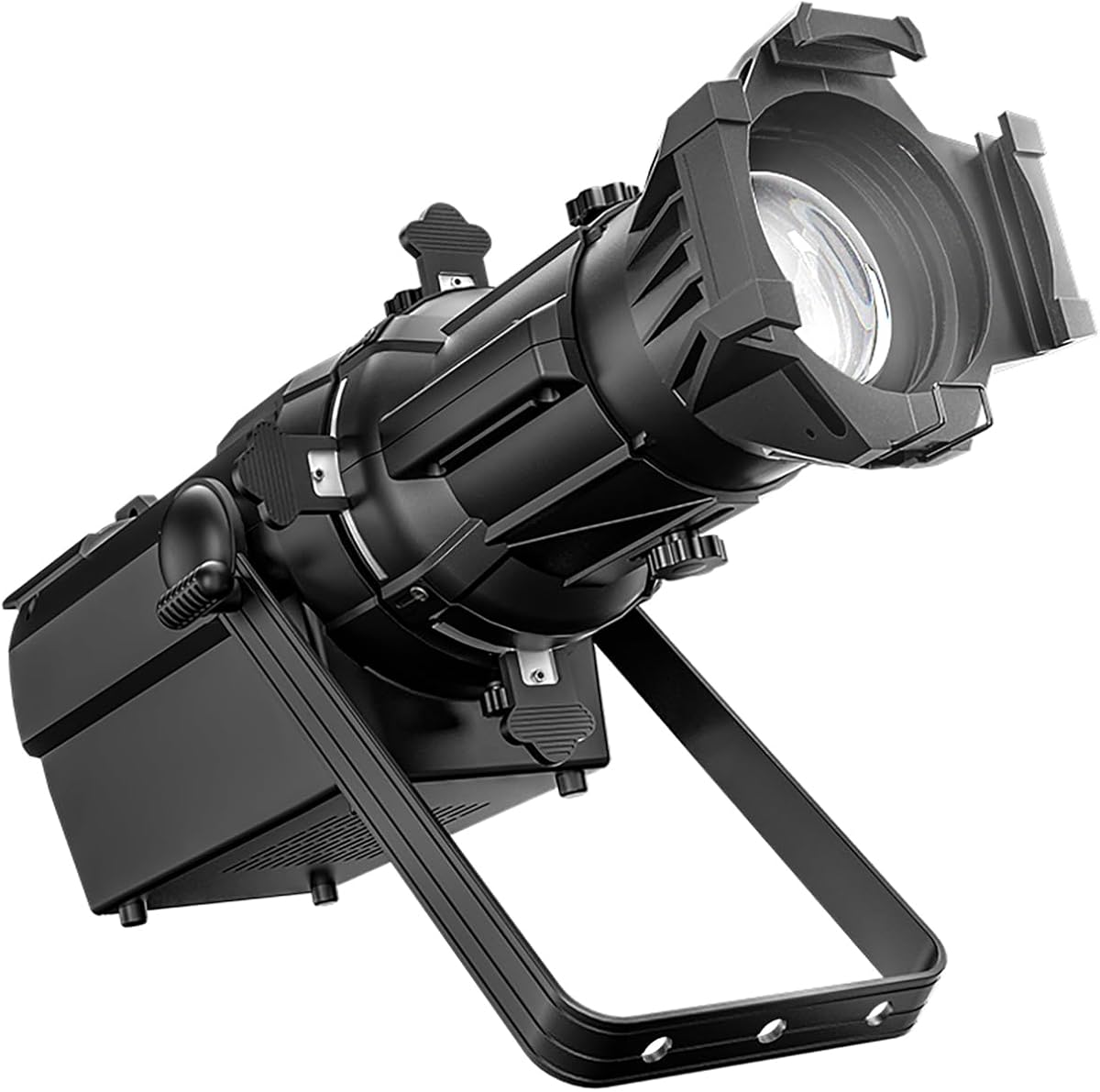
SHEHDS LEKO Profile Spotlights LED 250W
4.8Editor score
250W white LED output
CRI 90 color rendering
2800K–10000K color range
Four-blade framing shutters
16-bit smooth dimming
LED Stage Lighting guide comparing ten top-rated fixtures for color, control, portability, brightness, installation, durability, and professional event use in
LED Stage Lighting gives DJs, performers, event planners, and home entertainers flexible ways to color, animate, and direct a space. A good fixture balances useful beam control, dependable operation, intuitive control options, and enough output for its intended environment while fitting the setup’s power, mounting, and portability requirements.
This guide compares ten stage lighting products ranging from compact RGB PAR cans and all-in-one stands to waterproof wash bars, pixel tubes, rechargeable neon lights, and a professional profile spotlight. The comparison considers color capabilities, operating modes, DMX compatibility, mounting options, brightness, environmental resistance, portability, and the needs of different venues.
Each pick reveals which situations it appears best suited to, from inexpensive party accents to more demanding theatrical, live-performance, and event-production applications. Ratings and specifications reflect the supplied product information, while current prices and availability can change, so shoppers should confirm the latest listing details before making a purchase.
4.8Editor score

4.8Editor score
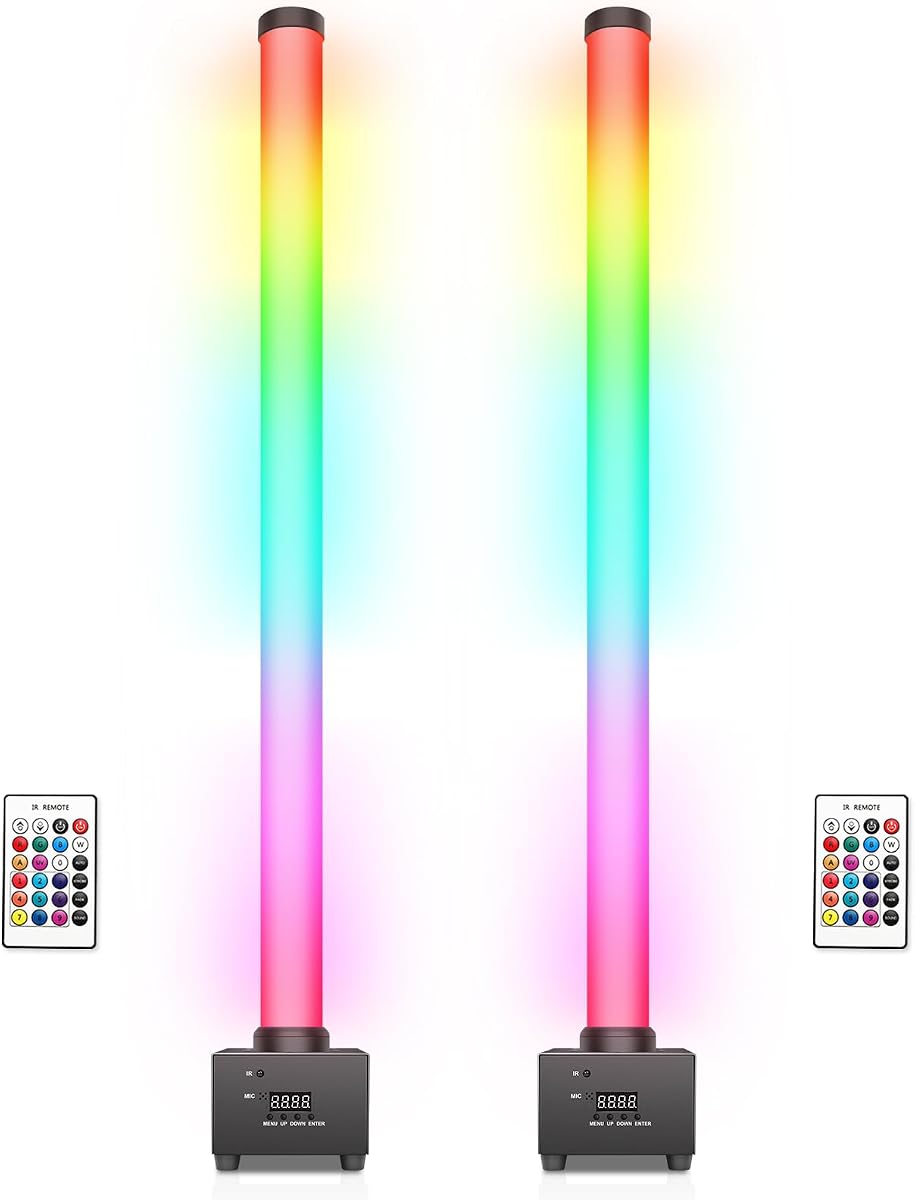
4.6Editor score
The table below compares the ten shortlisted LED stage lighting options by fixture type, light source, control capabilities, installation method, and best-suited application, making it easier to match a fixture to your venue and operating style.



The Czgor four-pack combines four 36W RGB PAR lights with a remote and seven-channel DMX control. Its supplied rating is 4.5, and the strongest attraction is the balance between fixture count, color options, and operating flexibility. Each light contains 12 red, 12 green, and 12 blue LED beads, allowing both static color and mixed-color effects.
We may earn a commission when you buy through this link, at no additional cost to you.
Nine modes cover static color, color mixing, jumps, strobe, fade, automatic operation, sound activation, master-slave linking, and DMX control. That range makes the package useful for beginners who want immediate visual variety and for operators who need fixtures that can join a larger control system. Adjustable brackets and included screws allow the lights to sit on the floor or attach to a truss or stage bar.
The trade-off is that this is a wired lighting system, so cable routing and outlet access require planning. The four-light package may also be more equipment than a small room or intimate gathering needs. Even so, the combination of RGB output, multiple effect modes, and professional DMX addressing makes the four-pack more versatile than a simple remote-only novelty light.
This is a strong choice for DJs, party hosts, small performers, and anyone who wants four coordinated RGB fixtures without assembling separate units. It suits bars, weddings, dance halls, theaters, home celebrations, and seasonal events. For users who need simple controls plus scalable stage operation, it offers one of the most balanced feature sets in the group.
The nine operating modes let users move quickly between static washes, rhythmic changes, fades, and strobes. Automatic and sound-activated modes are particularly helpful when no lighting desk is available, while DMX takes over when coordinated control is important.
Multiple lights can be distributed around a dance floor, stage edge, DJ booth, or wall. The included adjustable brackets make directional placement straightforward, helping the same four-light set serve as uplighting, ambient color, or performance accents.
We may earn a commission when you buy through this link, at no additional cost to you.
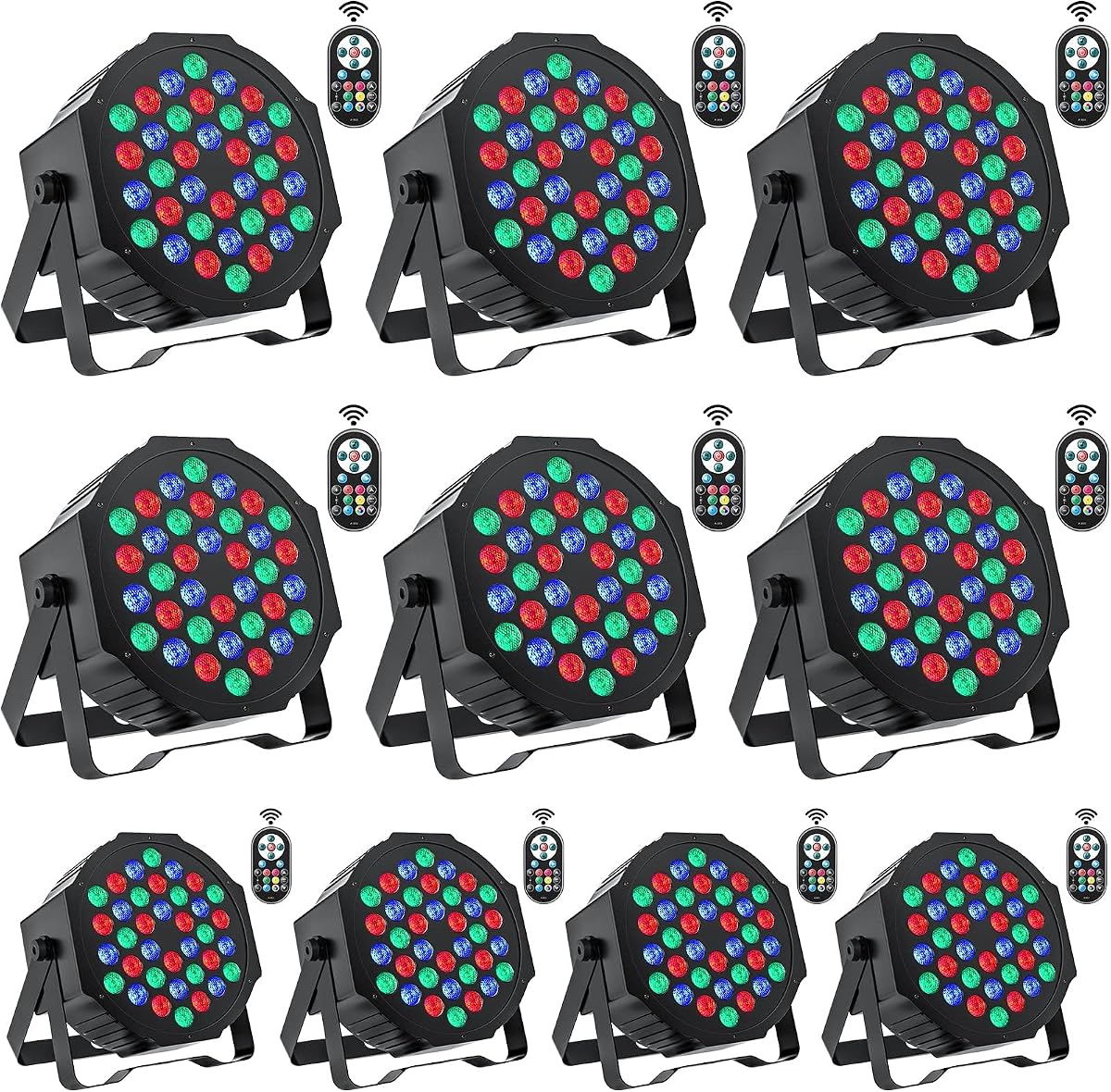
The U`King ten-pack is built for events that need numerous matching RGB fixtures rather than a single accent light. It carries a supplied rating of 4.4 and uses ten 36-LED PAR cans, with each fixture dividing its LEDs evenly among red, green, and blue. The quantity makes it appropriate for larger rooms, stages, dance halls, and permanent event inventories.
We may earn a commission when you buy through this link, at no additional cost to you.
Six color modes provide selection, shade, pulse, jump, strobe, and fade treatments. The fixtures also offer automatic, sound-activated, master-slave, and DMX 512 operation, giving users a choice between automated shows and externally programmed control. Standard DMX cabling allows the lights to be chained and synchronized with other compatible PAR fixtures.
Its principal disadvantage is logistical rather than functional. Ten wired fixtures require careful power distribution, cable management, and setup time. The package also does not include a stand or a control console, so complete coverage may require additional equipment depending on the venue. Despite that, the number of matching units creates an immediate visual scale that smaller packs cannot provide.
For mobile DJs, event rental businesses, clubs, theaters, and larger party hosts, the ten-pack offers considerable deployment flexibility. It is less attractive for a small home setup, but for repeated use in rooms with substantial programming needs, a coordinated ten-unit collection can save time and simplify matching.
Ten identical fixtures can be positioned across a stage, room perimeter, or dance floor to produce consistent color. Centralized control and master-slave operation help keep the installation visually synchronized.
The six dedicated color modes offer different visual rhythms without requiring extensive manual programming. Users can transition between restrained shade effects, energetic jumps, pulses, and full strobe output as an event develops.
We may earn a commission when you buy through this link, at no additional cost to you.
The U`King two-pack provides a manageable introduction to RGB stage lighting for parties, performances, and event accents. It has a supplied rating of 4.4 and includes two corded fixtures, each using 36 one-watt LED beads. That arrangement offers full red, green, and blue color mixing without the complexity of a larger installation.
We may earn a commission when you buy through this link, at no additional cost to you.
Seven modes include static color, strobe, automatic operation, voice control, master-slave, DMX, and gradient. The remote is convenient for everyday color changes, while the DMX connection allows one controller to manage multiple units. Included brackets and screws support installation on walls, ceilings, or other suitable positions, with adjustable angles for directing the output.
A two-fixture set naturally provides less coverage than a four- or ten-light package, making fixture quantity the main limitation. Remote operation can also be less dependable in crowded radio environments or when signals must pass through obstacles. However, the lights retain professional DMX support, so the package need not remain limited to simple standalone use.
The two-pack is well suited to home entertainers, small performers, intimate receptions, and DJs who need a compact pair of colored uplights. It is especially useful for users who want remote convenience today but may later integrate the fixtures into a DMX-controlled setup.
The adjustable brackets allow the pair to provide uplighting, wall washes, or focused stage accents. Because only two units are involved, setup and cable management remain comparatively simple.
Remote operation keeps everyday use accessible, while seven-channel DMX support provides a route to centralized control. One controller can operate multiple compatible lights and help coordinate colors with music or other programmed effects.
We may earn a commission when you buy through this link, at no additional cost to you.
The Manalete four-pack offers four matching 36W RGB stage lights and a supplied rating of 4.5. Each fixture uses 12 red, 12 green, and 12 blue one-watt LEDs, delivering multicolor output through a compact PAR format. The set is designed for DJs, stages, clubs, churches, theaters, weddings, and home parties.
We may earn a commission when you buy through this link, at no additional cost to you.
Seven modes—dimming, sound, DMX, color, gradient, pulse, and jump—cover the core needs of party lighting. Two remote controls are included, each with a stated reception range of up to 16 feet. Remote and DMX control provide both a simple operating path and a professional integration option, while mounting brackets and screws allow each light to be angled as needed.
The main limitations are the wired nature of the system and the relatively modest stated remote range. Users may also need to source DMX cables and plan cable paths carefully. Even so, the four matching fixtures, multiple control methods, and adjustable mounting hardware create a convenient package for event organizers who want coordinated lighting without assembling units individually.
This is a strong option for party hosts, small-stage performers, DJs, and venue staff who need a balanced four-light RGB set. Its useful combination of color modes, sound response, and DMX support makes it appropriate for both spontaneous events and more structured performance environments.
Including two remotes can be helpful when different people manage separate sections of a room. Each can access the basic operating functions within the stated reception range, while DMX remains available for centralized control.
The fixtures use a sturdy ABS housing intended to tolerate regular handling and use. Combined with included brackets, this makes the set practical for venues that repeatedly install and transport their lighting.
We may earn a commission when you buy through this link, at no additional cost to you.
This four-pack of 72W wash light bars is built for broad, colorful coverage and outdoor resilience. The supplied rating is 4.3, while the defining feature is an IP66 rating for dust and resistance to strong waves or heavy spray. The bars are intended for stages, walls, and dance floors where a wide wash is more useful than a narrow spotlight.
We may earn a commission when you buy through this link, at no additional cost to you.
Control comes through the LotusLamp X app, an included remote, and daisy-chained operation. Users can adjust brightness, speed, and effects, set a timer, and synchronize lighting to music detected from a phone or external source. A 25-degree beam angle creates a defined wash without the extreme concentration of a profile fixture.
Important limitations apply. The bars cannot be submerged, and they can only operate in series with one shared power connection; they cannot be separated for individual use. That configuration reduces flexibility, particularly for users who want different fixtures pointed in different directions. Installation therefore requires more planning than a conventional set of independent PAR cans.
The package is most suitable for outdoor weddings, church events, parties, stage backdrops, and architectural color washing where weather exposure is a concern. For indoor users seeking completely independent fixtures, this is less adaptable. For a permanent linked wash with smart control, however, the combination of IP66 protection, app operation, and synchronized effects is compelling.
The IP66 enclosure helps protect against dust and substantial spray during outdoor use. It still requires correct installation and cannot be fully submerged, so environmental protection does not eliminate the need for careful placement.
The timer can automate daily operation, while adjustable sound sensitivity allows effects to follow nearby music. These functions make the bars suitable for unattended or semi-unattended event routines.
We may earn a commission when you buy through this link, at no additional cost to you.
The SHEHDS LEKO profile spotlight is the most specialized fixture in the group, offering a 250W white LED source rather than multicolor party-lighting output. It has the highest supplied rating, 4.8, and is built for stage, studio, and camera applications where color accuracy, beam definition, and dimming quality matter.
We may earn a commission when you buy through this link, at no additional cost to you.
CRI 90 supports natural-looking skin tones and materials, while the adjustable 2800K–10000K range moves from warm white to cool daylight. The 16-bit dimmer covers 0–100% with smooth fades, and a manual four-blade framing system lets an operator shape the projected edge. A filter holder also supports gobos, frost, and color filters.
Its focused 19-degree beam makes it appropriate for theatrical or performance accents, but not a substitute for a broad RGB wash. It also lacks integrated red, green, and blue emitters, so colored stage looks require external filters or additional fixtures. For a buyer who specifically needs controlled white light and shaping, those limitations are less relevant than the precision the product provides.
This profile spotlight is best for theaters, studios, photographers, churches, and stage productions that need natural white color and crisp beam edges. It is the premium choice in this roundup because the high-output engine, CRI 90 rendering, smooth dimming, and framing controls serve a distinct professional purpose that basic party lights do not cover.
CRI 90 is particularly helpful when performers, presenters, or products are being lit. The broad color-temperature adjustment lets one fixture create warmer dramatic scenes or cleaner, cooler illumination for cameras and contemporary spaces.
The four-blade framing system creates defined edges and can shape the light around a performer or set element. The filter holder expands creative control with gobos, frost, and standard color-filter media.
We may earn a commission when you buy through this link, at no additional cost to you.
This 120W RGBW gigbar is the most complete portable package in the lineup, combining four lights, a seven-foot tripod, carry bag, remote, and power cord. It has a supplied rating of 4.8 and is intended for DJs, bands, parties, weddings, churches, and concerts. The all-in-one format reduces the need to source a separate stand for immediate deployment.
We may earn a commission when you buy through this link, at no additional cost to you.
Twelve RGBW LED beads provide a broader palette than standard RGB by adding a white element. DMX compatibility uses the CH5-CH8-CH20 protocol, while a built-in microphone supports music-rhythm synchronization. The adjustable strobe operates from 0–20Hz, giving users both subtle pulsing and more intense effects for energetic passages.
The two-section tripod reaches 2.2 meters, or 7.2 feet, to provide broad dance-floor coverage. At approximately eight pounds, the complete kit is still portable enough for mobile use, though the stand and four-light bar require a stable footprint. The lighting is also primarily white-based with RGBW output rather than a fully saturated RGB-only fixture.
For beginners building a first DJ setup, this package removes many accessory decisions and supports a professional control path. It is also a strong choice for event planners who need a complete, reusable lighting kit that can be carried between venues. The combination of stand, bag, DMX, sound activation, and RGBW output makes it the most approachable all-rounder here.
The included tripod, power cord, remote, and carry bag create a ready-to-assemble package. Operators can unfold the stand, position the bar, and begin using built-in or sound-activated effects without first building a separate support system.
At about eight pounds, the package is manageable for mobile DJs and event planners. The included tote helps organize the fixtures and accessories, while the stand provides elevated output when floor placement is insufficient.
We may earn a commission when you buy through this link, at no additional cost to you.
The 60W pixel tube combines 120 RGB LEDs with 360-degree illumination, creating a visible effect from nearly any viewing angle. Its supplied rating is 4.6, and the design is aimed at stages, clubs, live shows, DJ setups, and creative video environments where an immersive tube of color is more appropriate than a conventional directional PAR.
We may earn a commission when you buy through this link, at no additional cost to you.
The fixture divides its LEDs into 20 segments, each containing six beads, allowing pixels to be controlled individually in DMX mode. Remote operation provides quick access to automatic, sound-activated, master-slave, and DMX shows, with brightness, strobe, and color controls. RDM support permits remote adjustment of important fixture settings, which helps during performances.
A fanless cooling system provides completely silent operation, making the tube useful in churches, weddings, studios, and video shoots where fixture noise would be distracting. The limitation is quantity: a single tube provides a smaller canvas than a multi-fixture package, and more elaborate pixel designs depend on appropriate programming and placement.
This pixel tube is a strong value-oriented choice for DJs, bands, clubs, and creators who want a distinctive full-angle visual. It combines professional control, silent operation, and flexible mounting with a relatively focused single-fixture design. For anyone building around a central stage element, it can be more expressive than conventional uplights.
The tube distributes light through a full 360-degree field, so it reads as a glowing visual element from the audience, stage, and sides. This makes it well suited to center-stage placement, frame integration, or installation among other scenery.
Fanless cooling removes the operating noise associated with many powered fixtures. That characteristic is valuable in churches, intimate weddings, studios, and shoots where background sound must remain clean.
We may earn a commission when you buy through this link, at no additional cost to you.
This six-pack of four-foot RGB tube lights is built for setups where conventional power cables are inconvenient. Each tube contains a 5000mAh rechargeable battery, a handle, and an adjustable base, while the set includes a protective hard case. Its supplied rating is 4.4 reflects a portable package aimed at parties, studios, broadcasts, photo booths, and outdoor performances.
We may earn a commission when you buy through this link, at no additional cost to you.
The 3.7V batteries take about four hours to charge and provide approximately five to six hours of continuous illumination at full brightness. Lowering the output extends operation to roughly 13–15 hours. Type-C charging allows recharging through computers, adapters, or power banks, adding flexibility when conventional outlets are distant.
Six remotes use 2.4G technology with a stated 40-meter range, and each remote can control groups or individual tubes. The fixtures also offer more than 500 RGB effects, sound pickup, and direct handle controls for color, brightness, speed, mode, and effect changes. One limitation is that the RGB output does not include warm white, so users who need neutral or tungsten-style light should look elsewhere.
This set is a compelling choice for photographers, mobile DJs, party hosts, and performers who need flexible placement without power drops. The batteries, handles, bases, long-range remotes, and carrying case prioritize mobility. For a permanent venue installation, however, the finite battery runtime and recharge cycle make a wired system more practical.
Rechargeable operation makes these tubes useful in outdoor venues, photo sets, studios without convenient outlets, and temporary stages. Type-C charging supports several common power sources, and lower brightness can extend the runtime when a long event is planned.
The remotes can synchronize all six tubes or address them separately, supporting both uniform room color and distributed effects. A stated 40-meter range offers practical flexibility across medium and large event spaces.
We may earn a commission when you buy through this link, at no additional cost to you.
The mini RGBW four-pack offers four compact, corded fixtures for parties, home banquets, restaurants, performances, and disco gatherings. It has a supplied rating of 4.3, with each fixture weighing 0.4 kilograms and measuring 5.3 inches on each side. Those characteristics make the lights notably easier to store, carry, and reposition than full-size stage PAR cans.
We may earn a commission when you buy through this link, at no additional cost to you.
Each eight-watt fixture mixes more than 16 million colors and supports automatic, sound-activated, DMX 512, and master-slave modes. Users can adjust brightness, color-change speed, automatic-mode speed, and sound sensitivity. Four- and eight-channel DMX operation provides integration options, while the white component in RGBW expands the palette beyond saturated red, green, and blue.
The primary compromise is output. At eight watts per fixture, the set is better for intimate rooms, tabletop accents, bars, and smaller performance spaces than broad washes across a large hall. Because the lights are corded, they also lack the placement freedom of the battery-powered tube set, and each requires a suitable connection for power and any DMX network.
This four-pack is a useful choice for home entertainers, small venues, and performers who value low weight and fast setup over maximum brightness. It offers enough control and effect variety for lively events, and the compact housing makes it convenient to transport. For larger stages, a higher-output fixture family would be the better choice.
Each light is small and light enough to carry with one hand, while wired power avoids the charging and runtime concerns associated with battery fixtures. This trade-off is useful for setups that can access dependable outlets.
Automatic, sound-activated, master-slave, and DMX modes cover most small-event workflows. Adjustable sensitivity and effect speed help the output remain appropriate for dining areas, home gatherings, and compact stages.
We may earn a commission when you buy through this link, at no additional cost to you.
The right LED stage lighting choice depends on the room, role of the light, control system, installation method, and level of output required. Comparing fixture types and practical specifications is more useful than choosing on wattage alone.
In short, use PARs for flexible uplighting, wash bars for broad coverage, profiles for shaped white beams, and pixels for graphic effects.
Prioritize usable coverage and the required beam angle before considering maximum power. For accurate white light, the LEKO profile’s CRI 90 specification is especially relevant.
Choose saturated RGB for energetic dance lighting, RGBW for more versatile white and pastel effects, and high-CRI white light when natural rendering is the priority.
For coordinated events, prioritize DMX compatibility, documented channel layout, and reliable master-slave linking. Remote-only fixtures are simpler but offer less expansion potential.
Choose sound and automatic modes for simplicity, pixel segments for creative sequencing, and professional DMX operation when precise scene control matters.
Use wired lighting for dependable long-duration power and battery products for mobile or cable-free placement. Verify runtime, recharge time, and charging method before booking.
Choose mounting hardware that matches the venue, not just the product. Mobile users benefit from included stands and cases; fixed installations should prioritize secure brackets and cable management.
For exposed events, select a clearly rated waterproof option. For quiet venues, favor fanless fixtures or place noisier units away from microphones and cameras.
Begin by identifying the fixture’s power, control, and mounting requirements. Read the supplied manual, inspect the housing and cables, and test each light at low output before installation. Secure brackets, stands, or hooks, distribute power safely, and keep DMX cables and power runs from obstructing guests or performers.
Start with remote, automatic, or sound-activated modes to establish a comfortable baseline, then introduce DMX control when the fixtures are correctly positioned. Test sound sensitivity in the actual room, adjust brightness for the camera or audience, and use slow fades and restrained strobe rates where photos, video, or sensitive guests are present.
After use, power the fixtures down, disconnect them safely, and inspect cables for damage. Store portable products in their cases, keep lenses and housings dry, and avoid blocking ventilation. Before an outdoor event, recheck weather ratings, connections, mounting security, and battery levels, and replace any damaged parts before reuse.
LED PAR lights are compact, directional fixtures commonly used for uplighting, accent lighting, and stage color. LED wash bars contain a longer row of diodes and are generally used to cover broader surfaces such as stages, walls, and architectural features. The best choice depends on the size and shape of the area you need to illuminate.
It is not required for simple remote-controlled color or sound-reactive effects. DMX becomes valuable when you want to coordinate several fixtures, integrate them with a larger lighting system, or program specific scenes. Beginners can start with remote and automatic modes, while mobile DJs and production users are more likely to need DMX.
Only fixtures with an appropriate environmental rating should be exposed to weather. The IP66 wash bars in this guide are designed to resist dust, strong waves, and heavy spray, but they cannot be submerged. Other products without a stated waterproof rating are safer under cover or in dry indoor environments.
No. A higher-watt fixture may deliver more output, but beam angle, lens quality, color rendering, and coverage determine how useful that output appears. Compact eight-watt PARs can work well in an intimate room, while a 250W profile is intended for focused theatrical illumination and should be selected for a specific stage task.
RGBW provides red, green, blue, and white light, so it can create saturated colors as well as cleaner white and pastel tones. RGB fixtures remain effective for vivid dance-floor color and may be all that a setup needs. RGBW is more versatile when neutral accents, warmer looks, or smoother transitions are important.
CRI becomes particularly important when lighting people, costumes, products, or camera subjects. A CRI 90 fixture can render skin tones and materials more naturally than a fixture with a lower rating. For pure colored effects or decorative uplighting, CRI may matter less than color saturation and brightness.
Place fixtures away from audience sightlines where possible, aim them toward the intended surface, and secure every support. Distribute lights around a room to avoid concentrated hot spots, and keep cables clear of walkways. Test the final arrangement before guests arrive and adjust angles while the room lighting is in its normal state.
It depends on brightness and the event length. The included battery tubes are stated to run about five to six hours at full brightness and approximately 13–15 hours at their lowest setting. Long events should reduce output, schedule charging, or keep wired fixtures available as a more dependable primary lighting source.
The top recommendations cover three distinct needs. The SHEHDS LEKO profile is the premium option for high-output, high-CRI white light and precise beam shaping. The 120W RGBW gigbar is the most complete portable package for DJs and event planners, while the 360-degree pixel tube offers distinctive programmable color, silent operation, and professional control at a more compact scale.
For most party and small-stage needs, the four-light RGB PAR packs provide a practical balance of output, modes, remote convenience, and DMX integration. Larger installations may prefer the ten-pack U`King system, outdoor users should focus on the IP66 wash bars, and mobile creators can use the battery tubes where power access is limited.
Before purchasing, confirm the current listing specifications, included accessories, control protocol, mounting hardware, and environmental limitations. Product prices and availability can change, so checking the latest offer and planning the full setup—including cables, power distribution, stands, and safe mounting—will lead to a more successful result.