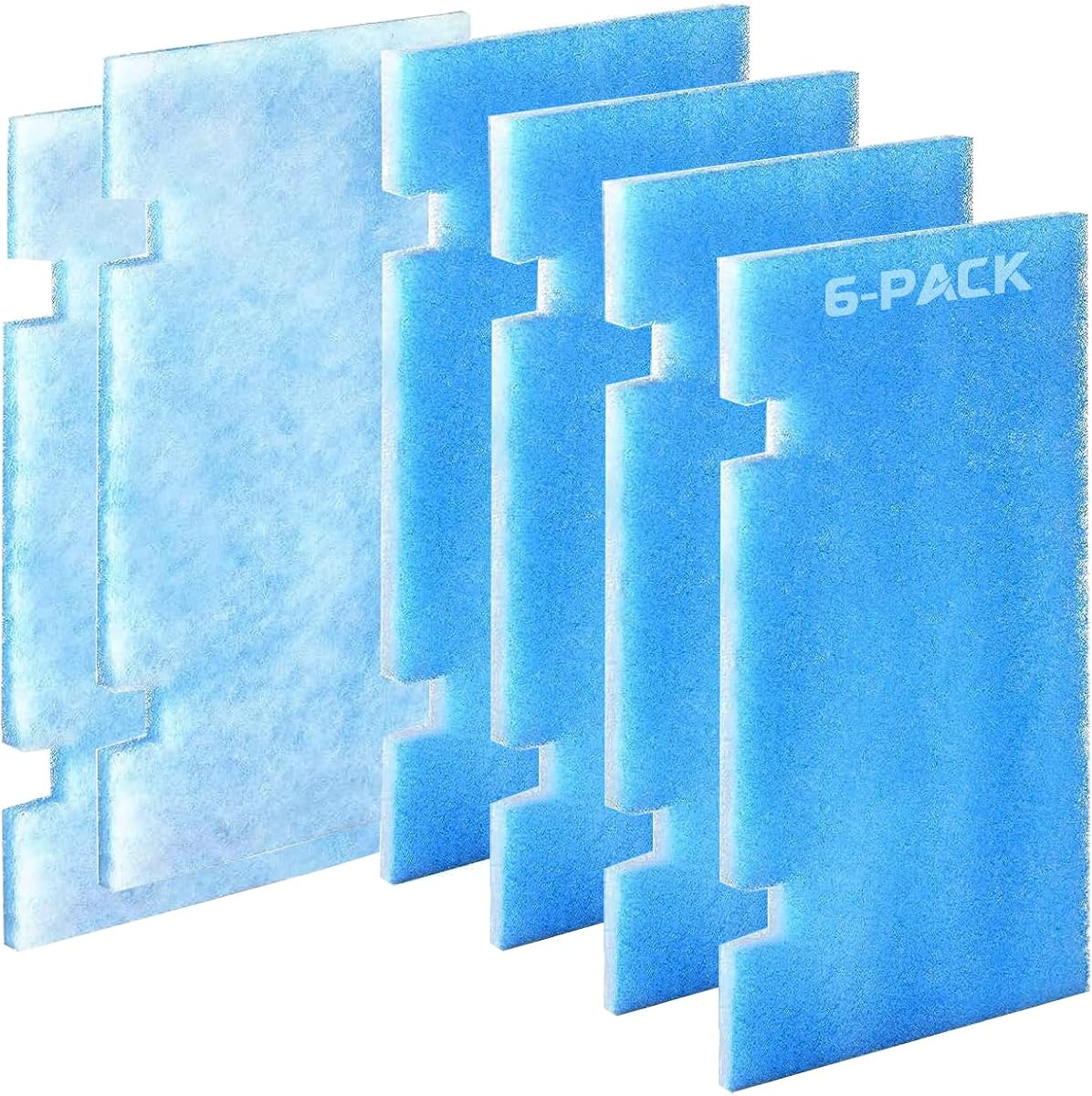
6 Pack RV Air Conditioner Filter for Dometic
4.7Editor score
MERV 8 composite filtration
Precisely cut for Dometic
Six-filter replacement pack
An RV air conditioner filter helps limit dust, pollen, pet dander, hair, smoke, and other airborne particles entering the living space. A good replacement should fit the unit, maintain healthy airflow, match the required dimensions, and suit the conditions encountered during travel.
This guide compares ten RV air conditioner filters using the supplied dimensions, materials, filtration ratings, pack quantities, compatibility information, and odor-control features. It covers cut-to-fit foam, precisely cut composite filters, activated carbon options, and multipacks intended for different RV air-conditioning systems.
Each review explains the strongest benefits, practical limitations, and ideal buyer profile, helping you distinguish universal replacement sheets from filters made for specific Coleman Mach and Dometic assemblies. Product ratings and availability can change, so compare the current listing details and prices before purchasing.
4.7Editor score

4.8Editor score
4.4Editor score
As an Amazon Associate we earn from qualifying purchases.
The comparison below highlights filter dimensions, materials, filtration ratings, and pack quantities, making it easier to identify an option for a universal cut-to-fit installation or a specific RV air conditioner.




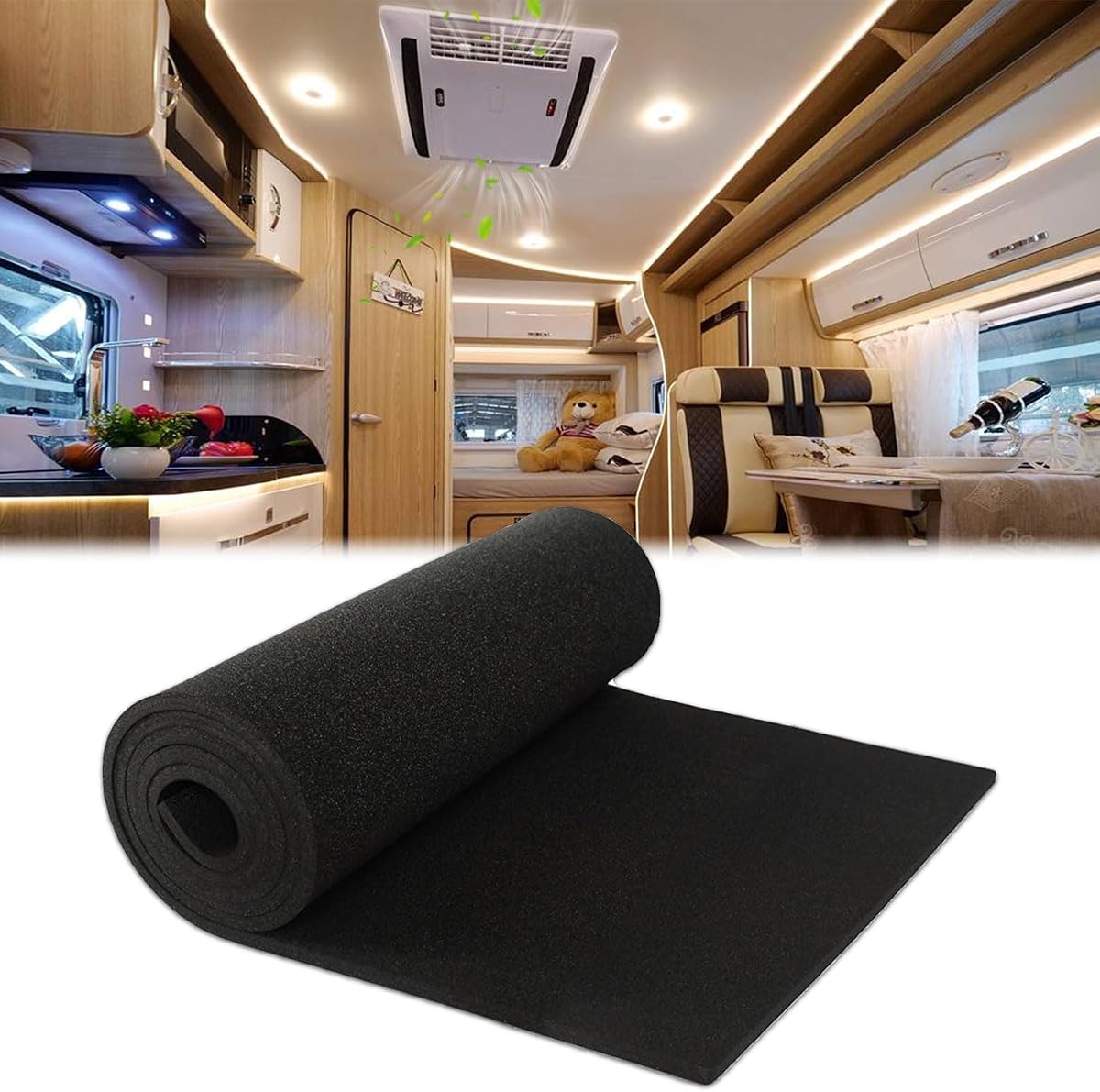
This single-sheet RV air conditioner replacement filter combines a budget-friendly format with a generous 16-by-40-inch size that can be trimmed for different installations. Its 4.4 rating reflects generally positive customer satisfaction, while its 50 PPI foam is designed to capture airborne hair, dust, pollen, and smoke.
We may earn a commission when you buy through this link, at no additional cost to you.
The main advantage is adaptability. Instead of being restricted to one filter shape, the material can be cut to accommodate RV, camper, motorhome, and travel-trailer air-conditioning units. Its quarter-inch thickness offers a straightforward replacement approach without requiring the owner to locate an exact factory part number.
The trade-off is that the package contains only one filter, so regular replacement schedules may require repeat purchases. It also lacks the dedicated activated-carbon layer offered by carbon-focused alternatives, which means odor reduction may not be its strongest feature. Vacuum packaging can compress the sheet before installation.
This is a sensible choice for RV owners who want an inexpensive, flexible replacement and do not need odor-specific filtration. Measure the existing filter or the filter opening before cutting, and allow the material to expand for two to three days after opening if it appears compressed.
The oversized sheet provides useful installation flexibility because it can be trimmed to the dimensions of many RV air conditioner openings. Using the old filter as a template reduces the chance of an incorrect cut.
The 50 PPI foam is intended to catch visible airborne debris such as dust, hair, pollen, and smoke. Replacing a saturated or visibly dirty filter can help support cleaner airflow through the RV.
We may earn a commission when you buy through this link, at no additional cost to you.
The FilterTime RV FT-616 is a purpose-built replacement for RV air conditioner models associated with Coleman Mach. It has a 4.5 rating and uses MERV 6 filtration to target pet dander, pollen, and dust, while the two-filter pack gives owners a backup for a future change.
We may earn a commission when you buy through this link, at no additional cost to you.
Its defined 6-by-16-inch size simplifies installation for RV owners who already know their unit accepts this format. The product description emphasizes easy installation and good airflow, while the MERV 6 specification offers a clearer efficiency reference than an unqualified foam replacement.
The fixed size is less accommodating than a broad cut-to-fit sheet. The stated 90-day rating also means busy travelers, dusty routes, or homes with pets may need to inspect the filter more frequently and replace it sooner. Buyers should still compare the dimensions with the original filter before ordering.
This filter is best for someone seeking a straightforward Coleman Mach replacement with a recognized efficiency rating and convenient two-pack format. It is less suitable for RV owners needing a universal sheet or a carbon-based odor-control solution.
The FT-616 is centered on a particular 6-by-16-inch replacement format rather than a generic sheet. Owners with matching Coleman Mach systems can install it without making major size adjustments.
Its MERV 6 rating and emphasis on airflow make it a practical middle-ground option for routine dust, pollen, and dander control. The product description also states that it was independently tested.
We may earn a commission when you buy through this link, at no additional cost to you.
The Bagean RV AC Carbon Filter stands out with a 4.8 rating, the highest among the products in this guide, and a design focused on both particle filtration and odor adsorption. Its cut-to-fit 16-by-40-inch format gives it broader applicability than filters manufactured for one exact housing.
We may earn a commission when you buy through this link, at no additional cost to you.
Made with highly absorbent coconut-shell carbon and enhanced carbon loading, this option targets persistent smells that an ordinary foam filter may not neutralize as effectively. The listing identifies compatibility with Coleman Mach, Dometic, Furrion, and other brands, although exact installation measurements should still be confirmed.
Its recommended replacement interval of two to three months may be less convenient for infrequent RV use, and owners should adjust the schedule according to visible dirt, odors, and system use. The activated material also makes this model more specialized than a basic foam sheet, particularly when odor control is not a priority.
This is our Editor's Choice for RV owners who want one cut-to-fit filter to address both airborne particles and unwanted odors across a wide range of units. Use an existing filter as a template and replace the material every two to three months for the stated level of performance.
The activated coconut-shell carbon is intended to adsorb odors in addition to capturing particles. That makes this a useful choice for RVs that encounter smoke, cooking smells, musty fabrics, or pet odors.
A 16-by-40-inch sheet can be customized for several major RV air conditioner brands. Cutting against the previous filter offers a simple way to preserve the original opening’s exact shape and clearance.
We may earn a commission when you buy through this link, at no additional cost to you.
Ziliny’s ten-pack is built for RV owners who prefer to keep multiple replacements on hand rather than reorder frequently. It carries a 4.7 rating and includes filters measuring approximately 12.9 by 5.5 by 0.59 inches for compatible MERV 6 RV conditioning units.
We may earn a commission when you buy through this link, at no additional cost to you.
The polyester-cotton construction is described as durable across heat and cold, which is useful for a component exposed to changing temperatures. A pack of ten also supports a more frequent replacement routine, helping owners maintain cleaner airflow without worrying about immediate resupply.
The precise dimensions mean this is not a universal option. RV owners should verify that their housing accepts a 12.9-by-5.5-inch filter and that the 0.59-inch thickness leaves sufficient clearance. It also lacks a dedicated activated-carbon feature, so odor control is not its primary advantage.
Choose this multipack when the measurements match and regular replacement is important. It is especially attractive for full-time RVers, families traveling with pets, and anyone who would rather maintain an onboard spare supply than purchase individual filters throughout the travel season.
The large pack is the defining feature, supporting regular changes and future travel planning. It also reduces the inconvenience of ordering replacement material every few months.
The listed polyester-cotton material is described as capable of withstanding hot and cold conditions. That makes the filter suitable for RV use across seasonal travel and varying climate zones.
We may earn a commission when you buy through this link, at no additional cost to you.
This Bagean carbon filter shares the same 16-by-40-inch cut-to-fit concept as the top-ranked carbon option and also holds a 4.8 rating. Its coconut-shell carbon layer is designed to adsorb odors while the sheet can be customized for RV air conditioner openings.
We may earn a commission when you buy through this link, at no additional cost to you.
The listing emphasizes extra carbon for stronger odor elimination and compatibility with Coleman Mach, Dometic, Furrion, and numerous other brands. That broad compatibility makes it practical for RV owners who are unsure of the precise replacement format but can measure their current filter.
The product is less convenient than a precisely cut filter because installation depends on accurate trimming. The recommended two-to-three-month replacement interval also requires attention, although owners who use their RV infrequently may need fewer filters than the schedule suggests.
This option is a strong alternative for odor-sensitive travelers who want flexible sizing. Confirm the dimensions of the existing filter, use it as a template, and ensure the cut sheet does not obstruct any airflow path or housing components.
Unlike ordinary particle foam, activated carbon is included specifically to adsorb common RV odors. This is valuable when the source of a smell persists or when the RV regularly carries food, pets, smoke, or damp materials.
Using the old mobile home furnace filter as a template helps the new material follow the required contours. A careful cut can create a close fit while preserving airflow.
We may earn a commission when you buy through this link, at no additional cost to you.
This six-pack is one of the most precisely specified options, designed around a 14-by-7.5-inch size with a 0.59-inch thickness. It has a 4.7 rating and is listed as compatible with Dometic filter numbers 3313107.103, 3105012.003, and 3104928.019.
We may earn a commission when you buy through this link, at no additional cost to you.
Its MERV 8 rating targets dust, hair, pollen, and other irritants, giving it a stronger filtration specification than many foam alternatives in the group. The listing also states resistance up to 100% relative humidity and temperatures up to 100°C, plus a silicone-free construction.
Compatibility is the main limitation. The filter will not suit arbitrary RV units merely because the overall dimensions seem similar; buyers should confirm the exact Dometic part number and observe the windward blue side when installing. The suggested three-month replacement period requires routine attention.
This is our Best Premium pick for Dometic owners who want a precisely cut, higher-rated multipack with environmental and temperature-related material claims. Its combination of clear fitment information, MERV 8 filtration, and six replacements makes it a strong choice for routine RV maintenance.
Three named Dometic filter numbers provide a more useful fitment guide than a generic size alone. Matching the correct number reduces installation uncertainty and helps maintain the intended airflow path.
The MERV 8 construction is positioned as an upgrade for filtering dust, hair, pollen, and other common irritants. It is especially relevant for travelers who spend significant time in dusty or pollen-heavy environments.
We may earn a commission when you buy through this link, at no additional cost to you.
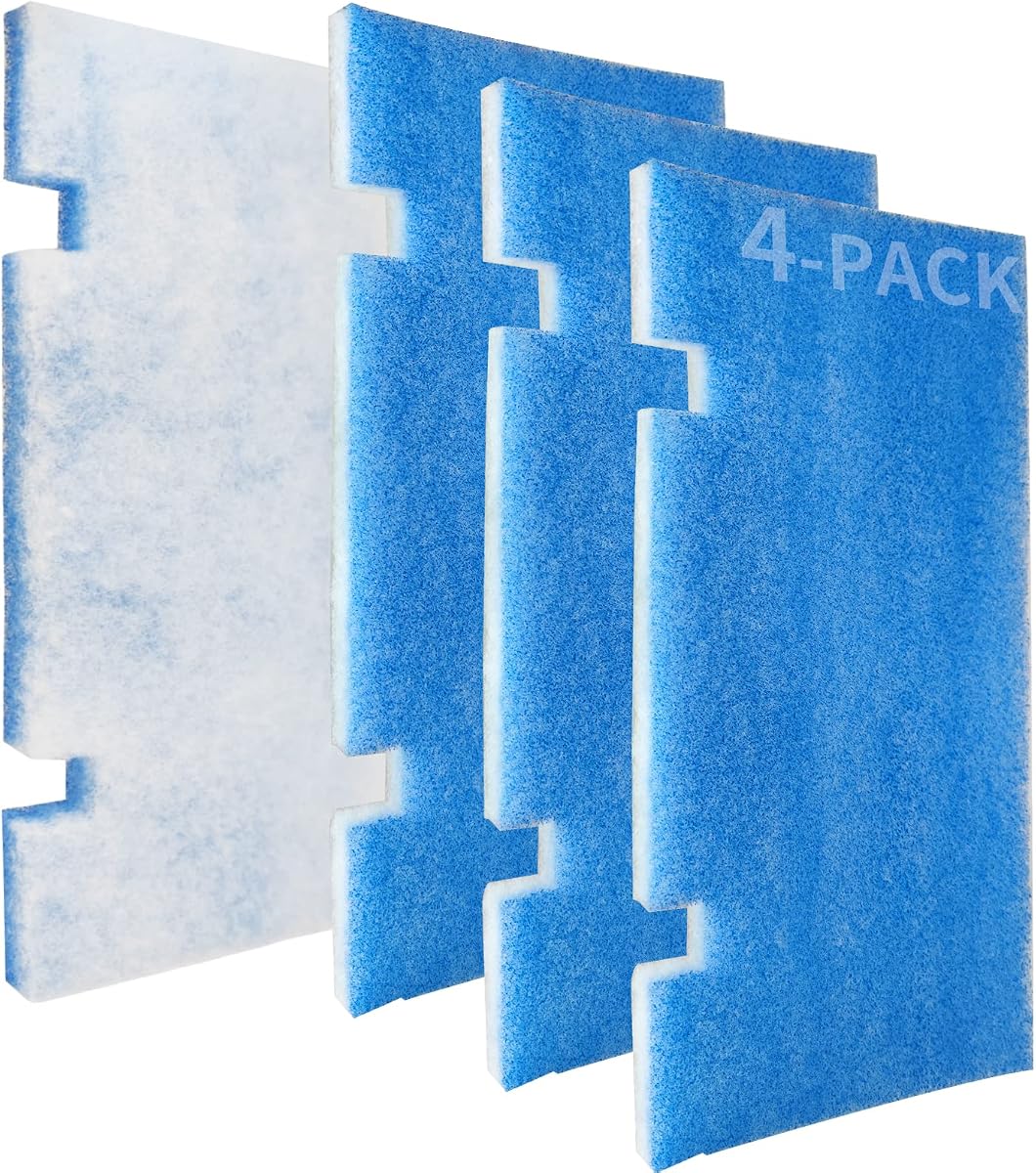
Tikfoam’s four-pack targets the same 14-by-7.5-inch format listed for several common Dometic filters. Its 4.5 rating and MERV 6 specification position it as a routine replacement for RV owners who need precise fitment and dependable debris capture.
We may earn a commission when you buy through this link, at no additional cost to you.
Unlike ordinary loose foam, the filter uses 0.59-inch advanced composite material. The listing says it captures debris, dust particles, and hair efficiently without those particles becoming stuck in the air conditioner, potentially reducing cleaning work and supporting equipment longevity.
It is less capable than MERV 8 alternatives when the priority is a higher efficiency classification, although MERV 6 remains useful for routine filtration. As with other exact-fit options, RV owners must verify the original filter number before ordering and install the blue side toward incoming wind.
This filter makes sense for Dometic owners seeking a four-filter composite replacement and a straightforward installation process. It is best when routine dust and hair control are the priority, rather than specialized odor adsorption.
The composite construction is intended to trap airborne debris while resisting the clogging associated with some ordinary foams. That can support more consistent airflow between replacement intervals.
The four-filter pack is described as enough for a year or more, depending on use. It provides a practical balance between bulk convenience and keeping replacement material available.
We may earn a commission when you buy through this link, at no additional cost to you.
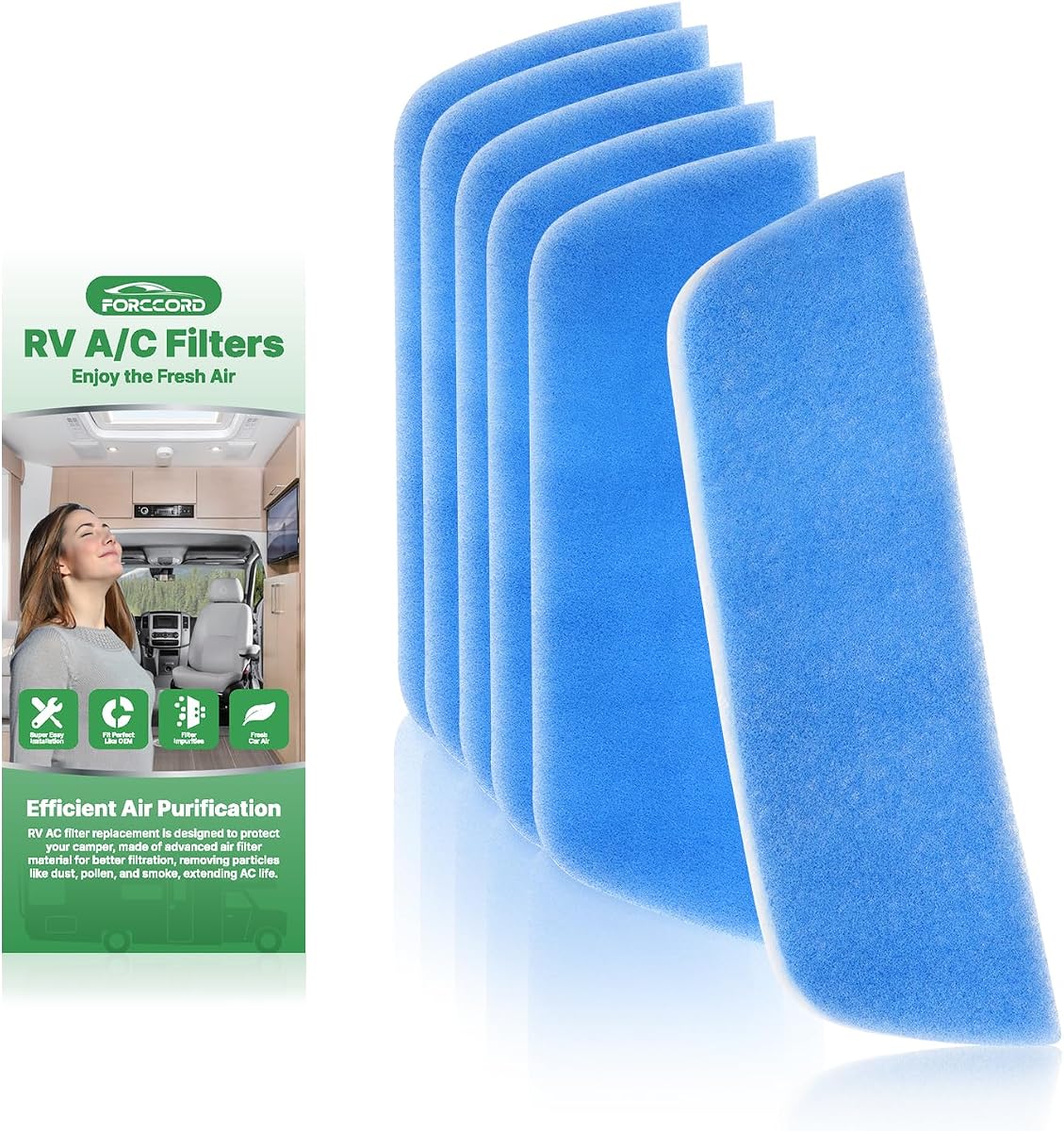
This multipack provides six RV air conditioner filters measuring 6 by 16.5 by 0.59 inches. Its 4.4 rating reflects a generally favorable response, and the high-density foam is described as compact, clogging-resistant, and capable of filtering hair, dust, pollen, smoke, and other particles.
We may earn a commission when you buy through this link, at no additional cost to you.
The six-unit quantity makes it easy to maintain a regular replacement cycle or keep several filters on hand. The product description also recommends adjusting the replacement interval according to how often the air conditioning is used, which is sensible guidance for occasional travelers.
The listing does not provide a formal MERV efficiency rating, so buyers cannot compare its filtration class directly with the MERV 6 and MERV 8 options. Its fixed dimensions also require confirmation, and the product is not described as specifically tailored to a named RV brand.
This is a practical choice for owners who want a generous pack of fixed-size foam filters at a moderate cost. Confirm that the filter housing accepts a 6-by-16.5-inch replacement and replace the material about every three months when the RV is in frequent use.
The material is described as having a compact structure intended to resist clogging while adsorbing airborne particles. This supports the goal of keeping the RV air conditioner operating with clean airflow.
The stated three-month schedule is explicitly presented as a reference rather than a rigid rule. RV owners can inspect their filters more often and replace them sooner during heavy use.
We may earn a commission when you buy through this link, at no additional cost to you.
This six-pack is marketed for 6-by-16.5-inch RV air conditioning units, including compatible Coleman Mach systems. With a 4.4 rating and MERV 8 specification, it gives RV owners a more clearly defined filtration rating while supplying six replacement filters.
We may earn a commission when you buy through this link, at no additional cost to you.
The material is described as resisting up to 100% relative humidity and temperatures up to 100°C, and it contains no silicone. These properties make it a practical option for RV environments where filter components are repeatedly exposed to humidity and temperature changes.
Owners still need to verify that their housing accepts the exact 6-by-16.5-inch dimensions and 0.59-inch thickness. The listing recommends replacement every three months, which may be unnecessarily frequent for an RV used only occasionally, so actual condition and usage should guide the schedule.
Choose this product when your system uses a matching Coleman Mach-style filter and you value a stated MERV 8 rating. The six-pack reduces reorder frequency, while the blue-side installation guide helps ensure the filter faces the incoming airflow correctly.
The stated filtration class is designed to capture dust, hair, pollen, and other everyday airborne irritants. It offers a stronger efficiency reference than filters without a formal rating.
The listed humidity and temperature tolerances indicate attention to the demanding conditions inside an RV. Silicone-free construction may also suit buyers seeking an alternative material specification.
We may earn a commission when you buy through this link, at no additional cost to you.
The Acostop six-pack provides a soft, dense foam alternative measuring 7.5 by 14 inches with a thickness of 0.5 inches. It has a 4.3 rating and is listed for Dometic filter numbers 3313107.103 and 3105012.003.
We may earn a commission when you buy through this link, at no additional cost to you.
Its 40 PPI foam is described as softer and denser than ordinary sponge material, with adsorption and filtration intended for dander, dust, and other impurities. Keeping the filters in the air conditioner is presented as a way to reduce debris entry and support the unit’s lifespan.
The main drawback is that buyers must confirm compatibility rather than assume the dimensions will work. Vacuum compression is another consideration: the manufacturer recommends allowing two to three days for the filters to expand before installation. Washing and reusing a used filter is not recommended.
This option best serves Dometic owners who want a six-pack of softer foam and expect to replace it every one to two months during summer use. Check the part number, wait for the material to regain its shape, and install it fully within the housing without bending or compressing the frame.
The stated 40 PPI foam is positioned as a softer alternative to ordinary sponge filters. Its dense structure is intended to adsorb dust, pet-related debris, and other airborne impurities.
The guidance favors swapping in a new filter every one to two months during frequent summer operation. Washing used filters is explicitly discouraged, reducing the risk of handling or reusing a material that has already trapped debris.
We may earn a commission when you buy through this link, at no additional cost to you.
The right RV air conditioner filter depends on the housing dimensions, required filtration performance, expected odors, and replacement frequency. These factors help narrow the field before comparing individual products.
Start by measuring the existing filter and the opening in your RV air conditioner. Record both length and width, then check the depth or thickness requirement. A close visual match is not always enough because even a small difference can prevent the filter from seating correctly, overlap the grille, or interfere with airflow. Also compare the shape, not just the rectangular dimensions, because some housings use a narrow profile, rounded end, or directional airflow structure.
The RV air conditioner brand and model can narrow the replacement options dramatically. Some filters in this guide are designed for Coleman Mach units, while others name specific Dometic filter numbers. Fixed-size products often provide the most straightforward installation when the original system is known. Cut-to-fit sheets offer more flexibility, but they require accurate trimming and are best suited to owners who can work safely with the housing and preserve its airflow clearance.
MERV provides a standardized way to compare particle-filter efficiency. The products here include MERV 6 and MERV 8 options as well as filters described by PPI or general filtration performance without a formal MERV rating. A higher classification does not automatically make a filter right for your system, because fit and airflow remain essential. Use the rating as a performance reference after confirming that the filter is compatible with your RV unit.
A standard foam or composite filter is primarily intended to capture airborne particles such as dust, hair, pollen, dander, and smoke. Activated carbon adds odor adsorption, which can be valuable in an RV that absorbs smells from pets, food, damp upholstery, or smoke. Carbon does not eliminate the need for routine replacement, and it may cost more than basic foam. Decide whether odor control is a meaningful benefit for your usual travel conditions.
Suggested replacement schedules in this guide range from approximately every one to two months to every three months, with some guidance based on a 90-day rating. These figures are general references rather than fixed deadlines. Frequent use, dusty roads, pets, smoking, heavy cooking, and long periods of continuous air conditioning can shorten service life. Inspect the filter periodically and replace it when it becomes visibly soiled, develops a smell, or restricts airflow.
A filter that is too thick, loosely cut, bent, or pushed too far into the housing can reduce airflow. Precise replacements should follow the original product’s shape and orientation. With cut-to-fit material, use the old filter as a template and cut smooth edges without narrowing the opening. Some products identify a blue windward side; installing it backward can undermine the intended filtration path. Keep the grille and housing clear so the unit can pull air through the replacement evenly.
Single filters can work well if you are comfortable reordering on a schedule, while four-, six-, and ten-packs provide a convenient reserve. Multipacks are especially helpful for full-time RVers, families, pet owners, and travelers who cannot easily shop mid-trip. The largest pack is not automatically the most economical choice for someone who uses the RV only a few weeks each year. Estimate replacement frequency and storage space before choosing.
Foam, polyester cotton, composite media, and activated carbon each have different characteristics. Some listings specify moisture resistance, temperature tolerance, and the absence of silicone. These details can matter in RV environments subject to humidity and temperature swings. They are useful supporting details, but they should not replace fit and airflow checks. Review the current product information carefully because materials and installation guidance may evolve.
Begin by identifying the correct replacement and comparing it with the old filter. For a cut-to-fit product, place the existing filter on the new sheet and use it as a template. Mark the shape and airflow orientation, then cut with a sharp utility knife on a protected, flat surface. For precisely cut filters, check the listed part numbers and dimensions before removing anything.
Before installation, remove the old filter and gently clean accessible dust from the housing and grille without using excessive water around electrical components. Allow vacuum-packed foam to expand for the stated period if needed. Seat the new filter evenly, preserve the windward-side orientation where indicated, and avoid forcing it into a shape that pinches the material or blocks the grille.
Inspect the filter every few weeks during frequent air conditioner use and more often in dusty, smoky, or high-pollen environments. Replace it when visible dirt accumulates, odors develop, airflow weakens, or the manufacturer’s schedule calls for a change. Do not wash and reuse filters unless the manufacturer explicitly permits it. Store unused filters in a clean, dry place away from moisture and direct compression.
The replacement interval depends on use, filter type, and environmental conditions. Recommendations among these products range from approximately every one to two months to every three months, with some listings describing a 90-day use period. Frequent operation, pets, dust, pollen, smoke, and cooking odors can require earlier replacement. Inspect the filter regularly and replace it when it is visibly dirty, smells strongly, or begins to restrict airflow.
Yes, if the filter is specifically designed to be cut to fit. The 16-by-40-inch options in this guide are intended for customization and can be trimmed using the existing filter as a template. Avoid cutting filters that are precisely sized for a named system unless the manufacturer allows modification. A poor cut can leave gaps, narrow the airflow path, or prevent the grille from closing properly.
A conventional foam or composite filter primarily captures airborne particles such as dust, hair, pollen, dander, and smoke. An activated carbon filter adds media designed to adsorb odors, making it more useful for smells associated with pets, food, smoke, or damp interior materials. Carbon may be a worthwhile upgrade for odor control, but it still requires routine replacement and does not make a mismatched filter compatible.
No. The MERV rating describes filtration efficiency, while fit depends on dimensions, shape, housing design, and sometimes the RV air conditioner’s part number. Confirm compatibility first, then use the MERV rating to compare filtration performance. Installing a higher-rated filter that fits poorly can reduce airflow and may cause installation problems.
For products whose listings identify the blue side as the windward side, it should face toward the incoming airflow. The windward side is normally the side exposed to the outside air as it enters the unit. Follow the orientation guide for the specific product, because reversing the filter can affect how particles are captured.
Many foam filters arrive in vacuum-sealed packaging to reduce shipping size. This compression is temporary, but the material should be allowed to expand before installation. Some manufacturers recommend leaving it out for two to three days. Installing a compressed filter can create gaps or prevent it from fitting correctly, so check the packaging instructions before proceeding.
It is safest to follow the instructions for the specific filter. The Acostop listing in this guide explicitly recommends replacement rather than washing and reusing a used filter. Washing can damage the media, remove useful surface area, or leave residue that interferes with airflow. Keeping a few unused filters on board makes timely replacement more convenient.
A larger sheet can be cut down, but it must still fit within the housing and preserve the required airflow clearance. The filter opening, grille clearance, and directional structure are important. Use the old filter as a template and avoid cutting away sections that are needed to hold the material securely in place.
The Bagean 16-by-40-inch carbon filter stands out as the Editor's Choice because it combines a cut-to-fit format, broad brand compatibility, activated coconut-shell carbon, and a 4.8 rating. The precisely cut Dometic multipack earns the Best Premium distinction for owners who value MERV 8 filtration and exact fitment, while the single-sheet 50 PPI filter is a practical Best Budget selection.
Prioritize compatibility before any other feature. Confirm the RV air conditioner brand, measure the existing filter, and pay attention to the required thickness and shape. After establishing a correct fit, choose ordinary foam for routine particle control or activated carbon when odor adsorption is a meaningful priority. Pack quantity and replacement frequency should follow the way you actually use the RV.
Ratings, product details, availability, and prices can change, so check the current Amazon listing before buying. Compare the exact dimensions, included quantity, orientation instructions, and replacement recommendations with your existing unit. A carefully matched filter maintained on a sensible schedule will support cleaner RV airflow and help keep the air conditioner easier to maintain.