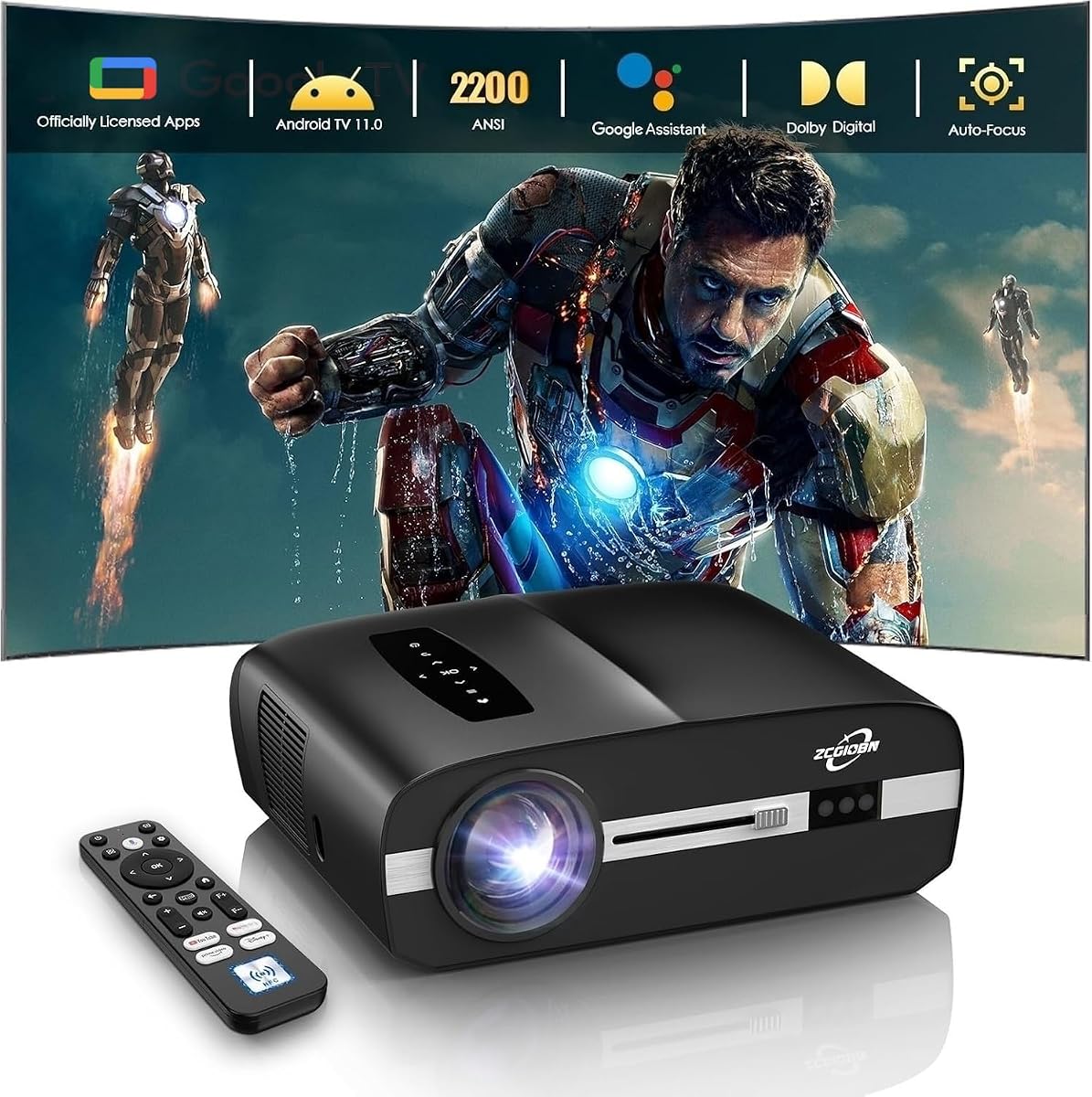
4K Projector for Golf Simulator
4.4Editor score
2200 ANSI lumen brightness
4K HDR10 image support
Flexible ceiling and desk setup
This guide compares the best BenQ projector for golf simulator options, including brightness, resolution, throw distance, features, and installation needs.
A golf simulator projector must place a clear, bright image where every shot can be read without interference from the golfer, lighting, or room dimensions. The right model should also handle the software, video feed, impact-screen alignment, and prolonged use expected in a dedicated home practice space.
This guide compares ten projector and enclosure products using the supplied specifications, including resolution, brightness, laser life, short-throw capability, color performance, latency, connectivity, and installation flexibility. It also includes relevant alternatives when a different brand or protective enclosure better suits a particular simulator setup.
Each entry explains the strongest reasons to consider the product, along with practical limitations and placement requirements. Ratings and specifications reflect the information available at the time of writing, while marketplace listings, configurations, software bundles, and prices can change without notice.
4.4Editor score
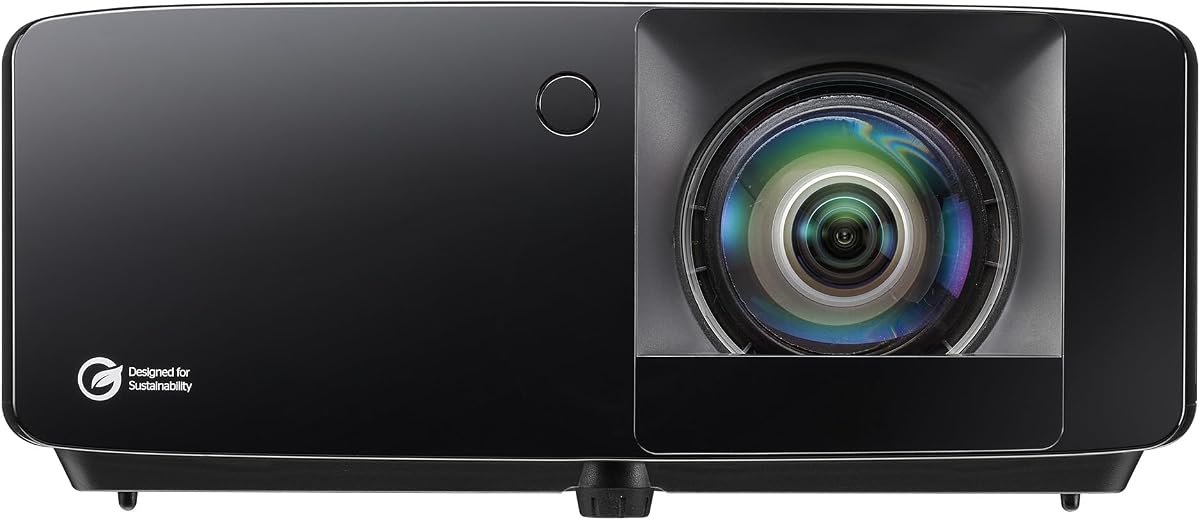
5.0Editor score

5.0Editor score
The comparison below covers ten relevant projector and accessory options, emphasizing the specifications that most directly affect golf simulation: image clarity, brightness, throw distance, laser longevity, installation control, connectivity, and resistance to equipment impacts.


The BenQ AH700ST is a 4000-ANSI-lumen, Full HD short-throw laser projector with features that map directly to a golf simulator. Its defining attraction is the dedicated Golf picture mode, which is intended to improve visual clarity and realism. The supplied 3.5 rating is lower than those of several alternatives, so prospective buyers should evaluate the current listing carefully.
We may earn a commission when you buy through this link, at no additional cost to you.
Installation is unusually practical for a simulator. A 0.69–0.83 short-throw ratio and 1.2x zoom allow the projector to create a large image without requiring the extreme mounting distance associated with a conventional home projector. Multiple HDMI 2.0b inputs, USB Type A ports, and a USB Type C display port support connections to a simulator computer, laptop, and related video equipment.
The trade-off is resolution. Native 1920 x 1080 can present golf courses and swing replays clearly, but it does not provide the pixel density of a true 4K model. Its 20,000-hour laser source is designed for long service life, and 95% Rec. 709 coverage with 30-bit color is a useful foundation for naturalistic greens, fairways, and sky.
This is a compelling choice for buyers who prioritize brightness, a short-throw footprint, and a purpose-built golf mode over 4K detail. It should be shortlisted against the room dimensions and computer output before purchase, especially if ultra-fine 4K imagery is central to the expected experience.
The dedicated Golf mode gives this model an advantage over general-purpose projectors by providing a starting point tailored to simulator imagery. It can reduce the need for repeated manual adjustments when switching among courses, statistics, or replay footage.
The 0.69–0.83 throw ratio and 1.2x zoom offer useful positioning flexibility. That matters in tight rooms where the projector must sit close to the impact screen without projecting through the golfer's swing path.
We may earn a commission when you buy through this link, at no additional cost to you.
The BenQ TH671ST combines native 1080p resolution, 3000 lumens, and a short-throw lens in a projector designed as much for gaming as for large-screen viewing. Its 4.4 rating is among the strongest in this list, giving it a well-regarded foundation for a mixed-use simulator room.
We may earn a commission when you buy through this link, at no additional cost to you.
A major strength is placement flexibility. The projector can create a 100-inch image from approximately five feet away and supports image sizes up to 300 inches. Ultra-fast low input lag and a refresh rate matched to the maximum output of Xbox One X and PS4 Pro make it suitable when a simulator package also includes console or PC gaming.
Color and contrast specifications support a credible entertainment experience, with 92% Rec. 709 coverage. However, the TH671ST is less specialized for golf than the AH700ST and does not include a listed golf-specific picture mode. Its lamp-based design also separates it from the maintenance profile of the laser models in this guide.
Buyers should choose it when short-throw convenience, gaming responsiveness, and a well-established rating matter more than native 4K. It is a sensible alternative for a multipurpose media and golf room, provided the room can control ambient light well enough to preserve the image.
Producing a 100-inch image from about five feet makes the TH671ST useful when rear placement is impractical. It also reduces the amount of space occupied behind the playing area, although the exact position still needs to align with the impact screen.
Low input lag and high-refresh support make this more than a basic display for simulator spaces. That versatility makes it attractive for users who want to alternate between virtual golf, sports, console games, and streamed entertainment.
We may earn a commission when you buy through this link, at no additional cost to you.
The Optoma GT3900UHD is a true 4K UHD, 4000-lumen laser projector explicitly positioned for golf simulators. It carries a 5.0 rating and is one of the most technically compelling options here, particularly for users who can accommodate its 0.496:1 ultra-short-throw design.
We may earn a commission when you buy through this link, at no additional cost to you.
The ultra-short throw ratio is the major differentiator. It can create a large image from very close to the screen, helping preserve room space, reduce player shadows, and keep the device safely outside the swing zone. HDR compatibility, low input lag, and support for 1080p at 240Hz or 4K at 60Hz make it suitable for both golf and interactive entertainment.
Optoma's DuraCore laser system is specified to last up to 30,000 hours, giving it the strongest stated laser longevity in the comparison. The trade-off is that ultra-short-throw projection is a specialist installation format, and the projection surface, enclosure, and available wall area need to be planned carefully rather than treated as a simple ceiling-mount decision.
For buyers seeking the strongest combination of 4K detail, compact throw distance, brightness, and long-term laser operation, the GT3900UHD is an excellent alternative to BenQ. It is especially attractive for a dedicated simulator room where minimizing shadows and maximizing usable floor space are priorities.
By mounting close to the screen, an ultra-short-throw projector can reduce the risk of shadows falling across the playing surface. This is a meaningful safety and visibility benefit in a room where the ball, club, and impact screen occupy the same area.
Native 3840 x 2160 output provides more visible detail than Full HD models. That can help when reviewing course textures, club paths, and small swing-analysis elements on a large screen.
We may earn a commission when you buy through this link, at no additional cost to you.
This 2200-ANSI-lumen 4K HDR10 projector is marketed for golf simulators, home theaters, and gaming, with a 4.4 rating and a feature set oriented toward flexible installation. It combines a sealed optical engine, automatic alignment, modern connectivity, and built-in audio in a general-purpose package.
We may earn a commission when you buy through this link, at no additional cost to you.
Automatic Focus, Auto Keystone, a ToF sensor system, and a three-in-one CMOS module make setup easier than manually adjusting a fixed projector. It supports ceiling and desk placement and is stated to project a 100-inch image from 9.25 feet, providing a clear image when installed above and behind the golfer.
Its most important limitation is explicitly stated: it is not short-throw or ultra-short-throw, so placement above and behind the golfer is recommended. In addition, a golf simulator cannot transmit its video feed directly to the projector; the system must first connect to a computer or laptop, and that device then feeds the projector.
This model makes sense for buyers who want lots of smart features, strong automated setup, and 4K HDR imagery without adopting the same installation demands as an ultra-short-throw unit. Planning the signal path and ceiling clearance is essential before installation.
Auto Focus, Auto Keystone, ToF sensing, and the CMOS module simplify the process of producing a square image. These features are particularly helpful when the projector is mounted at an angle or moved between a desk and ceiling position.
The listing notes that the simulator video feed must pass through a computer or laptop. That intermediate device needs to be capable of sending the simulator's output and running the software while the projector serves as the display.
We may earn a commission when you buy through this link, at no additional cost to you.
The BenQ TH575i is a bright 1080p home projector aimed at flexible entertainment and gaming use. Its 3800 lumens, 16.7ms input lag, and included Google TV dongle make it practical for a simulator room that also serves as a media space, although its 3.0 rating warrants caution.
We may earn a commission when you buy through this link, at no additional cost to you.
The supplied 1.1x optical zoom and automatic vertical keystone correction make placement easier than with a projector offering only manual geometry controls. Cinema, Sports, Game, and 3D modes allow the image to be adjusted for different content, and the licensed Google TV dongle supports access to streaming applications.
As a general home-entertainment projector, it does not list a dedicated golf mode, short-throw lens, or flexible lens shift. Those omissions make it less specialized for tight simulator installations than the AH700ST, LK936ST, or LU935ST. The 16.7ms latency is useful for gaming but is not the central factor in most conventional golf software workflows.
The TH575i is best considered for a room with enough space for conventional placement and a need for streaming as well as simulation display. Buyers who value brightness, smart entertainment, and easy vertical correction may find it useful, but should confirm that its mounting footprint and image geometry suit the impact screen.
The included Google TV dongle makes the projector useful beyond simulator sessions. Golfers can switch to streamed courses, sports, or entertainment without adding a separate streaming device to the display setup.
Its 3800-lumen output can support a visible 120-inch image with lights on, according to the listed feature set. Actual clarity still depends on screen quality, room surfaces, and the amount of ambient light.
We may earn a commission when you buy through this link, at no additional cost to you.
The BenQ LU935ST is a professional short-throw laser projector built around 5500 ANSI lumens, WUXGA resolution, and flexible installation. It is a strong candidate for a dedicated facility with bright surroundings, careful mounting, and a need for professional signal integration.
We may earn a commission when you buy through this link, at no additional cost to you.
Its installation controls are particularly useful for simulator rooms. Vertical lens shift of up to 60% and horizontal shift of 23% help align the image without relying entirely on digital keystone, which is valuable because digital correction can reduce effective image quality. The 0.81–0.89 throw ratio and 2D keystone add further placement options.
HDBaseT and LAN Control make it well suited to a professionally wired installation, particularly when the projector and simulator computer are separated or the room is being fitted as a training facility. The 3,000,000:1 contrast ratio and laser source rated for up to 20,000 hours in normal mode support serious, sustained use.
Its limitation is resolution: 1920 x 1200 provides plenty of pixels for many simulator applications but is not true 4K. Since no user rating is supplied, this recommendation rests on specifications rather than customer feedback. It is best for buyers who prioritize brightness and professional mounting over UHD detail.
Large vertical and horizontal lens-shift ranges allow the optical image to move relative to the projector body. This is preferable to using digital keystone for all alignment because it helps maintain the native projected image.
HDBaseT provides a practical route for long-distance signal transmission in a finished room. It can reduce the need for conventional video cables to extend from a computer to a ceiling-mounted projector.
We may earn a commission when you buy through this link, at no additional cost to you.
The BenQ LK936ST combines native 4K UHD resolution, 5100 ANSI lumens, and a short-throw laser system in a premium installation-oriented projector. Its 5.0 rating and detailed installation specifications make it one of the strongest choices for a purpose-built, high-end golf simulator.
We may earn a commission when you buy through this link, at no additional cost to you.
The 3840 x 2160 native panel is a major advantage for large-screen golf imagery, where fine turf texture, course scenery, and replay graphics benefit from additional pixel density. At the same time, 5100 ANSI lumens provide enough output for a vivid image in well-lit environments without relying on a completely dark room.
Installation is flexible but professional. A 0.81–0.89 throw ratio, 23% horizontal lens shift, 60% vertical lens shift, and keystone correction provide several ways to align the image. Dual HDMI 2.0b, DisplayPort, and HDBaseT cover common simulator and home-automation connection needs.
This projector is best suited to buyers who want a dedicated, polished installation and intend to use the system regularly. Its 20,000-hour laser life reduces lamp-maintenance concerns, while native 4K supports the most detailed available presentation. Room geometry and impact-screen calibration should be completed before final mounting.
Native 4K output avoids relying on pixel shifting or upscaling for the stated resolution. That is valuable when the simulator image occupies a large screen and viewers examine small details during analysis and replay.
High brightness can support lit-room use, while the short-throw ratio limits the distance between the projector and screen. Together they make the model suited to professional rooms where image visibility and compact placement are both important.
We may earn a commission when you buy through this link, at no additional cost to you.
The BenQ W4100i is a 4K HDR smart home-theater projector that can also serve a golf simulator when flexible placement and cinematic color are priorities. Its 4.4 rating, 3200 lumens, and 100% DCI-P3 coverage distinguish it from basic 1080p models.
We may earn a commission when you buy through this link, at no additional cost to you.
HDR-PRO technology with local contrast enhancement and tone mapping is designed to preserve detail in both dark and bright scenes. Factory calibration and the full DCI-P3 color gamut can make greens, blues, and sky gradients appear richer, which translates well to virtual courses and impact-screen content.
Installation features include 2D lens shift, a 1.3x zoom, and ceiling-mount support. Those controls make it easier to fit into a smaller room than a projector with a narrow zoom range. It is not listed as a short-throw golf projector, so the physical distance needed for a large image must be checked against the available space.
This is a compelling choice for buyers who want one premium display for golf, movies, and television. It may not be the first option for the tightest simulator room, but its color capability, smart platform, installation flexibility, and positive rating make it a versatile premium alternative.
Full DCI-P3 coverage and factory calibration support more saturated, accurate color than many general-purpose projectors. That can make fairway gradients, rough, sand, and sky appear more differentiated on a large simulator screen.
Android TV, HDR support, and cinema-focused processing make the W4100i useful for streamed content and films as well as virtual golf. It is a strong option when the simulator room doubles as a home theater.
We may earn a commission when you buy through this link, at no additional cost to you.
The ViewSonic LS740W is a high-brightness laser projector with a dedicated golf simulation mode. Its 4.3 rating, 5500 ANSI lumens, and 1.3x optical zoom make it a credible alternative for bright training rooms, although it is not a BenQ product.
We may earn a commission when you buy through this link, at no additional cost to you.
The Golf mode is designed to boost greens and blues, which can make turf and sky colors more vivid. The projector can display images from 80 to 150 inches and is stated to create a 100-inch image from 8.3 feet. That offers some placement flexibility, but the 1.2–1.5 throw ratio is not a short-throw specification.
Installation controls include horizontal and vertical keystone, 360-degree projection, portrait mode, and 1.3x optical zoom. Ceiling-mount support is also available, including compatibility with the ViewSonic PJ-WMK-007 mount. Quick startup and shutdown options can suit busy facilities where sessions begin without delay.
The main compromise is native resolution. WXGA at 1280 x 800 is adequate for straightforward course imagery but trails sharply behind Full HD and 4K alternatives. It is most attractive to buyers who prioritize high brightness, a dedicated golf mode, and professional installation over fine pixel detail.
The dedicated mode boosts greens and blues to emphasize common elements of virtual courses. It provides a useful starting point, though final calibration should match the impact screen, projector output, and room lighting.
At 5500 ANSI lumens, the LS740W can maintain visibility in well-lit professional spaces. Its laser source also removes the routine lamp-replacement cycle associated with conventional projector lamps.
We may earn a commission when you buy through this link, at no additional cost to you.
The GoSports Golf Simulator Projector Cover is not a display device, but it can be an important part of a safe simulator installation. This turf-covered floor enclosure is designed to shield compatible low-heat LED projectors from impacts while blending into the playing environment.
We may earn a commission when you buy through this link, at no additional cost to you.
Its HDPE structure and protective polycarbonate front panel help guard against mishits at different swing speeds. The enclosure avoids the cost and complexity of ceiling mounting, which can also reduce the need for extra hardware, wiring, and contractors in a finished simulator room.
The enclosure fits most common projector models, provided the unit does not exceed its stated interior dimensions of 14 by 15.2 by 5.7 inches. Four side vents provide airflow and routes for cables, and the front panel can be removed for additional cooling. It does not provide waterproof protection.
Heat management is the decisive caveat. The cover is recommended only for low-heat LED projectors, so it should not be placed around a high-output laser unit unless the manufacturer explicitly permits that use. Even with this limitation, it offers a practical solution for owners who prefer a protected floor installation.
A floor enclosure can be attractive in a garage or multipurpose room where ceiling mounting is undesirable. The turf finish also helps the equipment area blend into the surrounding simulator flooring.
The four side vents and removable front panel help preserve airflow, but the product is specifically recommended for low-heat LED projectors. Confirm projector dimensions and thermal requirements before enclosing any model.
We may earn a commission when you buy through this link, at no additional cost to you.
The best projector for a golf simulator is the one that balances image clarity, usable brightness, safe placement, and the signal path needed by the simulator software. Room dimensions and installation style should be evaluated before comparing resolution specifications or entertainment features.
Throw ratio describes the relationship between projection distance and image width. A lower ratio allows a large screen from a closer position, which is valuable when a rear-mounted projector would be too far away or when ceiling depth is limited. The AH700ST uses a 0.69–0.83 ratio, the BenQ short-throw models use 0.81–0.89, and the Optoma GT3900UHD goes further with a 0.496 ratio. Standard-throw options such as the TH575i and W4100i need more distance for the same image size.
Prioritize a short or ultra-short throw for dedicated simulator rooms, but calculate the full image size rather than comparing ratios in isolation. Screen width, mounting position, swing clearance, and the projector's physical depth all influence the final installation.
Resolution determines how much fine information can appear on the impact screen. Full HD and WUXGA models can display courses and replays clearly, but true 4K options provide a noticeable step up for small swing-analysis details, course textures, and large viewing distances. The LK936ST and Optoma GT3900UHD list native 4K UHD, while the W4100i also provides 4K UHD imagery with HDR processing.
Choose 4K when the screen is large, viewers sit close to it, or detailed replay analysis is central to the experience. Full HD or WUXGA may be sufficient for basic virtual rounds, especially when the main priorities are brightness, placement, and budget.
A golf simulator is often built in a garage, basement, or multipurpose room where complete darkness is inconvenient. Higher ANSI-lumen output can make the image more visible with lights on, although ANSI measurements and real-world performance also depend on screen gain, color settings, and room surfaces. The LU935ST and ViewSonic LS740W lead the list at 5500 ANSI lumens, while the LK936ST provides 5100.
Choose brightness according to the room's lighting plan. If the projector will operate in a dark, dedicated space, image quality and contrast may matter more than maximum lumen output. If lights remain on, prioritize sufficient brightness and a screen designed for that environment.
Golf imagery depends on accurate greens, fairway transitions, sand, rough, and sky. A dedicated Golf mode provides a convenient starting calibration, while Rec. 709 or DCI-P3 coverage indicates how much of a recognized color space the projector can reproduce. The AH700ST includes a Golf mode, and the ViewSonic LS740W uses one to emphasize greens and blues.
Look for both a suitable picture mode and the ability to adjust brightness, color temperature, gamma, and contrast. Factory calibration can help, but every installation still benefits from testing with the actual impact screen and the simulator software the owner intends to use.
Laser projection removes routine lamp changes and supports consistent operation over years. The supplied specifications range from a 20,000-hour laser life in normal mode for several BenQ models to as much as 30,000 hours for the Optoma DuraCore system. Actual lifespan varies with mode, environment, usage, and maintenance practices.
For frequent simulator sessions, a long-life laser source is a practical advantage. Keep ventilation clear, use the enclosure only as the manufacturer permits, and clean filters or air paths according to the projector's instructions. Do not confuse a listed maximum lifetime with a maintenance-free guarantee.
Most golf simulators generate their imagery through a computer running the simulator software. The projector must accept that computer's output, commonly through HDMI, and the system may also need separate audio, tracking, launch-monitor, or sensor connections. The 4K golf simulator listing specifically notes that the simulator must connect to a computer or laptop before the projector displays the feed.
Match the projector input to the simulator computer's available output and verify resolution and refresh-rate support. For professional rooms, the LU935ST and LK936ST add HDBaseT and LAN Control, while dual HDMI and DisplayPort provide additional options for conventional installations.
The image must land precisely on the impact screen without placing the projector in the golfer's swing path. Lens shift, optical zoom, and keystone correction each help with alignment, but optical adjustments generally preserve image quality better than extensive digital correction. The LU935ST and LK936ST offer especially broad vertical and horizontal lens-shift ranges.
Plan the mount before drilling or purchasing mounting hardware. Check ceiling height, projector weight, ventilation clearance, cable paths, and the full golfer movement area. If the projector is placed near the floor, use a purpose-built enclosure only with a compatible low-heat model.
Input lag matters most for interactive gaming, while audio and smart features determine how useful the projector is outside simulator sessions. The TH671ST emphasizes low input lag, the TH575i lists 16.7ms, and the Optoma supports high-refresh gaming modes. The 4K golf simulator projector includes 40W Dolby Audio, while the W4100i and TH575i provide smart entertainment platforms.
Treat these as secondary to core image and installation requirements unless the room will serve several purposes. A feature-rich projector is not automatically a better golf display; the correct signal connection, screen alignment, and adequate brightness remain more important.
Begin by measuring the screen, the room depth, the intended image size, and the full width of the golfer's movement area. Select the lens position or mount according to the projector's specified throw ratio, then connect the simulator computer or laptop to the projector with the appropriate video cable. Power the display on before launching the simulation so the computer can identify the correct output.
Use the projector's physical controls, lens shift, optical zoom, and keystone tools to establish a square image. Avoid relying on maximum digital correction when a better optical alignment is possible. Select a Golf mode when available, then adjust picture settings against the actual impact screen. Run a representative course and replay to check legibility, color, sharpness, and stability from the hitting position.
For care, keep ventilation openings clear and use the laser in its intended operating mode. Clean the lens and filters only as directed in the manual, and avoid placing the projector inside a protective enclosure unless the enclosure is specifically compatible. Periodically inspect ceiling mounts, cables, and floor equipment, and update the simulator computer, graphics settings, and projector firmware as needed.
A short-throw model is often helpful because it keeps the projector closer to the impact screen and reduces the space behind the golfer. It can also reduce shadows, although the exact benefit depends on room geometry and mounting position. Standard-throw projectors can work in rooms with sufficient depth and a safe, practical installation path.
No, Full HD can adequately show most virtual courses, statistics, and basic replays. True 4K becomes more attractive on a large screen or when detailed swing analysis is important, because it provides more visible pixel detail. Resolution is only one part of image quality, and brightness, contrast, alignment, and screen performance remain essential.
It depends on the simulator's video output. Some systems are designed to send their feed through a computer or laptop, while others may provide a direct display output. The 4K golf simulator listing included here explicitly states that the simulator must connect to a computer or laptop, which then connects to the projector, so buyers should verify their own system's signal path.
Laser projection is often convenient for frequent use because it removes routine lamp replacement and provides long stated service lives across several models here. Actual brightness and longevity still depend on operating mode, ventilation, environment, and maintenance. Keep intake and exhaust paths unobstructed, particularly if the unit is used in an enclosure.
The right brightness depends on whether the room is dark and whether the impact screen can handle ambient light. A model around 4000 lumens or more offers useful headroom for lit rooms, while a controlled dark space may produce a more balanced image at lower levels. Screen gain, color settings, and room surfaces should be evaluated alongside the projector's ANSI rating.
A golf mode is convenient but not mandatory. It provides a starting point for greens, blues, brightness, and contrast that can make virtual courses look more balanced. Models such as the BenQ AH700ST and ViewSonic LS740W include a dedicated mode, while other projectors may be tuned manually with custom presets and the simulator's own display controls.
Place it outside the golfer's full swing and ball-flight path, preferably above and behind the hitting position or close to the screen when using a short-throw lens. Confirm image alignment, ceiling clearance, ventilation, cable routing, and access for maintenance before fixing the mount. A floor enclosure may be suitable only for a compatible low-heat projector.
A cover can protect a compatible projector from stray or mishit balls and may avoid ceiling-mount installation. The GoSports enclosure is designed for low-heat LED projectors, has ventilation openings, and accepts specific interior dimensions. Check thermal requirements, projector dimensions, cable access, and the enclosure's lack of waterproof protection before using it.
The BenQ LK936ST stands out as the premium all-around option, combining native 4K UHD, 5100 ANSI lumens, extensive lens-shift controls, and a 5.0 rating. The BenQ AH700ST is a strong practical alternative for buyers who prioritize a dedicated Golf mode, 4000 ANSI lumens, and a compact short-throw installation, while the Optoma GT3900UHD delivers true 4K and an especially short 0.496 throw ratio.
Before choosing, prioritize throw distance, impact-screen alignment, brightness, and compatibility with the simulator computer. A more expensive display is not automatically better if it cannot be mounted safely or fed by the available signal path. Check the room measurements, screen material, ambient lighting, software output, and required connections before making a final decision.
Marketplace listings, configurations, software bundles, ratings, and prices can change, so verify the current product details and total ownership requirements at the time of purchase. The included links provide convenient access to the listed products, while current manufacturer documentation remains the best source for installation limits and compatibility.
