
Logitech G PRO X2 SUPERSTRIKE
4.6Editor score
Up to 44K sensor DPI
Haptic inductive trigger system
LIGHTSPEED 8K wireless
Our Mouse for Lightroom guide compares ten precision mice for photo editing, evaluating tracking, scrolling, programmable controls, ergonomics, wireless
A mouse for Lightroom should deliver precise tracking, smooth navigation, dependable scrolling, and comfortable control throughout long editing sessions. The best option depends on whether you prioritize a sculpted grip, wireless freedom, customizable shortcuts, or fast movement across large photo catalogs and detailed editing interfaces.
We compared ten mice using their stated sensor specifications, button layouts, scrolling mechanisms, connectivity, battery information, and ergonomic features. The list covers wired and wireless gaming models, productivity-focused designs, vertical options, and mice suited to both detailed Lightroom adjustments and broader creative workflows.
Each review explains how the mouse could fit a Lightroom workflow, identifies meaningful strengths and limitations, and highlights the type of editor most likely to benefit. Product ratings are based on the supplied listings, while availability and prices can change without notice.
4.6Editor score
4.6Editor score

4.5Editor score
This side-by-side comparison highlights the sensor resolution, connection style, control scheme, scrolling behavior, and ergonomic design that distinguish each mouse for Lightroom and related photo-editing work.


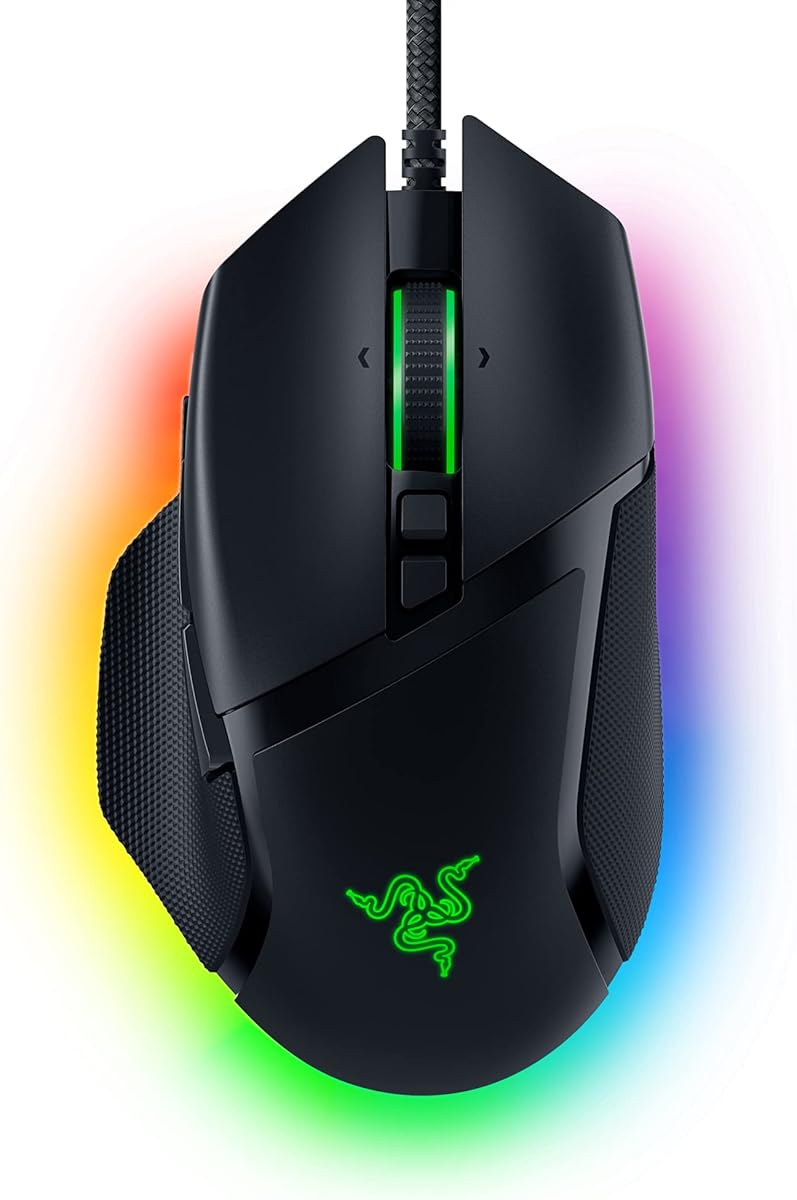
The Razer Basilisk V3 is our best overall Mouse for Lightroom because it combines a 26,000 DPI Focus Plus optical sensor with a mature, highly customizable control layout. Its supplied listing carries a 4.6 rating, and the combination of precise tracking, fast scrolling, and eleven programmable buttons makes it particularly versatile for editors who regularly move between Lightroom, Photoshop, and other desktop applications.
We may earn a commission when you buy through this link, at no additional cost to you.
The wired design removes any concern about wireless interference or charging during a focused editing session. Its sensor tracks without smoothing, while the optical Gen-2 switches provide crisp actuation. For Lightroom work, the useful distinction between large catalog movements and small on-image adjustments is handled by pairing sensitivity control with the HyperScroll wheel, which can free-spin for rapid navigation or return to tactile mode for controlled scrolling.
Customization is another major strength. Eleven programmable buttons can be assigned through Razer Synapse, making it possible to place frequently used commands close to the cursor. The 11-zone Chroma RGB lighting is not essential for photo editing, but it adds visual personalization without compromising the primary feature set. The ergonomic form, thumb rest, and accessible button placement also appear better suited to extended desktop work than a compact bare-bones mouse.
The trade-offs are straightforward: this is a wired gaming mouse with an aggressive design and a substantial control set that some photographers may never need. Its shape may also feel less natural to users who prefer a low-profile productivity mouse. Even so, the combination of dependable wired tracking, excellent scrolling, extensive remapping, and strong customer ratings makes it the most versatile recommendation in this guide. Choose it when precise control and customization matter more than wireless convenience.
The 26K Focus Plus sensor offers a high maximum sensitivity and tracks movement without smoothing, giving editors room to dial in a comfortable pointer speed. That control is valuable when moving a crop boundary, positioning a spot-removal brush, or making a subtle tonal change.
HyperScroll gives the mouse two useful personalities: a free-spinning mode for moving through long catalogs and a tactile mode for steadier navigation. The tilt function adds horizontal movement options that can complement Lightroom commands.
We may earn a commission when you buy through this link, at no additional cost to you.
The Logitech G502 Lightspeed is a strong all-around choice for photographers who want high sensor resolution, wireless operation, and a deep bank of programmable controls. Its 4.6 listing rating reflects broad appeal, while the upgrade path to a maximum 25,600 DPI Hero 25K sensor gives editors room for both broad movements and fine positioning.
We may earn a commission when you buy through this link, at no additional cost to you.
LIGHTSPEED wireless technology is the defining feature. It removes the cable from the editing desk and makes it easier to shift between a computer near the camera and a workstation used for catalog organization or image processing. The supplied information also notes that the USB receiver is included with or inside the mouse, although buyers should verify the package contents when ordering.
The 11 customizable buttons and hyper-fast scroll wheel are more immediately relevant to Lightroom than the model's gaming background suggests. Users can assign macros and shortcuts through Logitech G HUB, while the wheel supports quick review of long web pages, menus, and catalog views. It is also compatible with the separately sold PowerPlay charging system, which can reduce charging interruptions when the setup allows it.
The main drawback is that the mouse remains firmly rooted in gaming design and carries more controls than many editors require. Its substantial body may not suit users seeking a minimalist productivity shape, and the wireless receiver adds another component to manage. Even with those caveats, the sensor, customization, and wireless flexibility make this a compelling Lightroom option for users who want one mouse for both demanding creative work and general computing.
The LIGHTSPEED connection lets an editor move between a tethered photo-ingest station and a separate catalog workstation without reconnecting a cable. That flexibility can be useful when reviewing photographs near the camera and then moving to a larger display for detailed edits.
Eleven customizable buttons make this more than a simple pointing device. Mapped to Lightroom commands, they can shorten repetitive import, navigation, comparison, or panel-switching actions, although the configuration should be kept intuitive to avoid accidental adjustments.
We may earn a commission when you buy through this link, at no additional cost to you.
The Logitech G PRO X2 SUPERSTRIKE is the premium choice in this guide, bringing the most ambitious stated specifications of the group. It has a 4.6 rating, a Hero 2 sensor reaching up to 44,000 DPI, lag-free 8KHz wireless polling, and a haptic inductive trigger system designed to provide real-time feedback.
We may earn a commission when you buy through this link, at no additional cost to you.
For Lightroom, the sensor's tracking range and fine resolution can benefit precise brush, cursor, and crop work. The mouse is also exceptionally responsive over wireless connections, which helps preserve the direct relationship between hand movement and cursor position. Its 60- to 90-hour battery life and included USB-A-to-USB-C cable make it practical for extended sessions, although users interested in continuous charging can consider the separately sold PowerPlay 2 system.
The haptic system is unusual in this category and could provide meaningful confirmation of actions such as a click or programmed control. Ten levels of actuation and five levels of rapid-trigger reset offer fine control over activation behavior. Although these features are developed primarily for competitive gaming, the underlying lesson is valuable for precision work: a photographer can tune the mouse to feel responsive without relying on maximum sensitivity.
There are clear compromises. Advanced features require Logitech G HUB, and compatibility with optional charging or high-performance accessories depends on separately purchased equipment. The esports-inspired body may also be less appealing for users who want a sculpted productivity mouse. Even so, the sensor, polling rate, haptics, and extensive durability claims justify consideration for an editor who treats input hardware as a serious professional tool.
The Haptic Inductive Trigger System distinguishes clicks without relying only on sound. That tactile confirmation can help editors maintain rhythm during repetitive selections, brush strokes, or layered panel operations.
A sensor rated up to 44,000 DPI provides a wide sensitivity ceiling, while 8KHz polling makes the wireless connection especially responsive. Neither specification alone guarantees a better photograph, but both support a direct, controlled editing experience.
We may earn a commission when you buy through this link, at no additional cost to you.
The Logitech G502 X PLUS offers a mature combination of wireless precision, extensive controls, and a sensor designed for exact cursor positioning. Its 4.4 rating and 25,000 DPI Hero 25K sensor make it a credible option for editors who regularly work with detailed selections, masks, and brush adjustments.
We may earn a commission when you buy through this link, at no additional cost to you.
Its updated LIGHTSPEED protocol is stated to deliver a faster response rate than the preceding generation. The Lightforce hybrid optical-mechanical switches combine optical sensing with a mechanical feel, while the redesigned DPI-shift button can be removed, reversed, or repositioned to match the user's grip and preferred control flow.
The dual-mode scroll wheel is particularly useful in Lightroom. Editors can switch between a hyper-fast free-spinning mode for moving through long catalogs and a precise ratcheting mode for stepping through images or panels. Horizontal tilt adds two more assignable actions, and Lightsync RGB provides a visual battery indicator through startup and power-down effects along with active-play detection.
The G502 X PLUS is not the smallest or lightest mouse in the lineup, and the wireless mouse may not appeal to someone who wants an unobtrusive editing tool. PowerPlay compatibility is also dependent on an accessory sold separately. With that understood, the mouse remains a strong fit for power users who value exact tracking, wheel versatility, and the freedom to customize nearly every meaningful input.
The removable and reversible DPI-shift button lets the user tune control placement to a preferred grip. Combined with 11-button support and a tilting wheel, it creates a broad action surface for an experienced Lightroom workflow.
LIGHTSPEED wireless removes the cable during normal use, while the stated battery-management features help conserve power. For users who prefer a continuous charging solution, compatibility with the separately sold PowerPlay system extends the options.
We may earn a commission when you buy through this link, at no additional cost to you.
The Razer Basilisk V3 X brings the familiar Basilisk form into a wireless model with both Razer HyperSpeed and Bluetooth connectivity. Its 4.4 rating, 18,000 DPI sensor, and stated battery life of up to 285 hours on HyperSpeed make it a practical choice for photographers who want extended freedom from a cable.
We may earn a commission when you buy through this link, at no additional cost to you.
Its signature ergonomic shape supports different grips, which is helpful when an editor alternates between cursor work, scroll-wheel navigation, and quick access to secondary buttons. Nine customizable controls provide enough flexibility for common Lightroom shortcuts without turning the mouse into an overloaded command surface. Mechanical Gen-2 switches are rated for up to 60 million clicks, which should satisfy users who make many primary-click selections.
Multi-device support broadens the appeal beyond a single workstation. HyperSpeed is designed for lower-latency performance, while Bluetooth offers another way to connect. The exact battery figure will vary with usage conditions, so the advertised maximum should be treated as a best-case scenario rather than a guarantee for every editing schedule.
The 18,000 DPI ceiling is below the top resolutions offered by several other mice in the guide, though it remains more than sufficient for normal creative work. Chroma RGB lighting is primarily decorative and may not interest a minimalist photographer. Overall, the Basilisk V3 X is well suited to editors who prioritize a comfortable, familiar shape, wireless flexibility, long battery life, and configurable controls.
Razer HyperSpeed is intended for responsive mouse operation, while Bluetooth offers versatile connectivity for a broader range of devices. That separation allows the user to choose between performance and convenience without leaving the same familiar mouse.
The Basilisk form supports multiple grip styles and provides quick access to nine customizable controls. Its ergonomic shape may be especially helpful during lengthy catalog reviews, retouching sessions, and export preparation.
We may earn a commission when you buy through this link, at no additional cost to you.
The Logitech MX Master 4 is the most explicitly productivity-oriented model in the guide. Rather than leading with a maximum sensor DPI, its strengths are the Actions Ring, Haptic Sense Panel, MagSpeed wheel, quiet clicks, and an ergonomic shape built for sustained desktop workflows. Its 4.3 rating makes it a credible recommendation for photographers who spend more time editing than gaming.
We may earn a commission when you buy through this link, at no additional cost to you.
The Actions Ring is particularly relevant because it can adapt to individual applications and place filters, adjustments, or shortcuts near the cursor. In Lightroom, that could reduce dependence on the interface when an editor wants direct access to frequently used commands. The Haptic Sense Panel can provide notifications or confirm actions on specific controls, adding a nonvisual cue during focused work.
The MagSpeed wheel can scroll up to 1,000 lines per second and stop precisely where needed. That range supports rapid movement through large catalogs as well as controlled movement within panels. A separate thumb wheel supports fluid horizontal navigation, while quiet clicks reduce distraction in shared studios or during video calls.
The product information does not specify a maximum DPI, so buyers focused on extreme sensitivity ceilings should look elsewhere. Its controls also take time to configure through the associated software, and some users may find the large body excessive. Nevertheless, it offers one of the strongest combinations of app-specific shortcuts, efficient navigation, feedback, and long-session ergonomics in this roundup.
The dynamic Actions Ring changes with the active application, placing commonly used tools near the pointer. That makes it useful for editors who want faster access to adjustments without constantly hunting through Lightroom's menus.
The MagSpeed wheel is designed to travel rapidly through lengthy lists and then stop precisely. A dedicated thumb wheel adds a separate axis of movement, helping users work across wide editing interfaces without relying on modifier keys.
We may earn a commission when you buy through this link, at no additional cost to you.
The Razer Basilisk V3 Pro combines a 30,000 DPI Focus Pro optical sensor, wireless connectivity, and extensive controls in an ergonomic gaming design. Its 4.4 rating and ability to track on a wider variety of surfaces, including glass, make it a flexible choice for editors who sometimes work in less conventional setups.
We may earn a commission when you buy through this link, at no additional cost to you.
Its optical Gen-3 switches have an improved stated lifecycle of 90 million clicks and a claimed actuation time of 0.2 milliseconds. The 10-plus programmable controls make it possible to build a sophisticated Lightroom shortcut layout, while the HyperScroll tilt wheel handles both rapid free-spinning and controlled tactile scrolling. These features give the mouse more practical depth for creative software than its gaming description might initially suggest.
Razer HyperSpeed wireless supports responsive operation, and the stated battery figures cover up to 150 hours over Bluetooth and up to 110 hours on HyperSpeed under constant motion at 1,000 Hz. Users seeking an 8KHz polling upgrade need the separately sold Razer Mouse Dock Pro or HyperPolling Wireless Dongle, and battery life is lower when those accessories are used.
The broad feature set can feel excessive for a simple photo-editing setup. The underglow and aggressive styling also do not suit every office, and software configuration may take time. Even so, the 30K sensor, customizable controls, scrolling versatility, and surface flexibility make this a strong option for a power user who wants the Basilisk experience in a wireless, premium configuration.
The 30K Focus Pro sensor gives users a generous maximum sensitivity while supporting tracking on more than a conventional office surface. That flexibility can be useful for odd workspaces, although most editors will operate at a much lower practical setting.
More than ten programmable buttons, a tilting HyperScroll wheel, and separate lighting zones create a highly adaptable control surface. The best Lightroom setup will depend on a consistent mapping rather than assigning every available action.
We may earn a commission when you buy through this link, at no additional cost to you.
The Razer DeathAdder Essential is the best budget-oriented choice in this guide, providing a reliable wired sensor, five programmable buttons, and a recognizable right-handed shape. Its 4.5 rating indicates strong customer reception, and the straightforward feature set makes it a sensible option for editors who need dependable control without an extensive accessory ecosystem.
We may earn a commission when you buy through this link, at no additional cost to you.
The 6,400 DPI optical sensor supports on-the-fly sensitivity adjustment through dedicated, reprogrammable DPI buttons. That is enough range for typical Lightroom work, including crop placement, brush targeting, and interface navigation. Five programmable buttons allow core actions to be remapped through Razer Synapse, providing useful shortcuts without crowding the mouse.
The ridged, rubberized scroll wheel offers tactile bumps intended to improve grip and control. It lacks the free-spinning capability of the Basilisk models, yet that limitation can be an advantage for editors who prefer predictable, incremental movement through a filmstrip or a panel. Its wired connection also ensures there is no battery management and no receiver to store.
Users seeking extreme sensitivity, multiple-device operation, or ultra-fast scrolling will find more capable choices elsewhere. The switch rating of up to 10 million clicks is also lower than several premium models. Nevertheless, the DeathAdder Essential offers the most focused mix of accurate tracking, programmable controls, and dependable construction, making it a compelling first upgrade or a practical dedicated Lightroom mouse.
The five-button layout keeps essential commands accessible without demanding a steep learning curve. Users can configure those controls for Lightroom, then rely on the wheel and sensitivity buttons for routine navigation.
A wired optical mouse provides a consistent connection and removes charging from the equation. For photographers working at a fixed workstation, that simplicity can be more valuable than wireless convenience.
We may earn a commission when you buy through this link, at no additional cost to you.
The Logitech MX Master 3S is a refined productivity mouse whose 8,000 DPI sensor, quiet clicks, and MagSpeed scrolling translate well to Lightroom. Its 4.6 rating reflects a well-regarded design, and its sculpted silhouette is especially relevant for editors who want a comfortable alternative to angular gaming mice.
We may earn a commission when you buy through this link, at no additional cost to you.
The sensor is stated to track on any surface, including glass, while customizable sensitivity provides enough range for detailed cursor positioning. The wheel is rated as 90% faster and 87% more precise than Logitech's previous MagSpeed generation, allowing it to move quickly through long catalogs and remain controlled when navigating smaller interface areas.
Quiet clicks reduce audible distraction, a useful feature in a busy studio or during collaborative work. The thumb controls support workflow shortcuts, while Logi Options+ app-specific profiles allow the mouse to behave differently across applications. Flow cross-computer control can transfer text, images, and files between Windows and macOS, and Bluetooth connectivity supports up to three devices across several operating systems.
This Bluetooth edition does not include a USB receiver, adapter, or charging cable. That package limitation should be considered carefully if the computer lacks convenient Bluetooth or if the user expects a Logi Bolt connection. It is otherwise an excellent creative-work mouse for photographers who move between several computers and prefer quiet operation over gaming-style feedback.
The quiet-click mechanism reduces noise by 90% according to the supplied product information. That can make long catalog reviews and client demonstrations feel less disruptive while preserving a familiar clicking action.
Bluetooth connectivity for up to three devices and Flow cross-computer control simplify a multi-machine workflow. An editor can move from a catalog computer to a retouching laptop without changing input habits.
We may earn a commission when you buy through this link, at no additional cost to you.
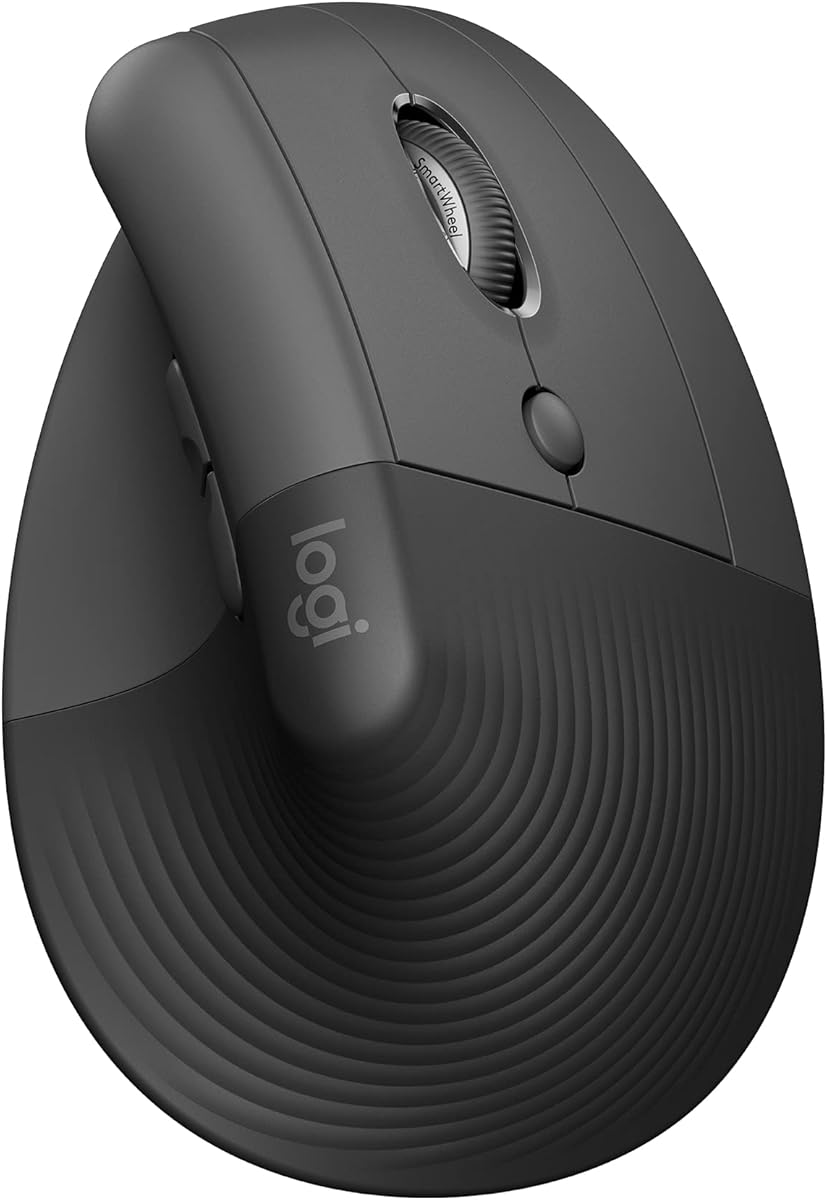
The Logitech Lift Vertical is the guide's alternative ergonomic recommendation. Its 57-degree vertical profile places the hand in a more upright position, making it especially relevant to photographers who spend long periods navigating Lightroom and experience discomfort from a flatter mouse posture.
We may earn a commission when you buy through this link, at no additional cost to you.
The shape is explicitly intended for small to medium right hands, so fit is a critical consideration. A softly textured grip and snug thumb rest help users settle into the design, while customizable buttons, quiet clicks, and the SmartWheel support a low-distraction workflow. The SmartWheel shifts between smooth and ratcheted scrolling according to user preference, useful for both rapid catalog movement and precise panel navigation.
Connectivity includes Bluetooth Low Energy and Logi Bolt, covering Windows, macOS, iPadOS, Chrome OS, and Linux. The supplied listing states a battery life of up to two years, although actual duration depends on usage and settings. The mouse is also ergonomist-approved, adding institutional credibility to its intention of encouraging a more natural forearm posture.
The vertical format is not automatically more comfortable for everyone, and users may need time to adapt to the different wrist angle. It is also designed for right-handed users, making it unsuitable for people seeking a left-handed vertical mouse. For a photographer with a smaller hand who values wrist-friendly positioning and quieter operation, however, it offers a compelling and distinct approach to Lightroom editing.
The 57-degree angle rotates the forearm into a more natural position than a conventional horizontal mouse. Users should assess comfort gradually, because the transition may initially feel unfamiliar even when the shape is well suited to them.
Unlike many large ergonomic productivity mice, Lift is designed around small to medium hands. Its compact scale and thumb rest offer a more individualized fit for editors who find oversized mouse shapes tiring.
We may earn a commission when you buy through this link, at no additional cost to you.
The best Mouse for Lightroom is the one that combines accurate tracking, comfortable positioning, useful controls, and smooth navigation with your operating setup. These factors matter more than gaming-oriented labels because Lightroom relies on repeated cursor placement, scrolling, selection, and command activation.
Sensor resolution determines the maximum sensitivity available, but the highest DPI number is not automatically the most useful setting. Look for tracking that remains controlled and consistent, along with the ability to lower sensitivity for precise crop, mask, and brush placement. Models offering programmable DPI controls are especially helpful because an editor can move quickly through a catalog and then switch to a slower setting for detailed work.
Lightroom uses long horizontal filmstrips, vertical catalog lists, image previews, and densely packed panels, so the wheel is central to the interface. A free-spinning wheel can accelerate through large catalogs, while a ratcheting or tactile mode helps with deliberate movement. Tilt or horizontal-scroll actions can also provide useful shortcuts when configured thoughtfully through the mouse software.
Extra buttons can accelerate repeated actions such as switching modules, toggling views, flagging images, opening a comparison, or changing the active tool. The best mouse is not the one with the most buttons, however; it is the one whose controls can be placed where your hand naturally rests. Check whether the required configuration utility is available for your operating system and whether it supports application-specific profiles.
A mouse should support the hand without forcing a cramped or rotated posture. Sculpted horizontal designs suit many users, vertical shapes may reduce forearm rotation, and larger gaming bodies can provide a fuller hand rest. Hand size matters as much as shape, so compare the product dimensions with your own hand and consider whether you use a palm, claw, or fingertip grip before purchasing.
Wired mice provide a consistent connection without charging or radio management, making them straightforward for a fixed workstation. Wireless models reduce desk clutter and can be easier to reposition between a catalog computer and a tethered editing setup. Consider battery life, the required receiver, supported wireless technology, and whether the charging cable or dock is included.
Long editing sessions involve many clicks, wheel inputs, and mode changes, so switch durability and the overall feel of the shell matter. Published click-life ratings are useful comparisons, although actual longevity depends on usage and care. A comfortable surface finish, accessible controls, and a wheel that feels consistent are often more noticeable day to day than a headline durability number.
Optical sensors generally perform best on a suitable, unobstructed surface. If your editing area includes glass, a textured pad, or unusual materials, check whether the product specifically supports those surfaces. A mouse with broad surface compatibility can offer flexibility, but a large, consistent pad remains a sensible way to achieve repeatable tracking in a Lightroom workspace.
Photographers often move between a tethered workstation, a laptop, and a catalog display. Multi-device Bluetooth, cross-computer control, and application-aware buttons can make those transitions smoother. Some features require extra software or an internet-connected setup, and some accessories are sold separately, so confirm the complete workflow before deciding that a wireless productivity model fits best.
Begin by installing the mouse's configuration software and updating the mouse firmware or sensor settings if prompted. Set the pointer speed to a comfortable baseline before assigning buttons, then make small adjustments while moving a crop boundary or brush cursor. For dual-mode wheels, identify the free-spinning speed that moves comfortably through a catalog without causing overshoot.
Build a restrained Lightroom shortcut map. Assign only the commands you use most often, place them on buttons that your fingers can reach without moving the mouse, and avoid placing destructive actions beside frequently used navigation buttons. If the software supports application profiles, give Lightroom its own layout and test each shortcut in both the Develop and Library modules.
Keep the tracking path clean and use a compatible mouse pad rather than tracking over dust, moisture, adhesive residue, or sharply edged surfaces. Clean the wheel with a soft dry tool, and follow the manufacturer's guidance for the battery, receiver, charging base, or included cable. Periodically review software updates, but avoid changing sensitivity profiles immediately before an important editing session.
Yes, many gaming mice are well suited to Lightroom because they combine precise optical sensors, configurable buttons, and fast scrolling. The most useful features for photography are adjustable sensitivity, a comfortable grip, and a wheel that works well in both rapid and precise modes. Gaming aesthetics and highly specialized triggers may be unnecessary, so the best choice is the model whose controls suit your editing habits.
No. Most Lightroom tasks are performed at moderate pointer speeds, and excessive sensitivity can make precise placement harder. A high maximum DPI is useful only if you want a wide range of settings. Choose a mouse with a smooth, adjustable sensor and configure a starting point that lets you move across the display without making tiny corrections.
A wired mouse offers the simplest setup and a consistent connection, while a wireless mouse provides more freedom to move between devices. For a fixed editing desk, either can work well. For a multi-computer photography workflow, look for multi-device connectivity, reliable battery life, and clear information about whether a receiver and charging cable are included.
They can be, especially for users who perform the same tasks throughout the day. Buttons may switch between the Library and Develop modules, toggle a comparison view, flag images, change masking tools, or open frequently used panels. The key is a consistent and memorable mapping; too many shortcuts can create accidental actions rather than save time.
The best choice depends on hand size, grip, and comfort preferences rather than a universal design. A sculpted mouse may suit a conventional workflow, while a vertical mouse may reduce forearm rotation for some users. Test the selected model during realistic editing sessions and adjust pointer speed and shortcuts gradually.
A vertical mouse can be beneficial for users who prefer a more upright hand and forearm position. However, the transition from a standard mouse may take time, and vertical shapes are not equally comfortable for everyone. The Logitech Lift is designed for small to medium right hands, so users with larger hands should consider fit before choosing it.
Yes, and application-specific profiles can make that workflow much more efficient. Users can assign a different set of commands for Lightroom and Photoshop while keeping primary navigation consistent. The mouse's configuration software should support your operating system, and any required receiver or additional hardware should be verified before purchase.
A clean, flat surface with enough room for controlled movement is generally suitable. The pad should be compatible with the optical sensor and large enough to avoid hitting its edge during long strokes. If you often work on glass or unusual surfaces, check the sensor's stated support and consider whether a consistent, lightly controlled pad would improve accuracy.
The Razer Basilisk V3 is the best overall choice because it balances precise tracking, fast and tactile scrolling, programmable controls, and a stable wired connection. The Logitech G PRO X2 SUPERSTRIKE stands out as the premium option with its 44,000 DPI ceiling, haptics, and 8KHz wireless polling, while the Razer DeathAdder Essential delivers the most focused budget experience.
Before buying, prioritize the factors you will feel during every session: comfortable hand fit, smooth tracking, a suitable wheel, and software that supports your Lightroom shortcuts. Productivity-focused editors may prefer the MX Master 4 or MX Master 3S, while smaller hands and users seeking a more upright position should examine the Logitech Lift. More specialized gaming models may appeal when haptics or very high polling rates matter.
Ratings and product features provide a useful starting point, but prices, availability, package contents, and software behavior can change. Check the current listing carefully, confirm that required receivers or cables are included, and verify current costs before making your final selection.