
Cables Direct Online Weatherproof Adjustable J-Pole Mount
5.0Editor score
1.3-inch pole diameter
17-inch mounting reach
60-degree positioning adjustment
Complete mounting hardware included
A satellite J mount raises and positions outdoor equipment to improve clearance from roofs, walls, and nearby obstructions. The right model also provides a rigid connection, weather-resistant construction, and enough adjustment to place a dish or antenna where it can receive a clear signal.
We compared all ten mounts by examining their arm length, pole diameter, adjustment range, material, installation methods, weight capacity, hardware, and supported equipment. The list includes compact household mounts, extended reach models, pole-mounted options, and heavy-duty systems for demanding outdoor installations.
Each review identifies the features that distinguish one mount from another and explains where it fits best. Ratings reflect the supplied customer feedback, while practical installation details help reveal which option offers the most useful balance of reach, stability, and convenience. Prices and availability can change.
5.0Editor score
4.7Editor score

4.6Editor score
As an Amazon Associate we earn from qualifying purchases.
This side-by-side comparison covers the key differences in reach, pole width, adjustment, construction, installation style, and equipment compatibility, making it easier to identify the mount that fits a particular rooftop, wall, or pole project.


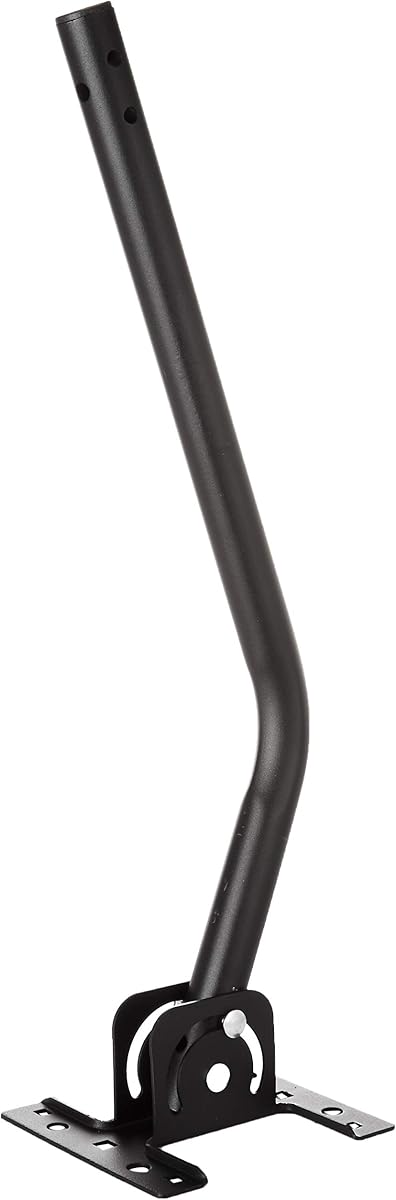

The ULNA Universal Antenna Mount is a versatile 19.68-inch J-pole bracket with a 4.6 customer rating. Its combination of reversible arms, pipe hoops, and an adjustable 150-degree connection makes it a practical general-purpose mount for dishes, wireless bridges, WiFi extenders, access points, weather stations, and signal-boosting equipment.
We may earn a commission when you buy through this link, at no additional cost to you.
One of its strongest features is the amount of positioning control built into the joint. After the base is secured, the arm can be tilted to find a more favorable signal path. The two-bracket construction also offers stand-off flexibility, while the 1.49-inch inner and 1.65-inch outer dimensions provide a useful balance between strength and compatibility with common outdoor equipment.
The heavy-gauge metal and painted finish are intended to resist rust and limit movement caused by vibration. Installation can occur on a wall, roof, side of a building, or another suitable structure. The package includes two J-bracket assemblies, two pipe brackets, four pipe hoops, and bolts, providing a substantial foundation for a complete install.
The important limitation is that a dish or Starlink setup may require an additional pipe or pole adapter, which is not included. The arm is also shorter than the 35-inch, 51-inch, and longer adjustable options. Even so, this mount is a balanced choice for buyers who want multiple compatible uses, solid hardware, and meaningful angle adjustment without an oversized frame.
It is particularly suitable for a homeowner mounting a wireless bridge, outdoor access point, weather-station antenna, or conventional satellite dish on a roof or exterior wall. Choose it when installation flexibility and included components matter more than maximum reach. For a straightforward all-around satellite J mount, it delivers one of the most convincing feature packages in this guide.
The 150-degree tilt range lets an installer change the equipment angle after the base is fixed, which is useful when working around roof slopes, eaves, walls, or nearby obstructions. It also makes fine-tuning easier when the exact line of sight is not obvious from ground level.
Two J-bracket assemblies, pipe brackets, four hoops, and bolts provide a more complete mounting foundation than a bare pole. The reversible layout offers different stand-off choices while retaining a secure connection for supported outdoor devices.
We may earn a commission when you buy through this link, at no additional cost to you.
This two-pack of universal heavy-duty J-pole brackets has a 4.6 customer rating and combines a 19.68-inch arm with a 150-degree tilt. Each arm has a 1.49-inch inner diameter and a 1.65-inch outer diameter, allowing it to serve as a general mounting solution for numerous outdoor devices.
We may earn a commission when you buy through this link, at no additional cost to you.
The pair provides useful flexibility for installers who have separate elevations, sides of a building, or multiple locations. Both arms can support antennas, wireless bridges, WiFi extenders, Starlink equipment, and weather stations. Installation is designed for walls, roofs, and other suitable surfaces using the included hardware, without a need for specialized tools.
Heavy-duty steel and a rust-resistant finish address two common concerns in outdoor antenna installations: structural rigidity and exposure to rain, moisture, and seasonal weather. The reversible arrangement lets the installer vary the stand-off distance, while the tilting joint provides enough freedom to refine the final direction.
Users should distinguish general Starlink support from complete, ready-to-install compatibility. Depending on the dish and pole arrangement, a suitable adapter may still be necessary. As with the ULNA model, the 19.68-inch reach is more modest than the longer CEKAY mounts, so it may not clear a tall obstruction.
This is an attractive option for a point-to-point wireless link, an outdoor WiFi extender, or a second satellite installation where two complete arms are useful. It balances straightforward installation with adjustable positioning and broad device support. Among the shorter universal brackets, the two-pack setup adds especially practical value.
The two complete arms make it easier to serve separate devices or prepare alternate installation positions. That is useful for wireless bridge projects, directional antenna placements, and homes where one mounting point cannot provide the required line of sight.
Heavy-duty steel and a rust-resistant finish suit permanent outdoor placements, while the included mounting hardware keeps setup straightforward. The result is a practical bracket for installers who value simplicity and repeatability.
We may earn a commission when you buy through this link, at no additional cost to you.
The Heavy Duty Antenna Mount Pole has a 4.4 customer rating and takes a compact approach to outdoor antenna support. Its 17.25-inch arm, 1.69-inch outer diameter, and 1.5-inch inner diameter make it particularly relevant to weather stations, cellular antennas, WiFi equipment, and other compatible devices that need a stable elevated position.
We may earn a commission when you buy through this link, at no additional cost to you.
Its most unusual strength is support for two installation methods. The included bracket permits a roof or wall attachment, while the V-jam bracket and U-bolt clamp kit can secure the assembly to pipes measuring 1 to 2 inches in diameter. That gives the installer more choices when a building surface is inconvenient or a pole already exists nearby.
The J-pipe moves freely inside the mounting bracket until the desired angle is selected, allowing the device to be positioned before the hardware is locked. Four stainless steel ST6 by 50-millimeter hex-head self-tapping screws and two clamp kits cover the main fastening needs. The design also offers broad compatibility with 4G, 5G, WiFi, TV, satellite, weather-station, outdoor-camera, and cell-phone booster equipment.
The relatively short arm is the primary tradeoff. It is less likely to provide enough stand-off from a deep roof edge than the 35-inch and 51-inch mounts, and a Starlink dish still requires a separately purchased adapter. The 4.4 rating is slightly below the leaders, but that should not obscure the mount's clear advantage for existing-pole installations.
Choose this model when a one-to-two-inch pipe is available, when weather-station mounting is the main objective, or when the installer wants the freedom to use either a wall, roof, or pole. For those conditions, its adjustable clamp system is more useful than the extra reach offered by larger models.
The same J-pole can be secured to a roof or wall through the mounting bracket or held on an existing pipe with the included U-bolt clamp kit. This dual approach is especially helpful around complex rooflines where repositioning the whole installation may be difficult.
The wide 1.69-inch pole and adjustable clamp arrangement are well suited to weather-station antennas and other compact outdoor sensors. Stainless steel fasteners and the locking bracket help maintain a steady position after installation.
We may earn a commission when you buy through this link, at no additional cost to you.
The SatelliteSale Universal J Pipe Antenna Mast carries a 4.6 customer rating and is the most extensively reinforced platform in the comparison. It supports dishes and antennas weighing up to 30 pounds, combining an adjustable J-pipe with two telescopic support poles and a broad baseplate for demanding installations.
We may earn a commission when you buy through this link, at no additional cost to you.
The shorter support pole extends from 11 to 20 inches, while the longer adjusts from 17 to 31 inches. This creates a more stable triangular structure than a single-arm bracket. A 9-by-6-inch baseplate and ten lag bolts provide a substantial anchor, and the built-in bubble level helps the installer establish a true vertical reference before tightening the hardware.
Compatibility extends to Starlink with a compatible pipe adapter, DIRECTV, popular satellite dishes, over-the-air antennas, weather-station antennas, radio antennas, and wireless signal boosters. A powder-coated finish helps protect against rust, corrosion, and moisture, while rubber pitch pads improve the securement of the mounted equipment and help protect the contact area.
The trade-off is size and complexity. The dual telescopic supports and large base require more assembly and anchoring than a simple J bracket. Starlink compatibility also depends on acquiring the right adapter, and the overall footprint may be more than necessary for a lightweight indoor-to-outdoor radio antenna.
This mast is well suited to a large satellite dish, a substantial outdoor television antenna, or a long-term rooftop installation where wind resistance and precise alignment matter. The bubble level and reinforced geometry justify choosing it for a serious dish installation. It is less compelling for a small device that can be supported by a compact 17-inch arm.
Two independently adjustable support poles stabilize the mast from different directions, making the system better suited to larger dishes and outdoor antennas. The 30-pound support rating gives installers useful headroom for equipment that is heavier than a typical compact antenna.
The integrated bubble level reduces guesswork when setting the mast. Once a level reference is established, the adjustable angle and telescopic supports can be used to position the dish while maintaining a stable base.
We may earn a commission when you buy through this link, at no additional cost to you.
The CEKAY 1.5 by 35-inch J-pole has a 4.7 customer rating and offers one of the strongest balances of reach, adjustability, and installation hardware. Its 35-inch arm, 1.5-inch outer diameter, and reversible configuration give an installer room to place equipment above roof edges or away from exterior obstructions.
We may earn a commission when you buy through this link, at no additional cost to you.
The pole rotates 180 degrees, giving a broad range of positions without requiring the entire base to move. A locking pin with two fixing positions helps prevent the arm from shifting after it has been aligned. Both ends of the J-pole can be used, allowing the installer to vary the stand-off distance to suit the mounting surface.
Construction is based on 1.5-millimeter, approximately 16-gauge steel for the mast and a reinforced 2.0-millimeter, approximately 14-gauge mounting bracket. The powder coating resists rain, moisture, and long-term outdoor exposure. Included components include ST8 by 50-millimeter stainless steel hex-head self-tapping screws, plastic anchors, a screw sleeve wrench, and step-by-step instructions.
The mount is compatible with 4G, 5G, WiFi, television, satellite, weather-station, and CB radio antennas. For Starlink, CEKAY's aluminum alloy adapter for one- to two-inch poles is required and sold separately. The 35-inch reach also means the base must be firmly anchored, and the long arm may feel oversized for a very small sensor.
This is a strong recommendation for a homeowner seeking one mount that can handle several antenna types and several mounting surfaces. The 180-degree movement, locking pin, reversible design, and complete hardware package remove many of the compromises associated with inexpensive universal brackets. It is the most balanced pick in the guide.
Using either end of the 35-inch J-pole changes the horizontal stand-off, while the 180-degree rotation controls direction. These independent adjustments make it easier to clear roof geometry, eaves, walls, and other obstacles without relocating the base.
The locking pin secures the selected angle, while the reinforced bracket and stainless steel fasteners help resist movement and corrosion. Plastic anchors add installation support on suitable walls and similar surfaces.
We may earn a commission when you buy through this link, at no additional cost to you.
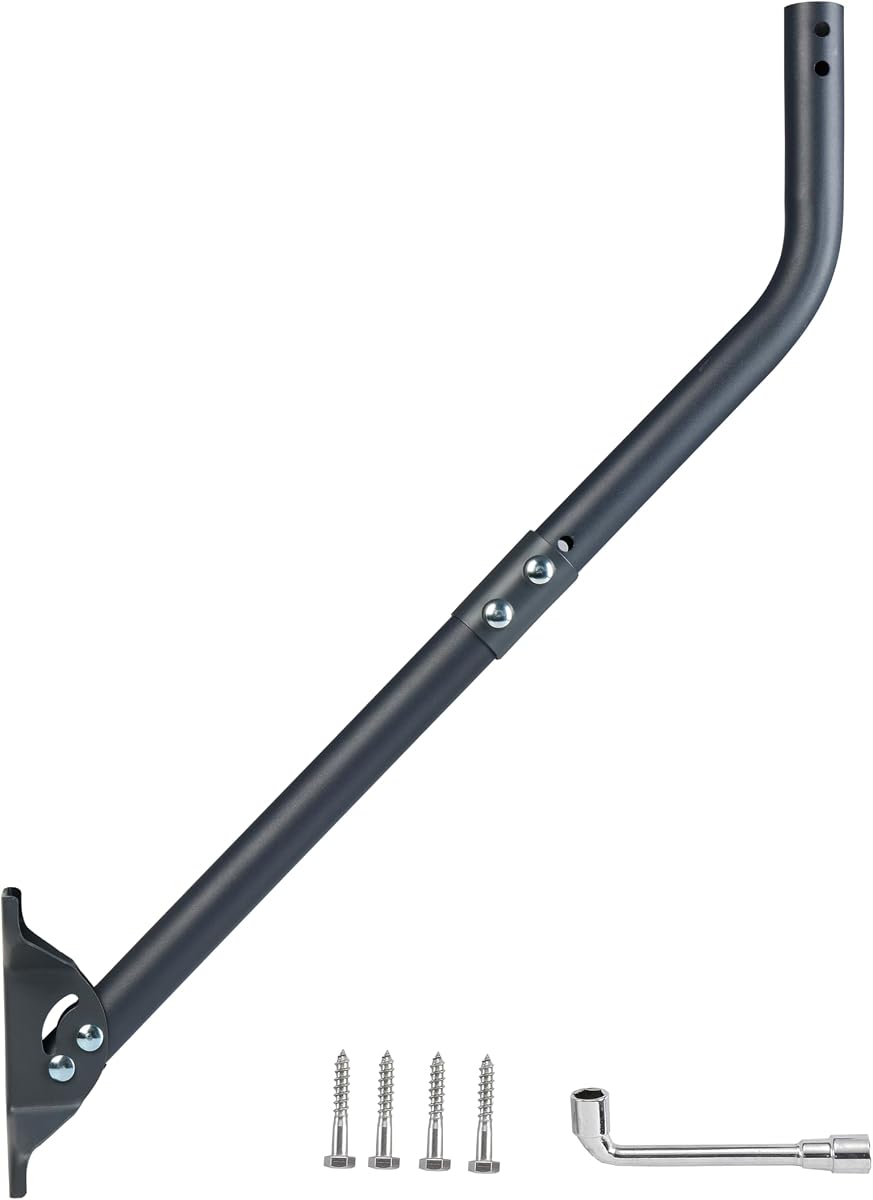
The Cables Direct Online Weatherproof Adjustable J-Pole Mount has a 5.0 customer rating and offers a compact solution for smaller outdoor antennas. Its 17-inch mounting pole supports equipment with a diameter up to 1.3 inches and a maximum load of 66 pounds, according to the supplied product information.
We may earn a commission when you buy through this link, at no additional cost to you.
The pole can rotate up to 60 degrees, allowing a homeowner to improve the reception angle without using a much larger assembly. It can be installed on a roof, wall, balcony, pole, or another flat surface. That range of options makes the mount approachable for a compact television antenna, lightweight satellite dish, or similar outdoor device.
Solid heavy-duty steel is finished with corrosion-resistant materials intended to endure rain, snow, and prolonged ultraviolet exposure. The package includes one J-pole aerial bracket, one base, four wall screws, four bolts, and two caps. It also includes easy-to-follow instructions, reducing the need to source a collection of additional fasteners before starting.
Adjustment and reach are more modest than those of the 35-inch and 51-inch CEKAY models. The 1.3-inch diameter limit is also narrower, so the mount is less appropriate for equipment requiring a larger pole or a dedicated Starlink adapter arrangement. Its strongest case is a light-to-medium device that benefits from elevation but does not need substantial clearance.
For an uncomplicated rooftop or exterior-wall installation, this is a practical pick. The 5.0 rating, included hardware, weather-oriented finish, and straightforward adjustment make it appealing for first-time antenna installers. Choose it for compact reach and convenience; choose a longer model when the device must clear a deeper obstruction.
The 60-degree rotation range is easy to understand and adjust, making this mount suitable for light outdoor antennas. It offers enough movement to improve a reception angle while remaining compact enough for smaller roofs, balconies, and wall locations.
Corrosion-resistant steel is appropriate for exposed installations, and the included screws, bolts, caps, and base simplify assembly. Buyers do not need to infer the basic mounting components from the product title.
We may earn a commission when you buy through this link, at no additional cost to you.
The Universal Antenna Mounting Pole for Weather Station has a 4.5 customer rating and combines a 33.25-inch arm with a narrower 1.25-inch outer diameter. It is designed to hold television antennas, 4G and 5G antennas, WiFi antennas, weather stations, satellite equipment, and cell phone signal boosters.
We may earn a commission when you buy through this link, at no additional cost to you.
Its 180-degree rotation provides more directional freedom than the 60-degree adjustment of the compact Cables Direct and Adjustable Satellite Dish models. The reversible J-pole can use either end, making it possible to vary the stand-off distance. A separately sold 16.5-inch extension can add more height or clearance when the base location requires it.
The pole uses 16-gauge, 1.5-millimeter steel, while the mounting bracket is reinforced with 14-gauge, 2-millimeter steel. A powder-coated finish helps protect against moisture and prolonged outdoor exposure. A unique pivot-lock design and locking pin with two fixing positions help reduce movement after the equipment has been positioned.
The installation package includes mounting brackets, ST8 by 50-millimeter stainless steel hex-head self-tapping screws, plastic anchors, and a screw sleeve wrench. As with other universal mounts, Starlink use requires a compatible adapter. The relatively slim 1.25-inch pole also offers less physical bulk than the 1.5-inch CEKAY models.
This mount is best for a weather station or compact directional antenna that needs considerably more reach than a 17-inch model. It is particularly useful when the installer wants 180-degree adjustment and a reversible arm but does not need the maximum 51-inch reach. It also works on walls, eaves, and roofs, with the locking mechanism helping maintain alignment.
The 33.25-inch reversible arm offers useful clearance, and the 180-degree rotation makes it possible to find the correct signal direction around a roof edge or wall. A separate extension can further improve height and horizontal clearance.
A 1.25-inch pole is lighter and less imposing than many 1.5-inch or 2-inch systems, yet the reinforced bracket maintains useful rigidity. The corrosion-resistant finish and locking pin support dependable outdoor positioning.
We may earn a commission when you buy through this link, at no additional cost to you.
The CEKAY 1.5 by 51-inch J-pole has a 4.7 customer rating and provides the longest fixed arm among the ten products compared. That extra reach makes it useful when a dish or antenna must be elevated well above a roof edge, wall, eave, or another obstacle.
We may earn a commission when you buy through this link, at no additional cost to you.
Like the 35-inch CEKAY model, it uses a 1.5-millimeter, approximately 16-gauge steel mast and a reinforced 2.0-millimeter, approximately 14-gauge bracket. The powder-coated finish protects against rain, moisture, and long-term outdoor exposure. Its pole rotates 180 degrees, and a locking pin with two fixing positions holds the selected orientation.
Both ends of the 51-inch J-pole can be used, giving the installer a choice of stand-off distance. A 16.5-inch mast extension is also available separately for projects that need still more vertical height or horizontal clearance. The included kit contains stainless steel ST8 by 50-millimeter hex-head self-tapping screws, plastic anchors, a screw sleeve wrench, and written instructions.
The product supports 4G, 5G, WiFi, television, satellite, weather-station, and CB radio antennas. Starlink installation requires CEKAY's aluminum alloy adapter for one- to two-inch poles, and that adapter is not included. The long arm also needs a well-anchored base and enough open space to rotate without interference.
This is the most practical option in the list when maximum reach is the main concern. It can remove a costly obstruction problem by placing the equipment farther from the structure, though the larger arm may be difficult to handle on confined roofs. Buyers should verify that the selected installation area can accommodate the full 51-inch geometry.
The 51-inch arm is the longest fixed reach in the comparison, offering a meaningful increase over 33-inch, 35-inch, and 19-inch designs. It gives an installer more room to position equipment above a roof edge or clear a nearby wall.
A locking pin secures the arm at the desired angle, and the reinforced mounting bracket helps control movement. The 180-degree rotation provides enough freedom to optimize the signal direction without moving the base.
We may earn a commission when you buy through this link, at no additional cost to you.
The Adjustable Satellite Dish Antenna Mount has a 4.4 customer rating and delivers a traditional, uncomplicated J-pole design. It is designed for a one-inch-diameter device, an 18-inch mount, and a maximum stated acceptance weight of 66 pounds, making it most suitable for relatively compact antennas.
We may earn a commission when you buy through this link, at no additional cost to you.
The mounting pole rotates 60 degrees so the antenna can be placed at a more favorable reception angle. The black-coated steel mount can be installed on a wall, roof, or balcony, and the product information notes that it may also be used in an attic. That versatility is useful for homeowners working around a simplified roofline.
Installation hardware includes the J-pole aerial bracket, base, four wall screws, four bolts, and two caps. The straightforward package makes the mount suitable for a first outdoor antenna installation, especially when the installer does not want to source individual screws and anchors separately.
The main limitations are dimensional. A one-inch pole is narrower than the other universal models, the 18-inch arm provides limited stand-off, and the 60-degree adjustment is less flexible than the 180-degree systems. It may also be less suitable for a modern dish requiring a larger pole connection or a dedicated adapter.
This mount is most appropriate for a compact TV antenna, a lightweight satellite dish, or a similar device that only needs a modest increase above a roof or wall. It offers more capability than a basic pole alone while remaining easy to install. Buyers needing a wider pole, greater clearance, or broader rotation should favor a 1.5-inch reversible model.
A familiar J-pole shape, 60-degree rotation, and an included hardware package make this a manageable option for a compact antenna. It allows meaningful angle adjustment without the complexity of a telescopic, multi-piece mast.
The stated 66-pound maximum acceptance is generous for many compact outdoor antennas. It provides useful support while keeping the pole diameter narrow enough for straightforward placement on walls, balconies, and roofs.
We may earn a commission when you buy through this link, at no additional cost to you.
The Universal J Pipe Antenna Mount Bracket has a 3.8 customer rating and offers a substantial mounting structure for dishes, wireless antennas, and wireless signal boosters. The J-tube assembly weighs eight pounds and is stated to support equipment up to 30 pounds, distinguishing it from many lighter single-arm brackets.
We may earn a commission when you buy through this link, at no additional cost to you.
Two adjustable support rods reinforce the main mast. The shorter rod extends from 11 to 20 inches, and the longer extends from 17 to 31 inches. The base rotates from 0 to 180 degrees, allowing the installer to orient the structure on a vertical, pitched, or otherwise suitable surface. A nine-by-six-inch baseplate and ten lag bolts create a large anchoring footprint.
A bubble level assists with accurate setup, while rubber rings and pads help protect the contact area and maintain a secure connection. The powder-coated surface is designed for weather resistance. The mount is intended for rooftop, wall, and deck placement and can accommodate a two-inch-diameter antenna pole.
Starlink support is possible, but it requires an additional pipe adapter. The 3.8 rating is the lowest among the listed products, so buyers should interpret the available feedback more cautiously. The product's eight-pound weight and broad base also demand a properly selected attachment surface and careful handling during assembly.
Its strongest qualities are structural reinforcement and precise installation support. It is most relevant to a homeowner mounting a substantial dish or wireless antenna where load-bearing capacity matters more than compactness. The bubble level and wide base make it a credible heavy-duty option, although the simpler adjustable poles may appeal more to buyers seeking convenience.
A stated 30-pound capacity and wide baseplate give the mount a stable foundation for substantial equipment. The adjustable support rods further reduce movement and help the main mast remain properly positioned outdoors.
The 180-degree rotating base and integrated bubble level make the structure easier to align on walls, roofs, and decks. These details are especially useful when a precise, level installation is important for the mounted device.
We may earn a commission when you buy through this link, at no additional cost to you.
The best satellite J mount depends on equipment size, required clearance, mounting surface, and the amount of directional adjustment available. Review the dimensions and included components before purchasing, especially when the device requires a specific pole diameter or a separate adapter.
Reach is the distance the equipment can sit away from the mounting surface. A short 17-inch or 18-inch model can raise a compact antenna slightly and improve its angle, but it may not clear a deep eave, parapet, or nearby tree. A 35-inch arm provides more practical positioning freedom, while a 51-inch model is appropriate when the equipment must be held well away from the structure. The correct choice depends on the actual obstruction rather than simply on which product has the longest arm.
Measure the available space and estimate the desired equipment location before selecting a model. Longer arms also require more room during rotation, so an installer should check for interference with roof materials, walls, and service routes.
The pole diameter determines which antennas and dishes can attach safely. Models with a 1-inch or 1.25-inch outer diameter suit smaller equipment, while 1.5-inch and wider poles accommodate more substantial mounting systems. Inner and outer dimensions should both be checked, because the listed diameter may refer to a different part of the assembly. Buyers should also verify whether the device needs a specific socket, clamp, or adapter.
Match the mount to the exact equipment dimensions and attachment method. Never assume that a product advertising Starlink compatibility includes the necessary adapter.
A 60-degree pivot is usually enough to make modest changes to a compact antenna's direction, while a 150- or 180-degree joint offers much more freedom around roof slopes, eaves, and walls. The best setup allows the device to be aligned after the base is installed, reducing the need to move the entire mounting point. A locking pin or fixed-position joint is also valuable because it helps keep the selected angle from drifting.
Prioritize adjustment that matches the installation, not just the largest stated angle. Make sure the arm can rotate without striking the roof, wall, or another object.
J mounts are exposed to rain, moisture, sunlight, and seasonal temperature changes. Powder-coated or corrosion-resistant finishes help protect steel components, while thicker mast and bracket measurements add rigidity. The supplied information describes the CEKAY models as using 1.5-millimeter steel poles with reinforced 2.0-millimeter brackets, whereas several other mounts use heavy-gauge steel with a protective painted finish.
Inspect the surface and hardware after installation, especially if the mount is exposed to difficult weather. Touch up any damaged coating and keep metal-to-metal joints secure.
Some mounts are designed primarily for walls and roofs, while others also support pole, deck, balcony, eave, or flat-surface placement. The included fasteners determine how straightforward the installation may be. A two-pack may help when separate sides of a building need coverage, and large baseplates offer more anchoring surface for heavier equipment. Pipe clamp kits are valuable when a suitable pole already exists nearby.
Choose the base method that matches both the structure and the equipment weight. Proper anchoring, surface preparation, and a clear working area are at least as important as the bracket itself.
Several compact mounts state a maximum load of 66 pounds, while the reinforced SatelliteSale and Universal J Pipe products support up to 30 pounds. The lower maximum does not automatically mean less capability, because a broad base and multiple support poles can create a more stable system. The important comparison is the complete structure, including the bracket, arm, fasteners, and attachment surface.
Consider the device's weight, wind exposure, and the length of the arm. Larger or heavier installations benefit from a wider base, additional supports, and secure lag-bolt anchoring.
A complete kit may include J-pole assemblies, pipe brackets, hoops, baseplates, wall screws, bolts, caps, anchors, U-bolt clamp kits, and specialized tools. The CEKAY products include stainless steel self-tapping screws, plastic anchors, a screw sleeve wrench, and instructions, while the SatelliteSale mast includes ten lag bolts. Dish and Starlink installations may still require an adapter that must be purchased separately.
Review the package contents before ordering. Confirm that the base fasteners match the intended surface and that any device-specific adapter is available.
A reversible J-pole can use either end, creating different horizontal stand-off distances from the same base. This is helpful when the mount must be installed around a roof edge or when the installer is unsure which orientation will produce the clearest signal path. Reversibility can also make it easier to reuse the mount if the equipment position changes.
Favor a reversible design when installation geometry is uncertain. Confirm that the reversible configuration remains compatible with the intended equipment and attachment hardware.
Begin by identifying the equipment connection, required pole diameter, and best unobstructed direction. Mark the mounting area, verify that the J-pole can rotate through its full range, and prepare the wall or roof surface according to the base and fastener design. A level reference is valuable because even a small mounting tilt can affect the final equipment position.
Install the base with the supplied or appropriate fasteners, then attach the J-pole and equipment loosely before making final adjustments. Rotate or tilt the arm to establish the required direction, check the line of sight, and tighten every connection. For multi-piece reinforced models, adjust the telescopic supports evenly and confirm that the bubble level indicates proper vertical alignment.
After alignment, tighten the locking hardware, inspect the mounting points, and check the equipment for movement. Periodic inspections are important because wind, thermal changes, and vibration can loosen bolts or degrade seals. Clean debris from the base, watch for corrosion, and replace damaged fasteners. A separate Starlink or dish adapter should be checked periodically for tightness as well.
A satellite J mount raises and positions a dish, television antenna, wireless antenna, weather-station sensor, or other outdoor device. Its curved arm provides stand-off from a wall or roof while the adjustable joint helps direct the equipment toward a clearer signal path. The correct size depends on the device weight, attachment diameter, and available space.
No. Some products describe Starlink compatibility, but a compatible pipe adapter is usually still required. The adapter is not included with several of the mounts in this guide, and the dish also needs a secure attachment point. Check the pole diameter, adapter range, and equipment orientation before ordering.
The ideal length is the shortest one that provides the required clearance and a useful viewing angle. Compact 17-inch and 18-inch mounts suit lightweight equipment on simple structures, while 33-inch and 35-inch arms offer more freedom around eaves. A 51-inch model is useful when the equipment must clear a substantial obstruction.
Most of the products compared can be installed on a wall, roof, balcony, eave, deck, or another suitable surface. The included fasteners are designed for particular base materials, so confirm that the supplied anchors or screws are appropriate for the structure. Proper sealing and secure anchoring are especially important outdoors.
Not automatically. Load capacity depends on the complete design, including the pole, bracket, base, fasteners, and attachment surface. Several compact mounts state a 66-pound limit, while some reinforced systems state 30 pounds but use broad bases and multiple supports. Compare the stated limit and the stability of the entire installation rather than the number alone.
A reversible J pole can be turned so either end attaches to the bracket, changing the horizontal stand-off distance. This provides useful flexibility when the base location is fixed but the required clearance is not yet certain. A fixed orientation is simpler and may be sufficient when the installation geometry has already been measured.
A 60-degree pivot is generally useful for small antennas and relatively simple layouts. A 150- or 180-degree joint gives more freedom to move around rooflines, walls, and nearby obstructions. The best mount is one that reaches the desired position while allowing the equipment to be locked securely without striking nearby surfaces.
Inspect the base, bolts, arm, and equipment connection periodically, particularly after severe weather. Clean away debris, address early surface corrosion, and tighten any hardware that has shifted. Keeping the protective coating intact and the attachment firm helps maintain alignment and prevents avoidable movement.
The CEKAY 1.5 by 35-inch model stands out as the most balanced choice because it combines useful reach, 180-degree positioning, a locking pin, a reversible design, and a complete hardware package. The Cables Direct adjustable mount is a compact budget option with a 5.0 customer rating, while the SatelliteSale mast is the premium reinforced choice for larger equipment and precise leveling.
Before buying, prioritize pole diameter, required stand-off, base stability, and adjustment range. A longer mount is not automatically better, and a heavy-duty construction may be unnecessary for a lightweight television antenna. Check any device-specific adapter requirements, confirm the included fasteners suit the mounting surface, and leave enough space for the arm to rotate.
Customer ratings, availability, and pricing can change over time, so check the current listing before making a final decision. Comparing the current product details with the dimensions and installation needs of your equipment will help identify the most suitable satellite J mount for the project.